Amid Internal Turmoil, President Lee Jae-myung Heads to the UN General Assembly

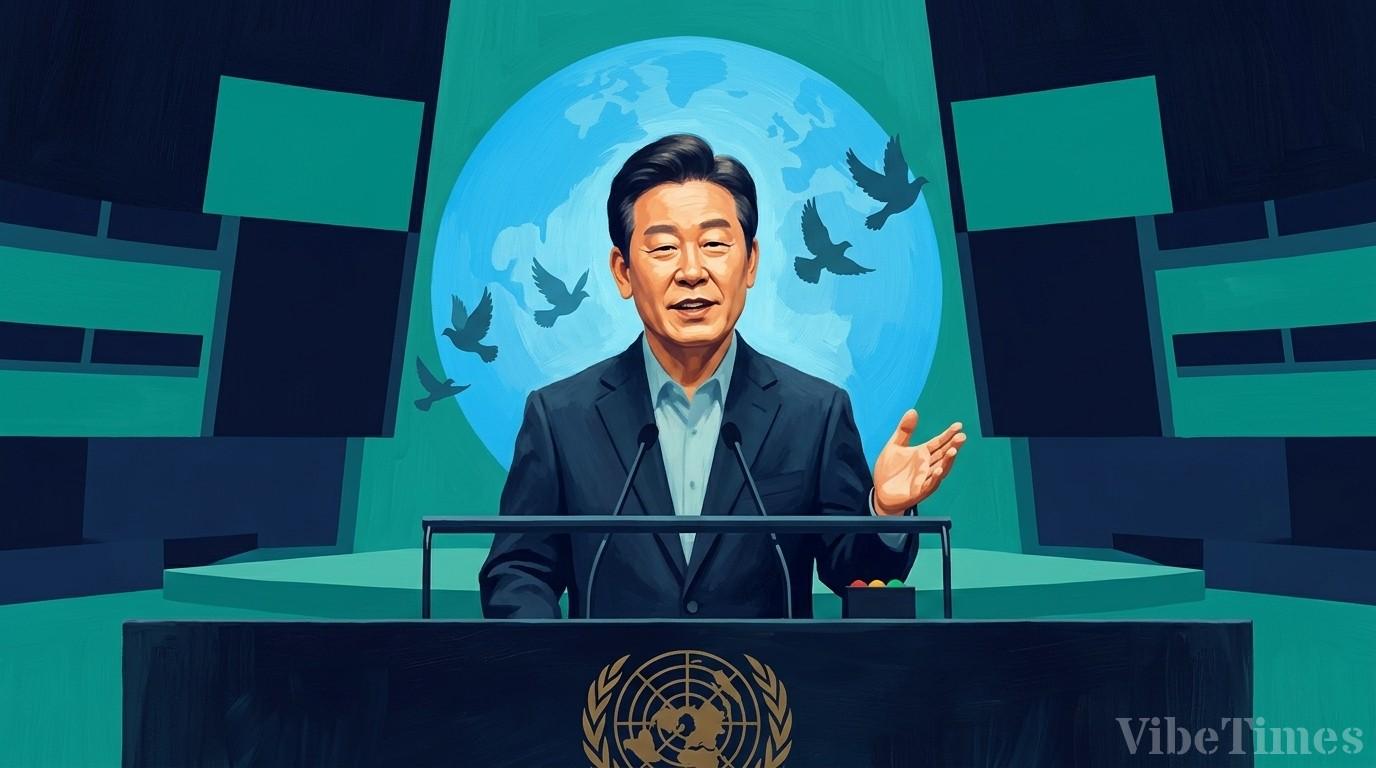
President Lee Jae-myung has shifted his focus to the diplomatic stage at a moment of internal political turmoil.
According to the presidential office, the president departed on an overseas trip from September 21 to 27 to attend the UN General Assembly and pay a state visit to Mexico. At the UN General Debate, he plans to unveil a peace initiative spanning the Middle East-driven crisis and the situation on the Korean Peninsula. Just before departure, he said, "I will reflect deeply and govern with greater humility," leaving a message that appeared mindful of domestic political instability. The outcome of summit diplomacy during his U.S. visit within the seven-day schedule is expected to influence how he manages the political landscape going forward.
Two Messages Carried in the Travel Itinerary
Behind this trip lies the risk posed by the Middle East. With the Iranian president also preparing to visit the United States, tensions have escalated after U.S. President Donald Trump remarked that he was "weighing whether to wipe them out entirely or make a deal." On the issue of the Strait of Hormuz, President Lee has made clear the principle of "no war involvement, intervention, or troop deployment." He is likely to reaffirm this principle to the international community in his UN General Debate speech and propose cooperation to stabilize energy supply chains.
Alongside diplomacy and security, trade issues are also a core agenda of the trip. At a press conference before departure, President Lee said of negotiations on investment in the United States, "There are some parts that are not easy to agree to, so we are talking again" — evidence that the talks have hit a rough patch. During the UN General Assembly, he is expected to engage with the U.S. side to seek substantive agreements lowering tariff barriers in key industries such as petrochemicals and semiconductors. He also drew a line, saying, "We only do business that makes commercial sense" — interpreted as a message that there will be no concessions at the cost of national interests.
Three Fires Extinguished Before Departure
Domestic instability persisted right up to his departure. The resignation of presidential chief of staff Kang Hoon-sik on the 21st pushed the question of accountability for the personnel shake-up to the surface. Within the ruling party, there were signs that suspicions of a power behind the throne could be amplified, while the opposition raised the intensity of its offensive, declaring, "It is now time for an investigation." President Lee's talk of "greater humility" reads as an acknowledgment of guilt in response to such pressure.
Normalizing relations with the judiciary also remained a task. President Lee recently met separately with Supreme Court Chief Justice Cho Hee-de for a tea conversation. As their first meeting since the conflict over the re-nomination of Supreme Court justices, it is interpreted as an attempt to ease tensions with the judiciary. The presentation of Justice Kim Sung-soo's appointment letter follows the same logic. Meanwhile, a Realmeter survey (September 14–18, 2,507 voters aged 18 and older nationwide) showed the president's approval rating rebounding to 34.8% after ten weeks. The fact that his support base has not collapsed despite the personnel scandal could serve as a breakwater minimizing a political vacuum during the trip.
Can Diplomatic Achievements Break the Domestic Deadlock?
During his seven-day absence, domestic politics is expected to be consumed by partisan bickering. With the opposition seeking accountability for the personnel controversy while searching for its next target, there are forecasts that the political landscape could turn even more turbulent after his return. For President Lee, tangible achievements on the diplomatic stage are his only card to offset that pressure.
His checklist of accomplishments includes securing international consensus on his peace initiative through the UN speech, progress in trade negotiations with the United States, and establishing a Latin America cooperation channel through the state visit to Mexico. Above all, the key will be how much common ground can be found with Washington on those "parts not easy to agree to." Given the Trump administration's continued pressure campaign, the gap at the negotiating table may well fail to narrow.
Taylor Fuller once said, "It is madness for a lamb to discuss peace with a wolf." In an international order governed by power, a peace initiative is ultimately tested by capability and negotiating strength. The coming week will determine whether the president's words at the UN General Assembly podium remain mere declarations or translate into substantive diplomatic achievements.
