President Lee Jae-myung formally proposes phased approach to North Korea's nuclear program

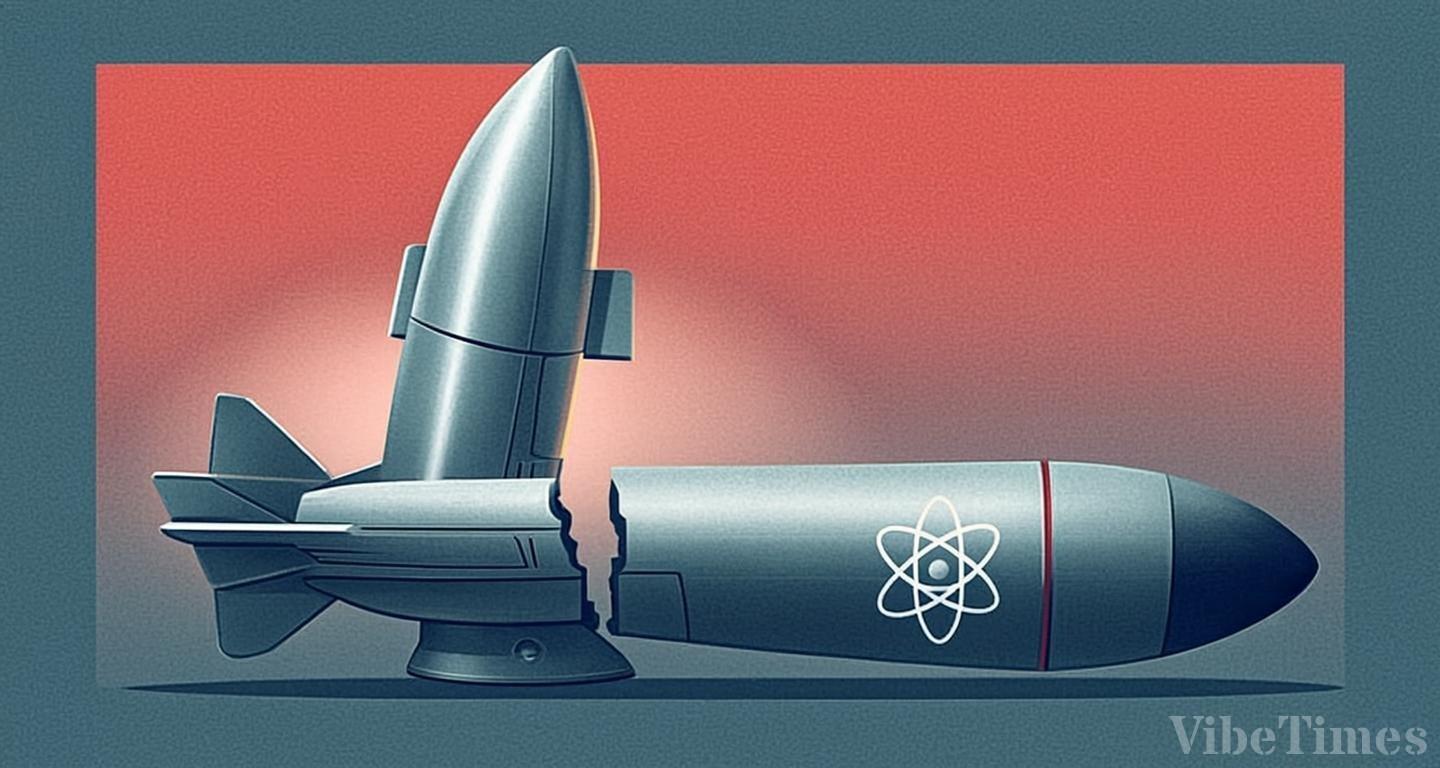
President Lee Jae-myung has formally proposed a phased approach of 'freeze, reduction, and dismantlement' for the North Korean nuclear issue.
Using the metaphor that a speeding car must first be brought to a stop, he presented a realistic starting point for denuclearization negotiations with North Korea. The president, who is on a trip to the United States and Mexico for the UN General Assembly, said he 'senses Korea's elevated standing,' indirectly signaling the diplomatic weight of his remarks. Analysts see this as a shift away from the existing principle-based stance premised on complete nuclear dismantlement, toward seeking incremental agreements starting with verifiable partial measures.
From 'Complete Dismantlement' to 'Phased Approach'
The emphasis on the freeze-reduction-dismantlement sequence carries significant weight in the discourse on Korean Peninsula denuclearization. Under both conservative and progressive administrations, the principle of Complete, Verifiable, and Irreversible Dismantlement (CVID) has served as the basic premise of inter-Korean and U.S.-North Korea negotiations. However, criticism has long been raised at home and abroad that an approach fixated on total dismantlement cannot even create a negotiating table when North Korea has enshrined its status as a nuclear state in its constitution.
President Lee's remarks are interpreted as directly targeting this point. A step-by-step path leading from a halt to nuclear tests and missile launches, to a reduction of nuclear capabilities, and ultimately to dismantlement is inevitably tied to sanctions relief cards based on the principle of reciprocity. The crux is whether to recognize rewards for partial implementation. Consistency with the U.S. policy line toward North Korea is expected to be the key factor.
Pragmatic Diplomacy Tied to Refusing Deployment to Hormuz
In the same vein, notable were the president's remarks regarding the Strait of Hormuz. He drew a clear line, saying 'there will be no deployment for involvement or intervention in a war.' With a Middle East-driven crisis escalating and having convened a ruling-opposition-government livelihood economy council meeting to discuss responses to Middle East risks, the declaration against deployment is read as a calculation to narrow the distance with domestic public opinion while minimizing diplomatic drain.
The investment negotiations with the United States likewise lay bare this pragmatist line. At a press conference on the 18th, the president said, 'There are parts that are not easy to agree to, so we are renegotiating.' According to a report by the Ministry of Trade, Industry and Energy to the National Assembly, the first U.S. investment project is a Texas gas-fired power plant, with a nuclear plant and the Alaska project under review as the second and third. Coupled with his declared principle that 'we only do projects with commercial rationality,' he appears intent on reframing trade frictions not as humiliating concessions but as choices based on profitability assessments.
The Gap Between Diplomatic Gains and Domestic Burdens
The question is how these diplomatic steps will intersect with the domestic political calendar. In a Realmeter survey, President Lee's approval rating rebounded for the first time in 10 weeks to 34.8 percent. Yet this remains low compared to the early days of his presidency, and the prevailing view in political circles is that without a recovery to the 40 percent range, it will be difficult to build momentum whether for constitutional revision or long-term governance. The president's own efforts to draw a line on the possibility of a constitutional amendment allowing re-election, placing weight on stable governance over a single five-year term, are interpreted in the same context.
Party affairs are no easier. Former Defense Minister Kim Min-seok was caught in a backlash over his remark that 'governments are short-lived,' while pressure is mounting, centered on the pro-Lee faction, for Democratic Party leader Jung Chung-rae not to seek re-election. During the push for prosecutorial reform, Yu Si-min harshly criticized the process, saying it 'stank of rotting fish,' and the opposition is pushing back, branding the discussion of abolishing prosecutors' offices as 'a retaliatory measure to cover up crimes.' The president's pledge to 'thoroughly review and remedy the matter so that not a single wrongful victim or even a small loophole emerges' is a response to these internal and external pressures. Meanwhile, the fact that as many as five ministerial-level nominees have fallen and suspicions of improper interference in personnel appointments have been raised is prompting calls for an overhaul of the entire vetting system.
Untangling the Three-Stage Roadmap
For the freeze-reduction-dismantlement roadmap to become a substantive negotiating document, three conditions must be met. First, U.S. agreement on sanctions relief corresponding to a freeze on North Korea's nuclear and missile activities. Second, an international monitoring system to verify implementation of the freeze. Third, a snapback mechanism—provisions to restore the status quo if phased implementation is halted or reversed. Without these three elements in place, the phased approach risks being exhausted as merely a means of buying time for North Korea's nuclear capabilities.
For President Lee, who was on the list of those to be arrested by martial law forces during the December 3 martial law episode, the North Korean nuclear issue is the paramount security challenge facing South Korea, independent of his political standing. As the long-held insight goes that success and failure are never permanent, peninsula denuclearization negotiations are neither total success nor total failure, and find their direction only through the accumulation of small, verifiable steps. Whether the three-stage plan presented on the UN General Assembly stage translates into an actual U.S.-North Korea negotiating table will serve as a litmus test for inter-Korean relations and the Korea-U.S. coordination framework in the months ahead.