Where and How to Buy an Apartment with KRW 35 Million

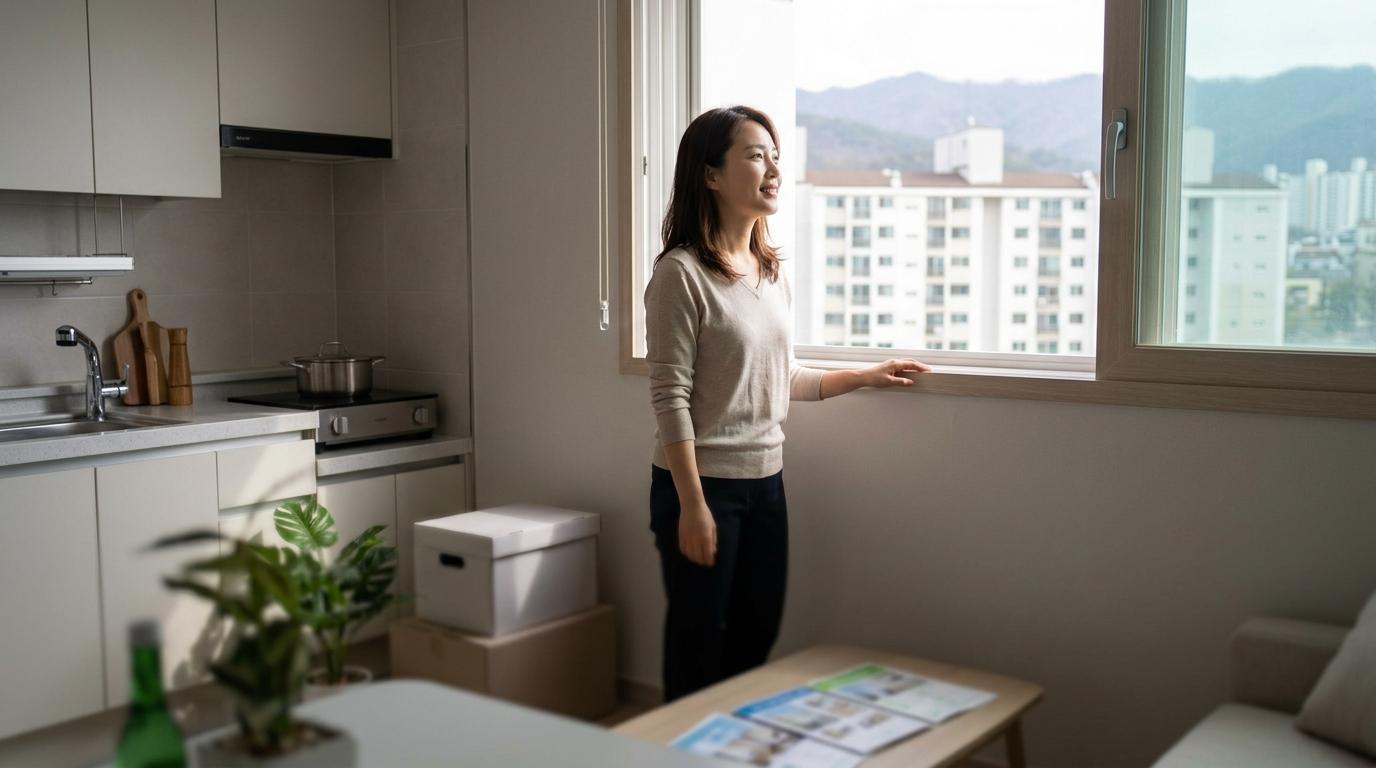
Purchasing an 'apartment' in South Korea with a budget of KRW 35 million is virtually impossible under current general market conditions. However, by expanding the definition of housing and strategically utilizing government funding and specific regional characteristics, one might explore the possibility of homeownership under very limited circumstances.
Housing Possibilities with a KRW 35 Million Budget: A Reality Check
Considering the reality of housing prices in South Korea and the position of KRW 35 million, this amount is often insufficient even for a down payment on an apartment in the South Korean real estate market. As of late 2023, the average apartment sale price in Seoul exceeded KRW 1.2 billion, with major areas in the Seoul metropolitan region also costing hundreds of millions of won. Even the average in Gyeonggi Province is in the KRW 400-500 million range, meaning KRW 35 million is less than 10% of the price of an apartment in the capital region. It's difficult to find apartments under KRW 100 million even in smaller provincial cities or rural areas, making it challenging to purchase even older apartments, let alone new ones, without substantial loans.
According to the Ministry of Land, Infrastructure and Transport's real transaction system, apartments priced below KRW 35 million are practically non-existent, or if found, are likely to have serious issues such as severe structural aging or fall under highly specific circumstances.
If we broaden the category of 'apartments' to explore housing types accessible with KRW 35 million, purchasing a traditional 'apartment' is difficult, but the following alternatives can be considered. While these options may not offer the same residential services as a standard 'apartment,' they focus on achieving the fundamental goal of 'securing housing.' Firstly, one could consider very aged, small villas or multi-family homes. Among housing types similar to apartments, some have seen their market value plummet due to low prospects for reconstruction or remodeling or poor living environments. Theoretically, auction properties where only land usage rights are held or where ownership of the building itself is partial could also be an option, but it's crucial to recognize the significant legal and practical limitations. Finally, in remote rural or fishing villages with extremely low demand, very cheap houses might appear, but the likelihood of these being in 'apartment' form is slim. Therefore, it is more realistic to approach this budget by broadening the scope to include some forms of multi-family housing like 'houses' or 'villas.'
Strategic Approaches to Securing Housing with a KRW 35 Million Budget
Maximizing the use of government policy funds should be the top priority. With only KRW 35 million, purchasing an apartment in the South Korean real estate market is practically impossible. Therefore, actively utilizing government low-interest loan and housing support policies is essential. Programs like the 'Didimdol Loan' or 'Beotimtok Jeonse Fund Loan' can offer low-interest loans up to KRW 250 million for eligible candidates, including first-time homebuyers, newlyweds, and unhoused heads of households. This allows a significant portion of the total housing purchase cost to be covered by loans, in addition to the KRW 35 million in savings.
Additionally, rental housing systems like LH Happy House and National Rental Housing, designed for vulnerable populations, or special supply programs and low-interest loan programs linked to residential environment improvement projects in specific regions can be realistic alternatives. Furthermore, utilizing housing purchase subsidies or low-interest loan schemes provided by local governments for returning farmers/fishermen or new residents can significantly reduce the financial burden. These policy funds, combined with the KRW 35 million cash reserve, play a crucial role in expanding the range of purchasable housing.
Targeting 'urgent sales' and the auction market is another strategy. Given the difficulty of finding an apartment for KRW 35 million in the regular market, 'urgent sale' properties, often priced far below market value due to debt defaults, inheritance issues, or urgent need for funds, may occasionally appear. These require consistent searching on real estate information sites or through real estate agents. The court auction market also presents opportunities for properties to be re-auctioned at significantly lower prices than their appraised value. With a KRW 35 million budget, analysis of properties that have been repeatedly passed over in auctions (not initial auctions) is necessary, and thorough preliminary research, including costs for eviction, repairs, and ancillary expenses, is essential.
In some provincial areas, villas or multi-family homes that are very small or old, and not in apartment form, may be purchasable with KRW 35 million. For such properties, local market prices and regulations must be carefully examined. For instance, assuming the purchase of an older villa priced at KRW 70 million, the KRW 35 million could be used for initial costs like the deposit, acquisition tax, and registration fees, with the remaining KRW 35 million covered by a mortgage or policy loan. In this scenario, a loan might be possible under a 50% loan-to-value (LTV) ratio, but if the collateral value is low, the loan limit could be reduced, or a loan might not be possible depending on income and creditworthiness. Therefore, pursuing these niche markets demands very proactive and consistent information gathering.
Risks and Alternatives When Purchasing Housing with KRW 35 Million
The risks and hidden dangers of low-priced housing must be thoroughly analyzed. Securing housing with an extremely low budget of KRW 35 million entails considerable risks. Housing in this price range is often severely aged, requiring extensive repairs for insulation, plumbing, and structure, which can lead to unexpected and substantial repair costs. Furthermore, the low transaction volume and poor living environment mean it's difficult to sell at a good price later or that the value may decline, increasing uncertainty in moving or financial planning.
Legal and administrative constraints are also unavoidable. Properties with only land usage rights or those where shares are up for auction can be prone to legal ownership disputes and may have limitations on their functionality or usability as housing. For example, housing with only land usage rights can lead to complex relationships with the landowner and may face restrictions on expansion or reconstruction under building codes. These risk factors must be thoroughly identified beforehand, and one should only proceed within manageable limits.
As a realistic alternative, focusing on 'stable residency' rather than 'ownership' may be wise. Instead of insisting on 'apartment ownership' with KRW 35 million, utilizing long-term public rental housing provided by entities like LH and SH can secure stable residency at low rents, offering a way to maintain housing quality while reducing costs. Residing in a jeonse (lump-sum deposit rental) or monthly rental property, consistently saving money, and waiting until one can combine savings with government policy funds could be a safer and more efficient homeownership strategy in the long run.
Additionally, inquiring at local government housing welfare centers or related institutions in your desired residential area can help reduce uncertainty by providing consultations and information on various housing support policies tailored to individual circumstances. For instance, the government operates diverse housing support policies for youth, newlyweds, and low-income households, and these programs can be maximized through consultations with experts. Ultimately, with a KRW 35 million budget, focusing on 'stable housing' rather than 'ownership' itself and establishing a long-term plan is a prudent approach.