Urgent Need for Fundamental Solutions as Antibiotic-Resistant Bacteria Rise

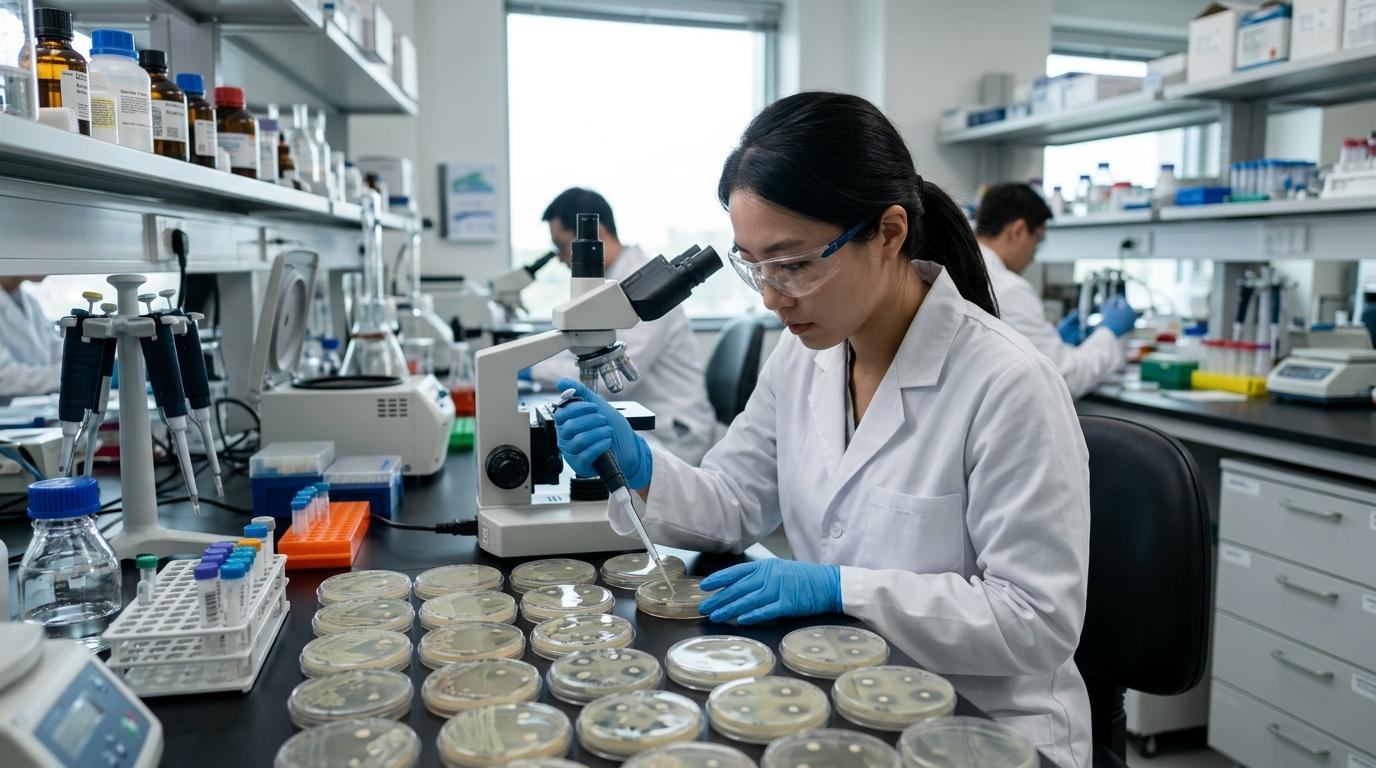
As an urgent need arises for fundamental solutions to the growing problem of antibiotic-resistant bacteria, the explosive increase in these pathogens represents not just a challenge in treating infectious diseases, but an 'invisible pandemic' threatening humanity's future health. It is crucial to develop multifaceted solutions that fundamentally improve the current culture of misuse.
I. Antibiotic Resistance: How Did We Reach the End of a Miracle Era?
In the unending war against bacteria, examining the birth of antibiotics and their dual nature reveals that while antibiotics were hailed as a miracle of 20th-century medical advancement, saving countless lives, their effectiveness is waning amidst the relentless evolutionary battle with bacteria. Bacteria proliferate rapidly, exchange genetic information, and adapt to environmental changes. The overuse and misuse of antibiotics, essential for treating severe bacterial infections that are difficult to manage with the human immune system alone, directly contributes to strengthening bacterial defense mechanisms.
The danger of antibiotic-resistant bacteria, referred to as the 'invisible pandemic,' lies in the fact that antibiotic resistance (AR) is a phenomenon where bacteria no longer respond to specific antibiotics, leading to the emergence of 'superbugs' that make infectious disease treatment impossible. This causes infections difficult to treat with existing antibiotics, leading to prolonged hospital stays, increased medical costs, and elevated mortality rates – a severe public health threat recognized globally. The World Health Organization (WHO) projects that by 2050, 10 million people will die annually due to antibiotic resistance, a grim forecast that could surpass cancer-related deaths.
Tracing the hidden roots of misuse, intertwined from healthcare to agriculture, fisheries, and livestock, the primary cause of increased antibiotic-resistant bacteria is the excessive and improper use of antibiotics. Prescribing antibiotics for viral infections, arbitrarily discontinuing medication upon symptom improvement, and the preventive use of antibiotics not only in humans but also in the agricultural and livestock sectors are accelerating bacterial resistance. In low- and middle-income countries, issues such as inadequate sanitation, accessibility problems (over-prescription or illegal distribution), and a lack of diagnostic capabilities further exacerbate the resistance problem.
Assessing our society's vulnerability to antibiotic resistance, statistics highlighting the fear of 'superbugs' indicate that millions of deaths worldwide are estimated annually due to antibiotic-resistant bacteria. In the European Union (EU), approximately 33,000 deaths occur each year from antibiotic-resistant infections, a figure higher than the combined deaths from AIDS, tuberculosis, and influenza. The U.S. Centers for Disease Control and Prevention (CDC) reports over 2 million infections and more than 23,000 deaths annually. South Korea also shows high rates of hospital-acquired antibiotic-resistant infections and an increasing frequency of specific resistant strains, directly leading to treatment difficulties and immense social and economic costs. The Korea Disease Control and Prevention Agency (KDCA) is responding with measures like the 'National Antibiotic Resistance Management Plan' based on this severity.
Regarding the structural issues fueling misuse – a dilemma involving patients, healthcare professionals, and policy – frontline medical settings often prescribe broad-spectrum antibiotics preemptively due to time constraints in accurate diagnosis or patient demand. Furthermore, patients frequently discontinue medication upon symptom relief or purchase antibiotics without a prescription, leading to misuse. South Korea ranks among countries with high antibiotic consumption within the OECD, and indicators suggest that high prescription rates for community-acquired infections (outpatient) are widespread. This complex dilemma involving patients, healthcare providers, pharmacies, and government policies deepens the culture of misuse.
The lack of individual attention and social awareness accelerating this 'silent pandemic' is also severe. Many people do not perceive antibiotic resistance as a serious threat or believe antibiotic misuse is unrelated to them. This individual apathy and low social awareness act as major obstacles to implementing policies or encouraging individual action. Experts point out the critical need for enhanced communication between doctors and patients and clearer education for patients on how to use antibiotics correctly.
II. Solutions for the Future: How to Overcome Antibiotic Resistance?
The most pressing task for establishing a precision diagnosis and treatment system based on science and technology is to clearly distinguish between 'bacterial infections' and 'viral infections' and to strengthen diagnostic systems that can rapidly identify which bacteria are susceptible to which antibiotics. Distributing high-sensitivity rapid diagnostic kits, expanding resistance gene testing, and establishing principles for personalized antibiotic prescription based on drug susceptibility testing are key measures that can drastically reduce unnecessary antibiotic use. Related agencies, such as the KDCA, are supporting the development and distribution of these diagnostic technologies.
To strengthen an integrated management system from a 'One Health' perspective, antibiotic resistance must be approached from the standpoint that all ecosystems – including humans, animals, and the environment – are interconnected. In the agriculture, fisheries, and livestock sectors, reducing antibiotic use, developing alternatives, prohibiting preventive use, and establishing rigorous hygiene management systems are essential. Efforts must also be made to prevent the spread of antibiotics and resistant bacteria into the environment through improvements in wastewater treatment facilities. This provides a comprehensive approach to preventing the spread of antibiotic resistance.
To enhance antibiotic resistance prevention and education and foster a culture of responsible use, large-scale educational campaigns and public awareness initiatives about the risks of antibiotic resistance and correct usage methods are necessary. Within healthcare institutions, strengthening antibiotic use guidelines, establishing usage monitoring systems, and expanding dedicated infection control personnel are crucial. Patients must be encouraged to take antibiotics as prescribed for the full duration, without arbitrary discontinuation or sharing with others, demonstrating a responsible attitude. Doctors must clearly guide patients on the correct way to use antibiotics. These efforts are expected to lead to changes in individual awareness and establish a culture of responsible use throughout society.
As existing antibiotics lose their effectiveness, national and international investment in the development of new antibiotics and research into alternative treatments must be significantly expanded. Supporting the development of various new technologies such as bacteriophage therapy, immunotherapy, and probiotics, and fostering an innovative research environment for overcoming resistant bacteria will be long-term solutions for the future. With a diminishing pipeline for new antibiotic development, such research investment is recognized as an essential measure to protect human health.