Climate Change: Scientific Issues and Solutions

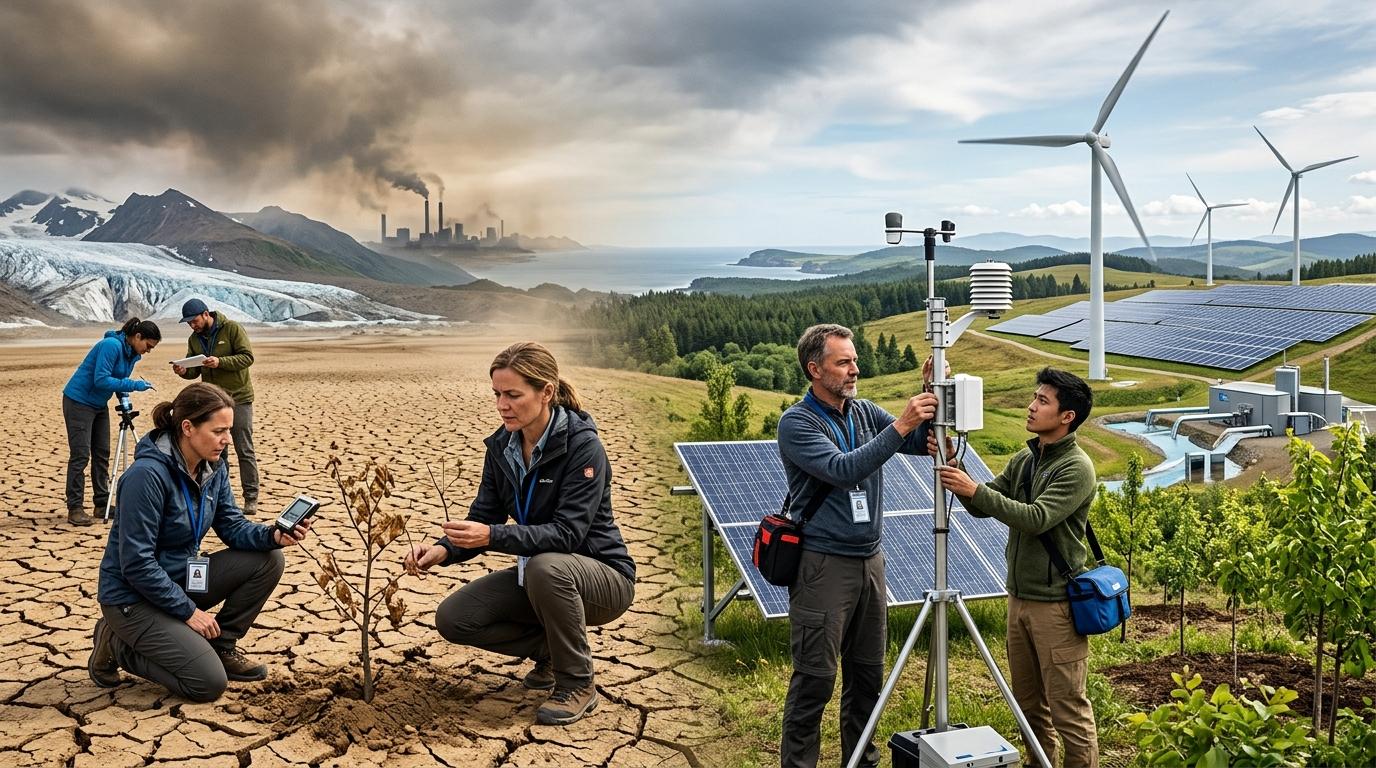
Climate change, marked by complex shifts across the Earth's systems due to the surge in greenhouse gases post-industrialization, is presenting more severe scientific challenges, including the potential arrival of 'tipping points' that increase prediction uncertainty. In-depth understanding coupled with practical solutions and actions, from individuals to society at large, is urgently needed.
At the forefront of climate change science, the Earth system is already flashing red warnings, with unprecedented rates of global warming and complex impacts being confirmed. The rise in global average temperature, approximately 1.1-1.2°C above pre-industrial levels, is proceeding at a pace far exceeding natural variability over millennia. This temperature increase is not merely about 'getting warmer'; it is amplifying the frequency and intensity of extreme weather events globally, such as heatwaves, heavy rainfall, droughts, and typhoons. Rising sea levels exacerbate the risk of coastal inundation, while ocean acidification and deoxygenation pose severe threats to marine ecosystems. These climate change impacts interact, increasing the likelihood of unpredictable outcomes.
'Tipping points' represent thresholds for irreversible change and are a primary concern for climate scientists. They describe phenomena where a system undergoes sudden and irreversible shifts once a certain critical limit is crossed. Examples include the release of vast amounts of methane as Arctic permafrost melts, the transformation of the Amazon rainforest into a savanna due to drying, and the collapse of the massive ice sheets in Greenland and Antarctica leading to rapid sea-level rise. The IPCC's Sixth Assessment Report (AR6) warns that there is a greater than 50% probability of exceeding 1.5°C of global average temperature rise in the short term, with a growing possibility of exceeding 2°C. It analyzes that these tipping points are likely to be activated within the 1.5°C-2°C warming range. If tipping points trigger a cascade, the Earth's climate could enter a severe phase beyond human control.
Despite increasingly precise predictive models, considerable uncertainty persists. While climate modeling technology is continuously advancing, it still faces limitations in perfectly capturing the complex interactions within the Earth system, particularly the role of aerosols, cloud physical processes, and non-linear responses like tipping points. These limitations increase uncertainty in predicting the speed and scale of future climate change, making preparations for worst-case scenarios more difficult. Currently, scientists are relentlessly conducting research across various fields to reduce this uncertainty and perform more accurate risk assessments. For instance, research quantifying the probability of extreme weather events occurring due to climate change (attribution science) is advancing, clarifying how much more likely and intense individual events have become.
Climate Change: Practical Approaches to Seeking Solutions
Enhancing individual awareness and strengthening responsible action are paramount. Addressing climate change is not only a scientific challenge but also a matter directly connected to each of our lives. Therefore, an accurate understanding of the severity and scientific basis of climate change is essential. Acquiring the latest information through documentaries, scientific books, and reports from credible research institutions, and deepening knowledge through educational programs or workshops, are vital steps. Furthermore, it is crucial to recognize the climate impact of one's consumption habits and to practice specific measures to reduce one's carbon footprint. Such individual actions form the foundation for societal transformation.
Beyond individual actions, effective solutions require the establishment of collective efforts built through systematic learning and experience. Pursuing higher education in environmental science or Earth system engineering, or conducting graduate research, can build expertise. Engaging in science club activities allows for analyzing climate change data with peers and exploring practical solutions. Participating in civil society organizations or NGOs, joining climate change campaigns, and contributing to policy proposal activities play a significant role in driving social change. These collective endeavors empower individuals and accelerate society-wide transformation.
Accelerating societal system transition through technological innovation and policy support is a key driver for climate change response. Research to enhance the efficiency of renewable energy technologies like solar and wind power, advancements in energy storage, development of Carbon Capture, Utilization, and Storage (CCUS) technologies, and the adoption of sustainable agricultural and construction practices are essential for decarbonizing industrial structures. Governments must expand R&D investment for such technological development. Additionally, robust policy support, including the introduction of carbon taxes, renewable energy subsidies, and the promotion of eco-friendly industries, should accelerate systemic transitions across society. Furthermore, strengthening international cooperation to integrate global climate change response efforts and exploring ways to improve access to climate technologies for developing countries are also necessary. A multi-faceted approach is required to solve complex problems such as accelerating sea-level rise, threats to food and water security, and the strengthening link between climate change and health.