Korea's Annual Working Hours to Enter 1700s; Structural Reforms Needed for Sustained Decline

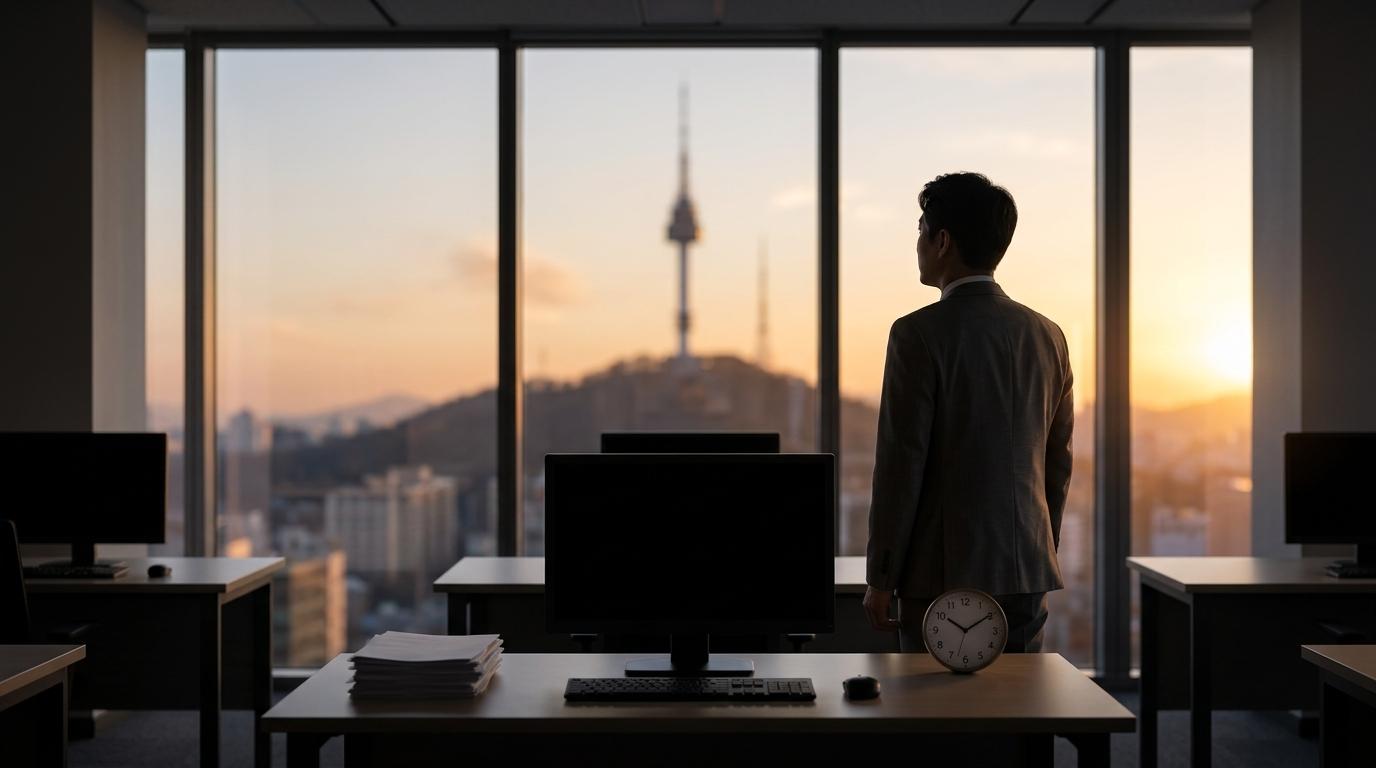
Contrary to government targets, South Korea's annual working hours are projected to reach the low 1700s by 2030. Experts point out that it will be difficult to continue the trend of decreasing working hours without further institutional improvements. A report commissioned by the Ministry of Employment and Labor and analyzed by the Korean Academic Society of Labor Relations predicted that domestic annual working hours would reach 1,739 in 2030, aligning with the government's goal of reducing working hours to the OECD average by 2030.
Domestic annual working hours have been steadily decreasing. Working hours, which stood at 1,996 in 2017, fell to 1,859 in 2024, influenced by institutional changes such as the introduction of the 52-hour workweek. However, this reduction has primarily relied on a 'decrease in the proportion of long working hours exceeding 40 hours per week,' revealing structural limitations. It is analyzed that the pace of reduction is likely to slow without additional institutional improvements, as long working hours have already been significantly reduced.
When compared internationally, South Korea's working hours remain high. It is the sixth-longest among OECD member countries, showing a significant gap with major European countries like Germany, the Netherlands, and France. It is longer than Japan's and still higher than the U.S., which is also above the OECD average.
The report identifies 'uniformity in working hour patterns' as a structural cause for Korea's long working hours. While workers on a 40-hour week constitute more than half, major European countries have widespread diverse part-time work arrangements, which act as a factor constraining the reduction of working hours. Vacation usage culture also shows differences. Domestically, the proportion of temporary leave during the summer is only around 3%, whereas it reaches 50% in major European countries. Unlike Europe, where long-term leave is actively used, the domestic environment imposes significant restrictions on using annual leave consecutively.
The report suggests expanding choices for working hours, diversifying the unit of working hours, and increasing the utilization rate of annual leave. It also proposed establishing institutional foundations for periods of work suspension for reasons such as family care. The government is also speeding up the revision of related systems. The Ministry of Employment and Labor is pursuing a 'Roadmap for Reducing Actual Working Hours' and recently issued guidelines to prevent the misuse of comprehensive wage systems, clarifying the additional payment for overtime exceeding 'fixed OT.' The revision of the related Labor Standards Act is also being pursued for parliamentary approval.