North Korea Revises Constitution, Designates Chairman of State Affairs as Head of State, Includes Basis for Nuclear Force Use

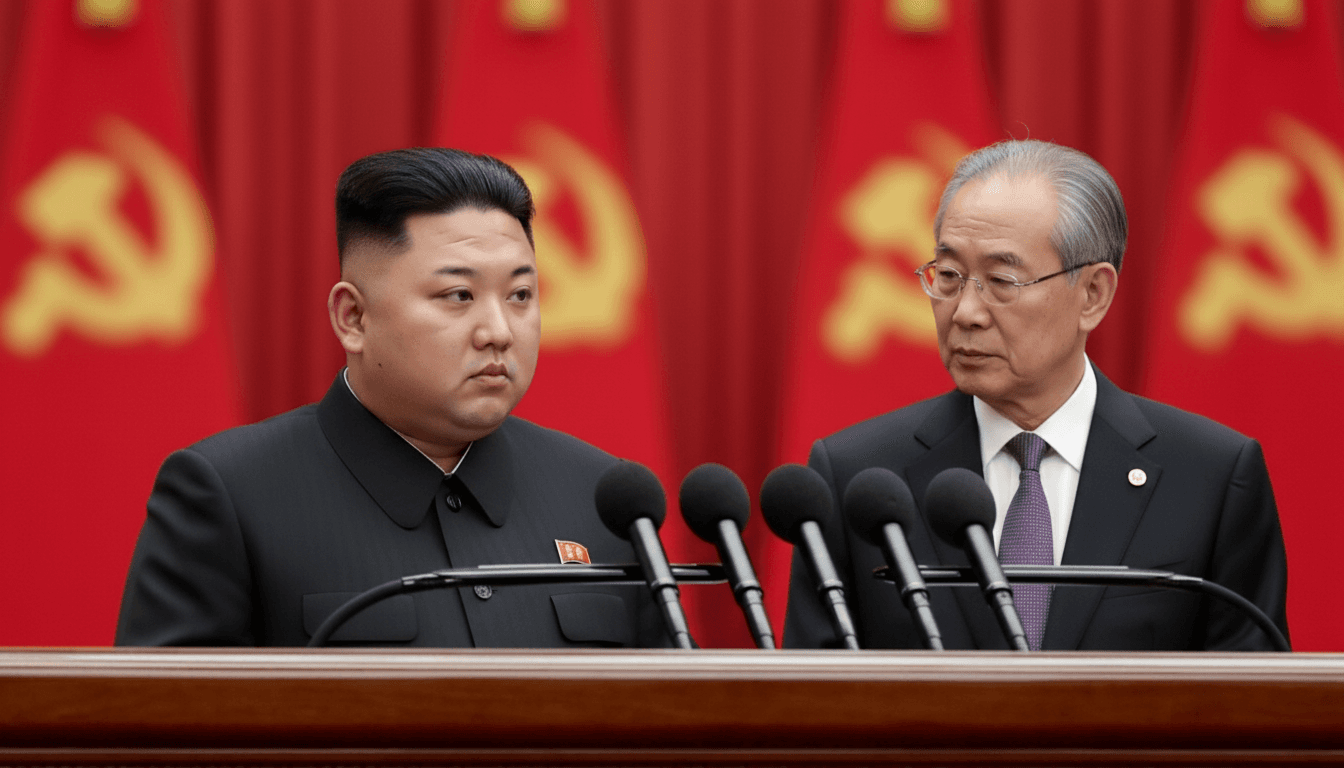
North Korea has amended its constitution, explicitly designating the supreme leader, the Chairman of the State Affairs Commission, as the 'Head of State,' and for the first time, incorporating the basis for the use of nuclear forces into the constitution. This revision reflects changes in national identity and foreign policy direction, stemming from Kim Jong Un's designation of inter-Korean relations as 'hostile' at the end of last year, signaling a 'two states' approach. However, hostile phrases such as designating South Korea as the 'first enemy' were not included.
The revised constitution defines the Chairman of the State Affairs Commission as the 'Head of State' and places the position first in the order of state bodies. This marks the first instance in North Korea's constitutional history where the Chairman of the State Affairs Commission precedes the Supreme People's Assembly. Furthermore, new provisions have been established regarding the Chairman's command authority over nuclear forces and the delegation of such authority, constitutionally underpinning Chairman Kim's final and exclusive power over the use of nuclear weapons. Chairman Kim's authority to 'appoint and dismiss important officials' now includes the 'Chairman of the Supreme People's Assembly' and the 'Premier of the Cabinet,' while the Supreme People's Assembly's power to recall the Chairman of the State Affairs Commission has been deleted, effectively abolishing this check and balance.
Ideologically, 'Kim Il Sung-Kim Jong Ilism' has been removed, and 'People First (Inmin Daejung Jeiljuui),' Kim Jong Un's ruling ideology, has been newly enshrined in the preamble. Phrases from past North Korean constitutions such as 'complete victory of socialism' and 'free medical care' have also disappeared.
The revised North Korean constitution defines its territory as: 'The territory includes the land bordering the People's Republic of China and the Russian Federation to the north, and the Republic of Korea to the south, as well as its territorial sea and airspace based on this land.' This is the first time North Korea's constitution has defined its territory. Provisions related to unification and relations with compatriots, such as 'fatherland unification' and 'northern half,' have been deleted, as have combative expressions like 'imperialist aggressors.'