Labor Disputes Over AI Adoption Threaten the Future of Korean Manufacturing

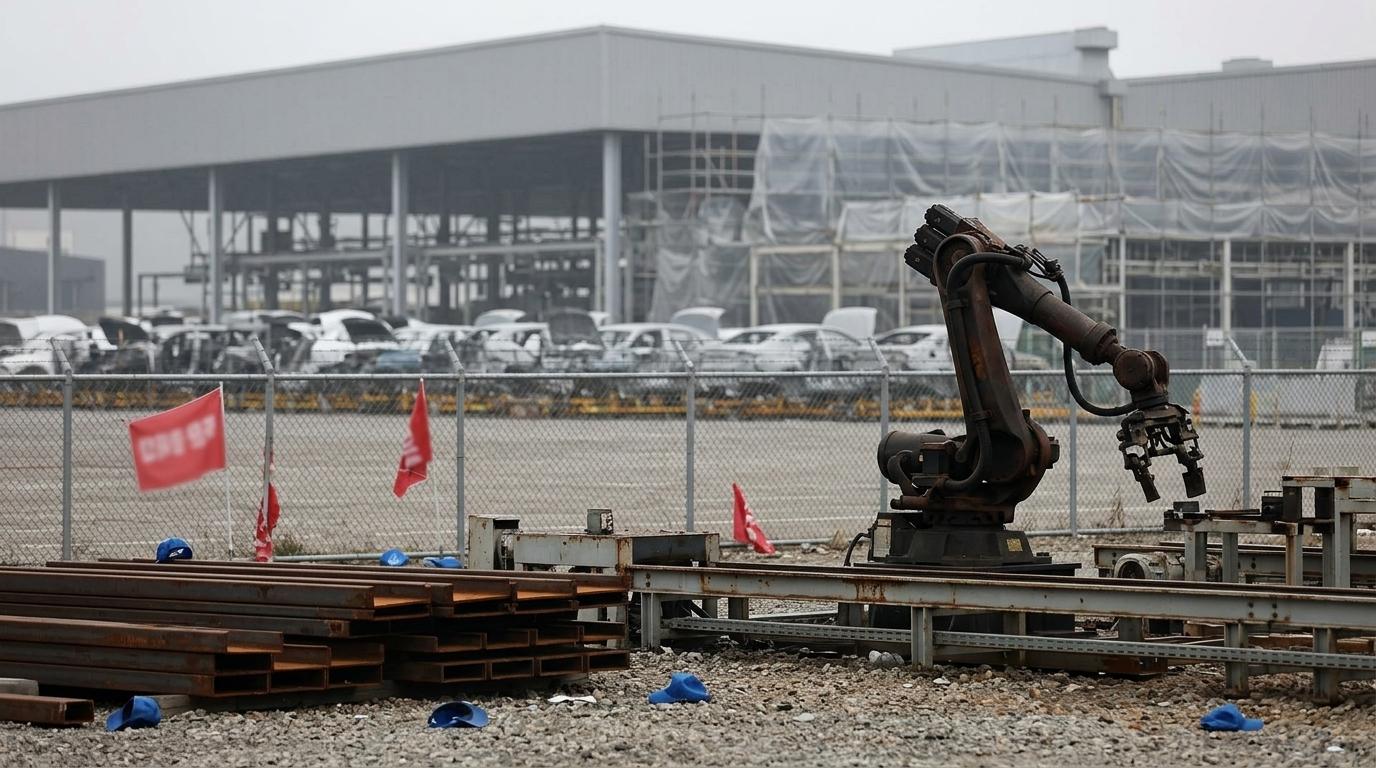
Deepening labor-management conflicts at major domestic companies over the adoption of AI and robots are pushing South Korean manufacturing towards a crisis. These disputes risk accelerating industrial hollowing out through reduced domestic investment and the relocation of production bases overseas. The nation's manufacturing sector stands at a critical juncture, facing a decision point on whether to achieve an innovative leap forward in the era of the Fourth Industrial Revolution or be left behind, mired in regulations and disputes.
On May 13, the Hyundai Motor Union held a rally at its Ulsan plant to demonstrate its commitment to achieving its demands in this year's wage and collective bargaining negotiations. A key point of contention in this negotiation is whether the company will accept the union's demand to mandate labor-management agreement on the introduction of AI and robots. Citing analyses that one robot can replace the work of three skilled laborers, the union's strategy is to secure practical veto rights over technology for job preservation.
Meanwhile, the Samsung Electronics Super Union is also escalating its collective action, demanding transparency in performance bonus calculations and fair compensation for technological innovations, in line with performance improvements driven by the AI semiconductor boom. The business community is closely watching the outcome of the collective agreements at these two companies, as they could serve as negotiation guidelines for approximately 500 metal industry workplaces and the IT ecosystem nationwide.
Behind the labor-management conflicts at these two companies lies the proposed amendment to the Labor Union Act (often referred to as the 'Yellow Envelope Law'). This bill would require that the effectiveness of management decisions, such as the introduction of robots, be subject to union consent. If a mandatory agreement system for technology adoption is codified, concerns are rising about a decline in the national real economy. Simulations by the investment banking industry suggest that a one-year delay in process innovation at Hyundai Motor's Ulsan plant could incur an opportunity cost of 2.5 trillion won annually. According to a survey by the Korea Employers Federation, 68% of domestic manufacturers cited strong unions and legal regulations as the top reasons for avoiding investment.
The Hyundai Motor Group is already in the process of relocating production volumes to overseas sites like its Metaplant in the United States. Germany's 'Industry 4.0' model offers a win-win approach, where profits generated by AI adoption are reinvested in job retraining for workers or redeploying personnel to areas like Software Defined Vehicles (SDVs). Critics point out that a lack of official interpretations or administrative guidelines from the government is exacerbating confusion on the ground.
The current negotiations between labor and management at Samsung and Hyundai Motor serve as a testbed determining whether Korean manufacturing will overcome the challenges of the Fourth Industrial Revolution or lose competitiveness and become obsolete due to delays in technology adoption.
