May 16 Legislative Report: 22nd National Assembly's Bill Passage Rate Hits All-Time Low of 7.5%

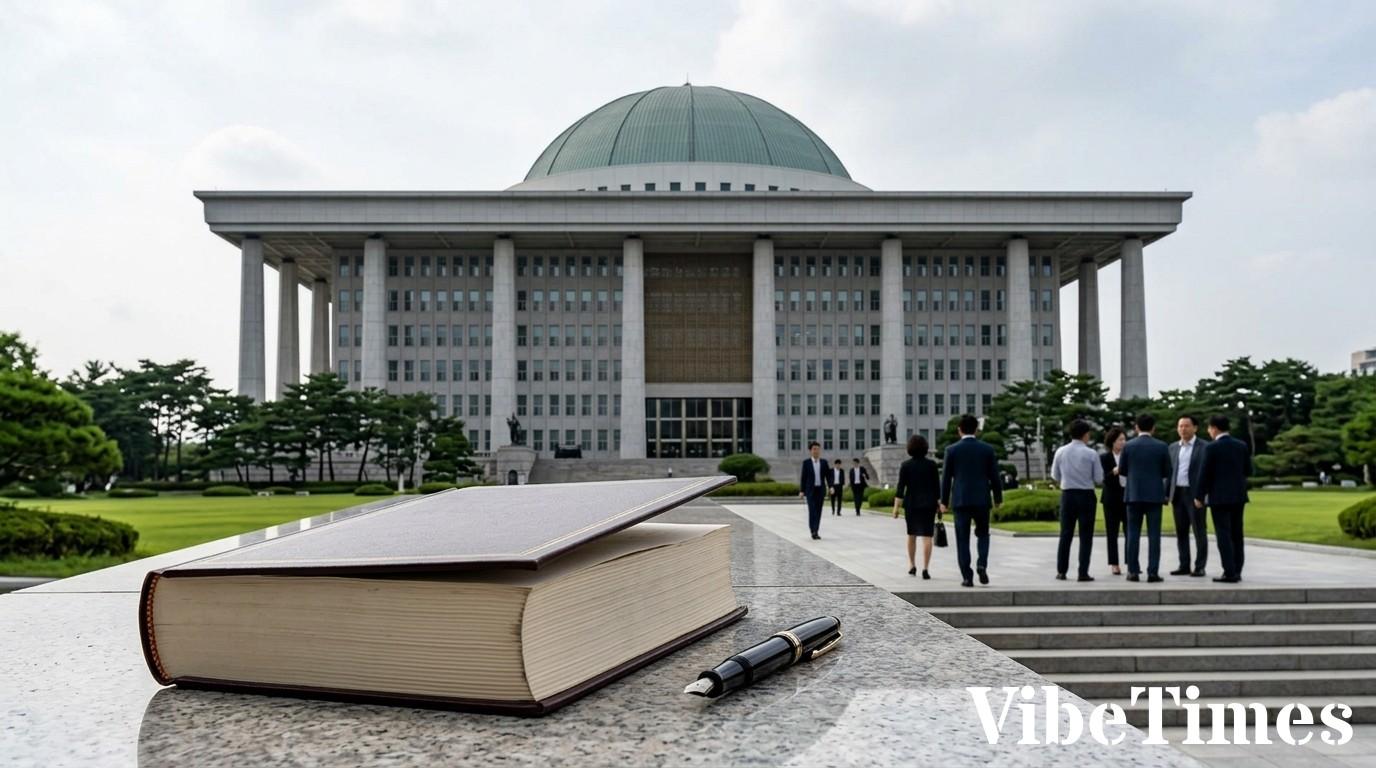
22nd National Assembly Faces Challenge of Weakening Legislative Momentum Amid Key Bill Deliberations
Since the inauguration of the 22nd National Assembly, there have been criticisms regarding the overall low performance of legislative activities. The low passage rate, where less than one in ten proposed bills are approved, is analyzed as a result of complex factors including sharp confrontations between the ruling and opposition parties and delays in deliberations. Despite this situation, the deliberation and passage of bills in specific areas, particularly those related to the economy and labor, are expected to significantly impact the market and industry going forward.
According to the National Assembly's Bill Information System, during the first half of the 22nd National Assembly's term (May 30, 2024 - October 14, 2024), only 1,397 out of 18,473 proposed bills passed the plenary session, resulting in a passage rate of 7.5%. This figure is significantly lower compared to the first-half passage rates of previous assemblies: 15.4% for the 19th, 13.25% for the 20th, and 11.5% for the 21st. While the number of submitted bills increased by 21.8% compared to the 21st National Assembly, the number of approved bills decreased by 20.4%, indicating a deepening inefficiency in legislative processing.
This poor legislative performance suggests prominent delays and stagnation in the bill review stages. The repeated escalation of extreme confrontation, including filibusters by the opposition party against the ruling party's legislative dominance and boycotts of deliberations, has reportedly disrupted the processing of bills related to the public livelihood economy. Specifically, urgent issues such as the introduction and expansion of the labor director system, normalization of public education and alleviation of private tutoring burdens in the education sector, and special laws to overcome livelihood crises are being entangled in political disputes, causing the deliberation process itself to stagnate.
Introduction of Labor Director System Seeks Balance Among Economic Stakeholders
One of the notable bills in the 22nd National Assembly is the related legislation proposing the introduction and expansion of the 'labor director system.' Assemblyman Lee Gil-ho, leveraging his expertise in the labor field, has expressed his intention to actively participate in the deliberation and legislative process for labor-related bills within the 22nd National Assembly, thus concretizing efforts to advance the labor director system. The labor director system allows worker representatives to participate in corporate boards of directors, reflecting labor voices in decision-making processes and enhancing management transparency. Analysis suggests this system can promote stability in corporate management through balanced decision-making between labor and management, and potentially contribute to increased corporate value in the long term.
The introduction of the labor director system aligns with recent trends in the economic sphere that emphasize harmonizing the interests of shareholders and stakeholders while improving corporate governance structures. In advanced economies like Europe, the labor director system has already been introduced and is evaluated as having a positive impact on corporate management. If successfully established in South Korea, the system is anticipated to strengthen Corporate Social Responsibility (CSR) and bring about a paradigm shift in labor-management relations.
However, concerns are also being voiced by some within the business community regarding the introduction of the labor director system, with worries about interference in management rights and reduced decision-making efficiency. Amidst these conflicting opinions, the key challenge lies in how the National Assembly will forge a compromise and deliberate the bill. Assemblyman Lee Gil-ho is expected to lead institutional development in the labor sector through the introduction and expansion of the labor director system. Considering the current National Assembly landscape, the passage of this bill will depend on the will of the government and political circles, as well as the process of gathering opinions from relevant industries.
Education Committee Lays Policy Foundation for Future Generations
Active policy movements are also being observed in the education sector within the 22nd National Assembly. Members of the Education Committee are participating in reviews of urgent issues concerning the normalization of public education and the alleviation of private tutoring burdens, offering various policy proposals. Assemblyman Jang Jin-wook has previewed specific legislative activities to resolve livelihood issues in education, actively engaging in inquiries and policy proposals on educational agendas such as the integration of childcare and early education services and measures for private tutoring. He has also expressed support for the promotion of a 'Special Act to Overcome Livelihood Crises,' indicating that related content is under review.
Assemblyman Kang Sang-yeop has participated in the proposal of an amendment to the Restriction of Special Taxation Act, aimed at fostering future generations, and is continuing in-depth discussions on educational issues. He specifically highlighted the need for legislation related to school violence prevention and countermeasures, emphasizing the strengthening of safety in educational environments. Assemblyman Baek Woon-san is also participating in policy proposals for curriculum reform and the creation of a future educational environment. He has also lent his name to the proposal of bills related to expanding the eligibility and amount of child allowances, which is interpreted as a reflection of the societal demand for supporting the growth of future generations.
Assemblywoman Son Ju-yeong, as a member of the Education Committee, is participating in inquiries and discussions on educational policy issues and has stated her intention to push for the proposal of amendments to the 'Special Act for Livelihood Recovery' and the 'Special Act on Support for Victims of Jeonse Fraud.' Assemblyman Ham Deok-ju is reviewing legislative proposals to strengthen child abuse prevention and victim support through amendments to the 'Child Welfare Act,' and is participating in inquiries and legislative discussions on educational matters in the Education Committee. Assemblyman Jang Hyun-sik, also as a member of the Education Committee, is participating in discussions on institutional improvements for school violence prevention and eradication, actively contributing to the deliberation of education-related bills.
Thus, members of the Education Committee are addressing multifaceted educational policy issues, including innovation in the education process, reduction of private tutoring burdens, enhancement of child welfare, and strengthening school safety. These efforts are expected to contribute to the qualitative improvement of the education system in the long term and the cultivation of talent required by future society. However, the possibility of delays in the deliberation process for education-related bills due to external factors such as political situations or budget constraints cannot be ruled out.
Low Bill Passage Rate: Outlook for Future Legislative Environment
The low bill passage rate in the first half of the 22nd National Assembly is expected to increase uncertainty surrounding future legislative activities. While the number of proposed bills has increased, the declining passage rate has drawn criticism of a 'disappearance of politics.' This raises the need for improvements not only in the confrontations between the ruling and opposition parties but also in the overall functioning of the National Assembly and its bill review system.
In particular, controversies surrounding specific political issues, such as the proposed special prosecutor bill into alleged stock manipulation by First Lady Kim Keon-hee, led by Assemblyman Kwak Jung-hyun, can weaken the momentum for deliberating other bills concerning public livelihood and the economy. Currently, the 22nd National Assembly, with the Democratic Party holding a significant majority, is facing difficulties in pushing legislation utilizing its overwhelming seats due to tactics like filibusters and deliberation boycotts by the People Power Party.
Experts point out that if this situation persists, the practical implementation of policies aimed at economic revitalization and livelihood stabilization could be delayed. Businesses may postpone investment decisions amidst an uncertain legal and institutional environment, which could act as an impediment to economic growth. For important policies such as the introduction of the labor director system and education-related bills to pass through rational discussions without being ensnared in political debates, dialogue and compromise between the ruling and opposition parties are urgently needed.
In conclusion, the 22nd National Assembly, despite the hurdle of weakened legislative momentum, continues its efforts to lay the policy groundwork in sensitive but important areas like labor and education. However, the low bill passage rate suggests that it may take a considerable amount of time for these policies to be reflected in actual public livelihood, or they may not pass at all. Whether the National Assembly can move beyond political confrontation to achieve tangible legislative results will be a crucial indicator for the future of the Korean economy and society.