22nd National Assembly Hits Record Low 7.5% Bill Passage Rate

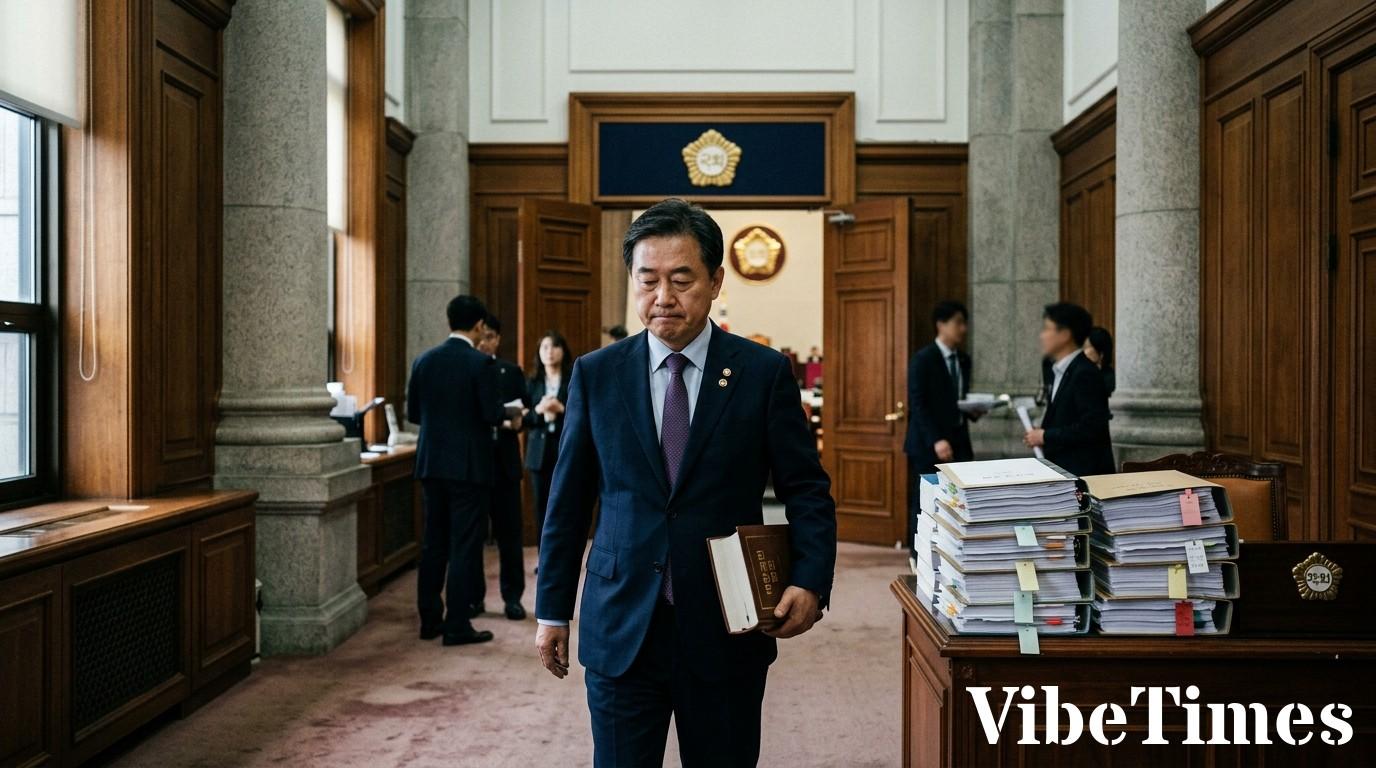
22nd National Assembly Records All-Time Low 7.5% Bill Passage Rate, Deepening Legislative Gridlock
As the first half of the 22nd National Assembly concludes on the 29th of this month, the bill passage rate has fallen to an all-time low of 7.5%. This figure represents a significant drop compared to the same period in the 21st National Assembly and is attributed to sharp inter-party confrontation and extreme conflict, which are delaying the processing of even vital public welfare bills. The 22nd National Assembly, launched amidst a minority ruling party/majority opposition configuration, experienced frequent clashes from its inception. Even during its reconfiguration to a majority ruling party/minority opposition scenario following political upheavals such as the 'December 3 Emergency Martial Law' incident and the inauguration of the 'Lee Jae-myung administration,' it failed to secure legislative momentum.
According to the National Assembly's legislative information system, the passage rate for bills processed since the 22nd National Assembly convened in May 2024 stands at a mere 7.5%. This indicates a low volume of passed legislation, starkly illustrating the difficulty for complex and contentious socio-economic issues to clear parliamentary hurdles. Specifically, politically sensitive matters such as the prosecution's demand for a special prosecutor's investigation into allegations of 'First Lady Kim Keon-hee's bribery,' the appearance of former Senior Presidential Secretary for National Security 1st Vice-Chief Kim Tae-hyo before a comprehensive special prosecutor, and former President Yoon Suk-yeol's motion to recuse the trial court have dominated parliamentary discussions. Consequently, public welfare bills directly impacting citizens' lives have been sidelined, according to critiques. A Gallup poll showing 44% opposed to granting 'prosecutorial misconduct special prosecutor' the right to withdraw indictments, compared to 27% in favor, indicates that public fatigue with democratic procedures is mounting due to overheated political debate.
Background of Legislative Gridlock: Extreme Party Conflict and Special Prosecutor Debates
The low bill passage rate of the 22nd National Assembly stems from the extreme confrontational dynamic between the ruling and opposition parties that has persisted since its inauguration. The opposition's obstructionist strategies, including filibusters aimed at preventing the 'ruling party's' legislative monopoly, coupled with the ruling party's counter-measures, have plunged the overall operation of the National Assembly into a state of gridlock. This transcends mere partisan wrangling, escalating into significant debates concerning constitutional values. The appearance of former Senior Presidential Secretary for National Security 1st Vice-Chief Kim Tae-hyo before a comprehensive special prosecutor, amid suspicions of delivering messages justifying the declaration of emergency martial law to the Ministry of Foreign Affairs, and the prosecution's demand for a 7-year and 6-month prison sentence in the special prosecutor's investigation into First Lady Kim Keon-hee's alleged 'bribery' have further heightened political tensions.
In particular, the prosecution's demand for a sentence against First Lady Kim Keon-hee, who is on trial for 'bribery' charges, has ignited political conflict surrounding judicial risks. Furthermore, the submission of a motion to recuse the trial court by former President Yoon Suk-yeol and former Minister of National Defense Kim Yong-hyun in their appeal trial for alleged insurrection has made it highly likely that the trial schedule will be delayed by at least a month. These circumstances compel the National Assembly to prioritize handling politically sensitive issues over resolving public welfare and economic challenges, consequently slowing down bill processing and dragging down the passage rate.
Amidst this situation, policy proposals by National Assembly members have also tended to focus on specific political orientations or contentious issues. For example, Assemblymen Ham Duk-ju and another unnamed assemblyman proposed 'strengthening digital transformation education' and 'expanding climate change response education' as policies for future generations. Assemblyman Jang Hyun-sik emphasized the importance of prosecutorial and judicial reform, framing it as a 'judgment of the Yoon Suk-yeol regime.' Assemblyman Gwak Jeong-hyeon, based on his profound interest in constitutional law, acted as a spokesperson for judicial reform pledges. Assemblyman Gwak Jae-sun (Chairman of KG Group) cited 'processing public welfare bills directly linked to people's lives,' 'improving the treatment of care workers,' and 'preparing measures for housing stability for single-person households' as key policy tasks. While this indicates that some assembly members are paying attention to concrete public welfare issues, it is assessed as insufficient to reverse the overall trend of weakened legislative momentum.
Future Outlook: Continued Difficulty in Bill Passage and Political Uncertainty
The low legislative performance of the first half of the 22nd National Assembly suggests that similar circumstances are likely to continue throughout its remaining term. Experts agree that it will be difficult to expect a rebound in the bill passage rate as long as fundamental differences in positions and political uncertainties between the ruling and opposition parties remain unresolved. In particular, politically sensitive matters such as demands for an investigation into the 'December 3 Emergency Martial Law,' judicial proceedings related to 'First Lady Kim Keon-hee,' and issues concerning former President Yoon Suk-yeol's trial could continue to hinder parliamentary discussions.
Such a situation can ultimately have a negative impact on the economy and industry as a whole. An uncertain legal and institutional environment can dampen corporate investment decisions and impede efforts to stimulate economic growth through the development of new industries or deregulation. For instance, in contrast to the news of the 'CLARITY Act' related to cryptocurrencies passing the U.S. Senate, there are concerns that, domestically, discussions on bills to foster related industries or improve the investment environment may not progress properly due to party confrontation. While the global market is changing rapidly, as exemplified by Bitcoin mining company IREN Limited completing a $3 billion convertible bond issuance with a 2033 maturity and a 1.00% annual interest rate, the domestic legislative environment is not responding swiftly.
Moving forward, the National Assembly faces the challenge of processing a backlog of bills. Although various policy directions have been presented, such as the 'Justice Party's' pledges for judicial reform and the 'People Power Party's' expression of will to restore the people's livelihood economy, sincere communication and compromise between the ruling and opposition parties are essential to complete and pass them into actual legislation. However, considering the National Assembly's operational methods to date, it remains uncertain whether such cooperation will be easily achieved. Therefore, the second half of the 22nd National Assembly is also likely to see stagnant legislative activities with a low bill passage rate, which will inevitably be perceived as a National Assembly failing to meet the public's expectations. For specific policies proposed by Assemblyman Lee Ga-hyeok on normalizing private tutoring and strengthening public education, and by Assemblyman Noh Gwan-gyu on preparing measures for the housing stability of the low-income class to be realized, the normal functioning of the National Assembly must be a prerequisite above all else.