22nd National Assembly Sees Record Low Bill Approval Rate of 7.5%

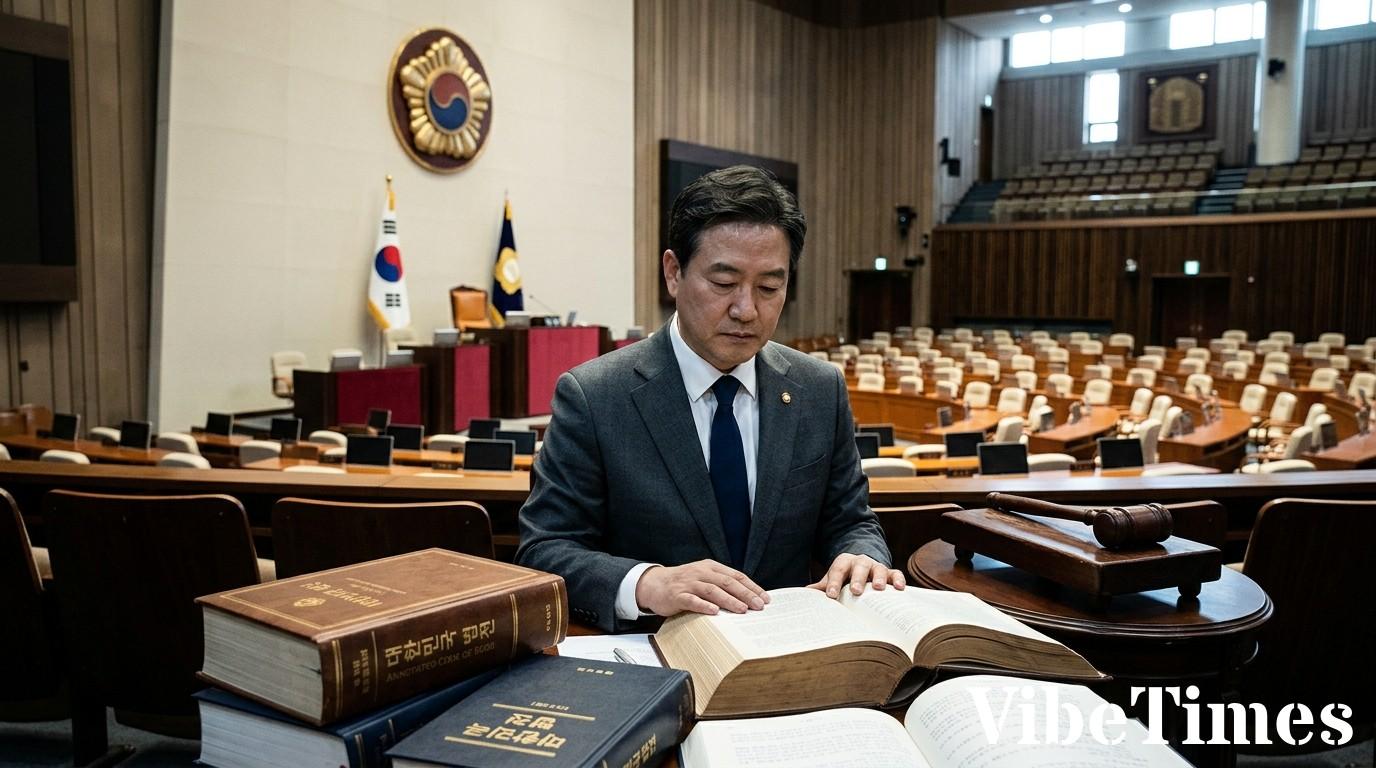
As the first half of the 22nd National Assembly concludes, concerns are growing over legislative activities, marked by an all-time low bill approval rate. According to the National Assembly's Bill Information System, the 22nd National Assembly, which convened in May 2024, has achieved a bill approval rate of just 7.5%. This represents a significant drop compared to the first half of the 21st National Assembly, with critics pointing to fierce inter-party confrontation as a cause for the delay in processing bills vital to public welfare.
From its inception, the 22nd National Assembly has been characterized by intense conflict within a minority ruling party and a majority opposition configuration. Issues related to judicial risks have further complicated parliamentary discussions, including the upcoming first-instance ruling for former National Intelligence Service Director Cho Tae-yong, who faces charges related to alleged plans for emergency martial law, and the prosecution's demand for a 7-year and 6-month prison sentence in the special prosecutor's case concerning First Lady Kim Keon-hee's alleged bribery. These events have heightened tensions in the legislative process, leading to a dynamic of confrontation rather than productive discussion.
The low bill approval rate during the first half of the Assembly's term is analyzed as a direct result of the parliamentary operational methods and strategic choices made by political parties. The ruling party's attempts at 'legislative dominance' and the opposition's strategic responses, such as employing filibusters, have made the legislative process exceedingly difficult. While the government and the ruling party emphasize the need to pass bills aimed at revitalizing the economy and public welfare, the opposition has focused on fulfilling its core role of checks and balances on government operations, leading to ongoing conflict. Consequently, numerous bills have been proposed but failed to find common ground, resulting in them being shelved or rejected, leading to an assessment of 'the worst ever' in terms of legislative achievements.
Legislative Gridlock Deepens Amid 'Legislative Dominance' and 'Filibuster' Battles
The low bill approval rate of the 22nd National Assembly is starkly evident in concrete data. The 7.5% approval rate since the Assembly's opening in May 2024 signifies a substantial legislative stalemate. This suggests that the issue is not merely one of bill quality but rather that fierce power struggles and conflicting party interests within the political arena are hindering the fundamental functions of the legislature. In a situation where the opposition holds a majority of seats, bills led by the ruling party are prone to strong resistance from the opposition, a pattern that has repeatedly occurred throughout the first half of the 22nd Assembly.
Meanwhile, legislative proposals and discussions are occurring in specific areas despite the overall challenges. National Assembly members participate in legislative activities by proposing bills based on their policy platforms and campaign pledges. For instance, in the education sector, bills have been proposed with the aim of enhancing communication between parents and teachers, protecting teachers' rights, resolving educational disparities, normalizing private education, and strengthening public education. Lawmakers from the Jo Guk Innovation Party are focusing on policy development, emphasizing the need to represent the voices of those in the education field and guarantee educational rights and teacher authority. Bills addressing major societal issues such as low birth rates and aging populations, protection of children's and adolescents' rights, and the eradication of gender-based violence are also being put forth as policy priorities.
However, despite these individual legislative efforts, overall parliamentary performance is harshly judged by the bill passage rate. Specific bills targeting particular issues, such as Representative Yoo Sang-bum's proposal on 'suspending statutes of limitations during public office,' signal the debates and difficulties inherent in the legislative process. Furthermore, government-led policy proposals, like the Ministry of Land, Infrastructure and Transport's 'direct punishment for illegal subcontracting' plan, also require parliamentary review. While overseas examples, such as the cryptocurrency market structure bill being debated in the U.S. Senate Banking Committee, can offer insights into domestic legislative discussions, they have limited direct impact on improving South Korea's low bill approval rate.
Sharp Bill Debates and Their Societal Impact
One of the key factors contributing to the low bill approval rate in the 22nd National Assembly is the sharp societal and political debate surrounding the bills themselves. For issues that garner high public interest, such as a bill granting prosecutorial cancellation rights to a 'special prosecutor for fabricated indictments,' where public opinion is divided 44% for and 27% against, the political divide becomes starker, making it difficult to reach consensus. This demonstrates that specific bills can be used as tools for political confrontation rather than mere policy discussions. Such circumstances further complicate the procedural legitimacy and societal consensus required for bills to pass.
Legislative activities in the National Assembly extend beyond simply passing bills; they have a profound impact on society as a whole. A low bill approval rate leads to delays in addressing pressing national challenges such as economic revitalization, stabilization of livelihoods, and the realization of social justice. If bills aimed at resolving issues like illegal subcontracting in the construction industry or protecting teachers' rights in education are not processed swiftly, confusion in related sectors is inevitable. Moreover, if judicial decisions and subsequent legislative discussions on matters that could shake the foundations of the national system, such as alleged 'bribery' or 'dereliction of duty during martial law,' do not proceed smoothly, it can lead to a decline in public trust in the national system.
Experts point out that the low bill approval rate of the 22nd National Assembly stems from a lack of responsible attitudes and a productive dialogue culture within the political sphere. There are strong calls to refrain from attempts to pass only bills favorable to a particular party during the review process, or conversely, to employ strategies of unconditional opposition or delay solely based on political gains and losses between parties. If this situation persists, there is a risk that the public will perceive the National Assembly as a forum for political wrangling rather than for solving practical problems. This is a cause for serious concern, as it can ultimately deepen public distrust in democratic institutions.
Future Outlook: Possibility of Continued Legislative Gridlock and Seeking Alternatives
With the first half of the 22nd National Assembly being evaluated as 'the worst ever,' the outlook for the latter half of its term is also challenging. It is widely believed that a dramatic rebound in the bill approval rate is unlikely unless the fundamental differences in positions and distrust between the ruling and opposition parties are resolved. Especially with general elections on the horizon, each party is likely to adopt strategic maneuvers with the next election in mind, potentially focusing on superficial conflict resolution or mutual blame rather than genuine cooperation.
However, the National Assembly will continue its bill review and discussions. Numerous bills currently pending may be brought back to the discussion table depending on the future parliamentary schedule. Policy proposals such as the government's 'direct punishment for illegal subcontracting' legislative notice, or bills reflecting the needs of the education sector, could potentially pass if efforts are made to find compromises between the ruling and opposition parties. Discussions on cryptocurrency-related bills, in line with international regulatory trends, are also expected to continue. However, for these discussions to yield results, more active and constructive dialogue between the major parties is essential.
In conclusion, for the 22nd National Assembly to overcome its current legislative deadlock and meet public expectations, a shift in the political mindset and concrete changes in behavior are urgently needed. Beyond 'legislative dominance' or 'blind opposition,' genuine efforts toward cooperation and compromise are necessary to achieve the best legislation for the nation and its people. Only when these efforts are supported can the National Assembly be expected to establish itself as an institution that produces tangible results, moving beyond mere numerical indicators like the bill approval rate.