Trillion-Dollar Semiconductor Investments at Risk Amid Grid Delays, Power Supply Crisis

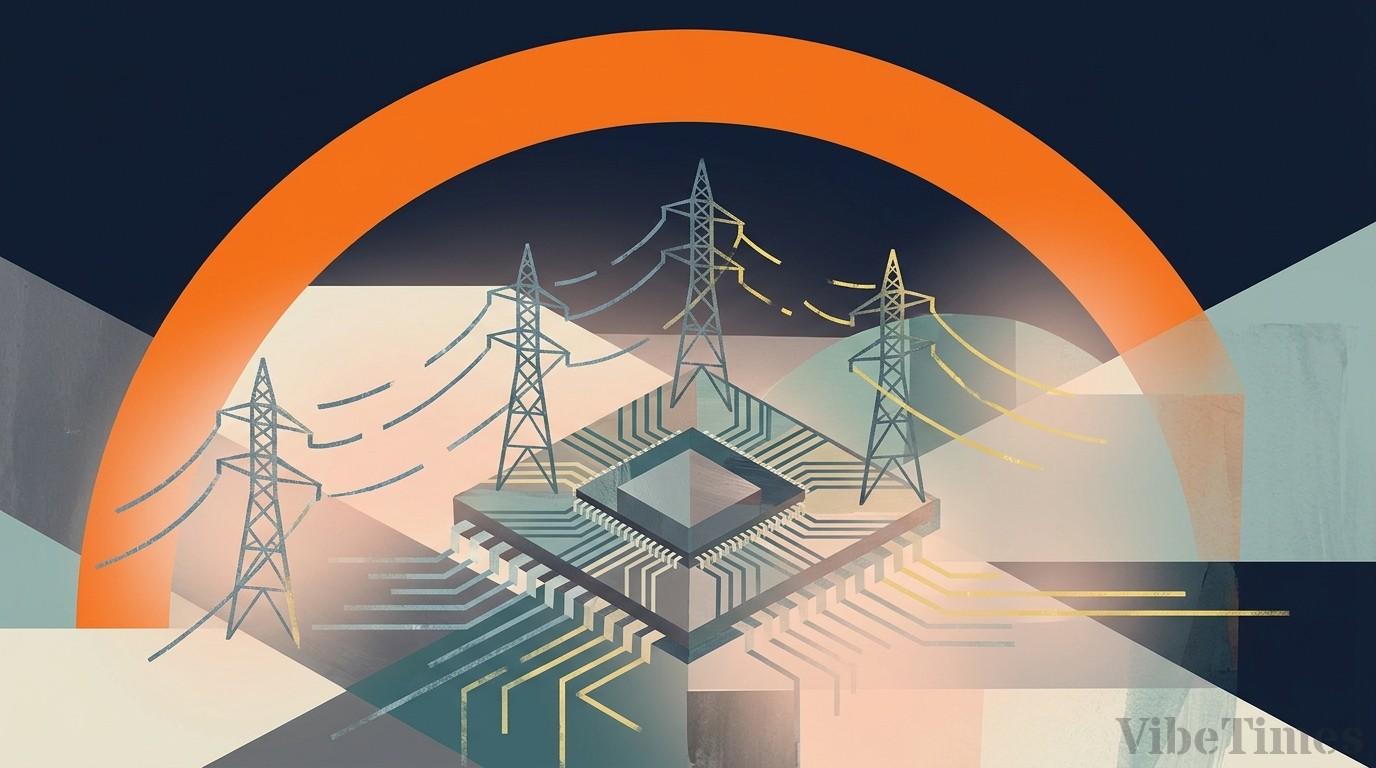
Concerns are mounting that semiconductor industry investments, valued in the hundreds of trillions of won, could face setbacks due to a lack of stable power supply and delays in transmission grid construction. Amid surging demand from AI data centers straining power capacity in the Seoul metropolitan area, only approximately 1.9 GW of the estimated 15-16 GW needed for the full operation of the Yongin Semiconductor Cluster has been identified as locally available power.
Korea Electric Power Corporation (KEPCO) is pursuing a 3.7 trillion won project to build 345kV transmission lines spanning 1,153 km to bring power from the East Coast and Honam regions to the Seoul metropolitan area. However, with an expected completion date of 2036, timely power delivery is uncertain. The National Assembly Research Service has analyzed that grid saturation and power supply instability make it difficult to guarantee the stability of private investments worth hundreds of trillions of won, leading to discussions even about relocating the Yongin Semiconductor Cluster to another region.
The lack of flexibility in the power grid suppresses renewable energy generation, widens regional price discrepancies, and drives up overall electricity prices through increased transmission and distribution costs. In the PJM power grid in the United States, capacity auction costs have soared to a record $16.1 billion.
Semiconductor fabrication plants and AI data centers are industries extremely sensitive to power outages and voltage drops. Grid connection capacity and the availability of 24/7 low-carbon power are key determinants of investment attractiveness. Global clients are demanding not only chip performance but also management of the carbon footprint throughout manufacturing and data center operations, making production bases relying on high-carbon electricity and processes likely to be disadvantaged in the long term.
Therefore, when considering new investments, regions with good access to low-carbon power should be evaluated as infrastructure conditions from the outset. Delays in transmission grid construction are directly linked to power supply chain issues. The construction of new transmission lines is repeatedly postponed for years due to public acceptance issues and conflicts with local governments.
Companies that have committed to investments worth hundreds of trillions of won may find themselves having to adjust the pace of subsequent investment execution or re-examine line expansion schedules due to infrastructure expansion delays. An industry official stated that if the power supply roadmap for the latter half of the year falters, the execution of advanced industry investments itself could be delayed. This becomes a critical variable for South Korea to maintain its lead in the semiconductor industry and pioneer the AI era.