President Lee Jae-myung's Remarks on 'Canceling' Prosecutions Spark Controversy

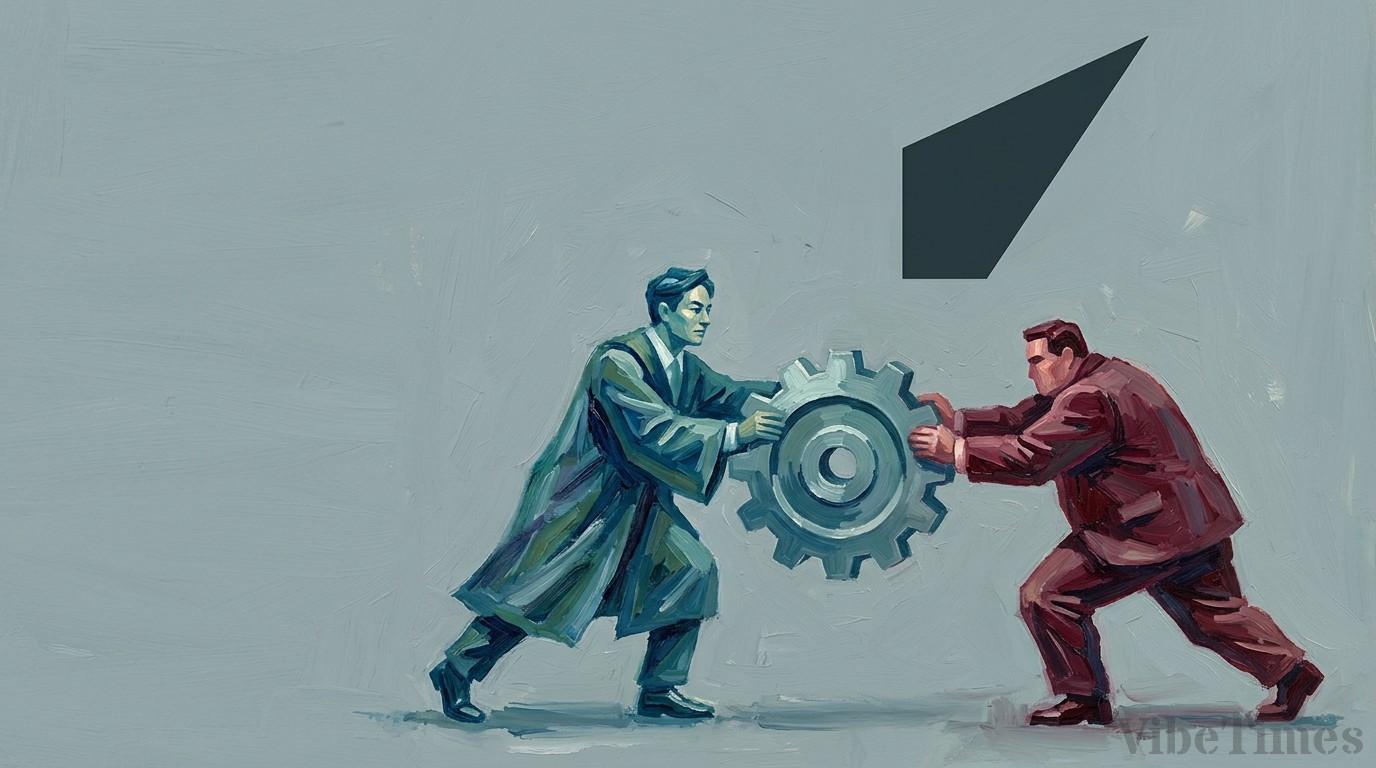
President Lee Jae-myung's 'Cancel' Remarks Shake Prosecutorial Authority; People Power Party Fiercely Criticizes 'Pressure to Withdraw Indictments'
Political circles are in heated debate over President Lee Jae-myung's statement at a State Council meeting, where he told prosecutors, "If you make mistakes, apologize and cancel them." The People Power Party, in particular, has vehemently criticized the president's remarks, arguing they infringe upon the independence of the prosecution and constitute pressure to "withdraw indictments." The issue has risen as a key point of contention between the ruling and opposition parties in the final leg of campaigning just one day before the June 3 local elections, and is expected to impact the election landscape. The People Power Party labeled President Lee's comments as "an overt threat to withdraw my indictment" and an act that shakes the rule of law.
President Lee made these remarks on the 2nd at a State Council meeting held at the Blue House, after receiving a report on the government's achievements over its first year in office from Acting Prosecutor General Gu Ja-hyun. He cautioned that prosecutors "should not fall into the trap of infallibility," adding, "If you make mistakes, apologize and cancel them." He further emphasized the point that "anyone can make mistakes," urging self-reflection within the prosecution.
The Presidential Office clarified that President Lee's remarks were not directed at any specific case or individual. However, the People Power Party immediately retaliated, asserting that the president's comments were made with his personal judicial risks in mind. Kim Jang-gyeom, a member of the People Power Party, criticized, "President Lee Jae-myung is effectively pressuring the prosecution to withdraw indictments. This is a clear shaking of the rule of law." Independent candidate Han Dong-hoon also posted on his Facebook, stating, "President Lee's remarks are laying the groundwork to push for the withdrawal of his own indictment after the election. I will go to the National Assembly tomorrow to stop it." Lee argued that the remarks could easily be interpreted not as correcting prosecutorial errors, but as a message demanding the cancellation of unfavorable judicial decisions.
Calls for Judicial System Reform and Controversy Over Prosecutorial Fairness
President Lee Jae-myung has repeatedly expressed his stance on the need to strengthen the transparency and fairness of the judicial system. His recent remarks align with calls for broader public disclosure of court rulings. Previously, on the 2nd, President Lee urged for the full public disclosure of court judgments, asking, "Shouldn't we fundamentally disclose all precedents, administrative decisions, and established practices to our constituents so they can judge how to act and whether their actions align with our current social and legal order?" He questioned, "Aren't the standards for any action or judgment inherently not supposed to be secret?" and pointed out, "Isn't there a tendency for the central government and judicial bodies to not readily share their decision-making criteria?" This is interpreted as a critical view of courts not disclosing lower court rulings to aid public understanding. While the president's actions show a strong will for judicial reform, they simultaneously risk being seen as interference with the prosecution's independent investigation and indictment powers, igniting controversy.
The Democratic Party of Korea defended the president's remarks as part of efforts to restore trust in the judicial system, which directly affects people's lives. The Democratic Party has been pursuing prosecutorial reform through measures such as the "Special Prosecutor Act on Fabricated Indictments" and argued that President Lee's comments should be understood in this context. Furthermore, they interpreted the president's emphasis on the need for "strict enforcement of broadcasting and telecommunications administration" in response to biased and distorted reporting by some media outlets as the president's intention to ensure transparency and fairness in information. President Lee had stated that "some broadcasts are as biased as party organs," pointing out a "lack of neutrality and fairness," and remarking that "some cases go too far." This can be seen as an intention to strengthen the role of the Korea Communications Commission to ensure media fairness.
Conversely, the People Power Party criticized the president's remarks as an attempt to frame them as "fake news" with political motives and as blatant pressure on the judiciary. The People Power Party cited remarks by Seoul mayoral candidate Oh Se-hoon, who asked if President Lee Jae-myung aspired to be like Putin, and called for Seoul to be left as the last bastion to check the Lee administration, arguing that the president's actions run counter to democratic principles.
Local Election Battlegrounds and Leveraging the President's Brand
Ahead of the June 3 local elections, the ruling and opposition parties have been making all-out efforts to win over voters. In the battleground regions of Busan, Ulsan, and Gyeongsangnam-do (Bu-Ul-Gyeong), in particular, both top party leaders and former and current presidents have been actively campaigning. Busan is considered a key indicator for the election results, with both parties concentrating their efforts on defending the 'Nakdong River Frontline.' The Democratic Party views Busan as ripe for recapture, while the People Power Party is focused on retaining it.
On the final day of campaigning, the 2nd, both parties utilized the names of former and current presidents—key brands and symbols of their support bases—in their rallies. The Democratic Party appealed, "Please choose President Lee Jae-myung, who works well, and the No. 1 ticket, the ruling party candidate," prominently featuring President Lee's state administration achievements. They highlighted accomplishments in national security and future technology during the 'first year of the Lee Jae-myung administration,' such as laying the foundation for a national data management agency for the AI era and discussions on follow-up measures for Korean-type nuclear-powered submarines, to garner voter support. The People Power Party attempted to rally its conservative base by emphasizing a "judgment of the Lee Jae-myung administration" and sought to secure support from former presidents' constituencies. Former presidents Park Geun-hye ('impeached/pardoned') and Lee Myung-bak ('imprisoned/pardoned') have re-emerged in the political arena, bringing past political issues back into the spotlight.
President Lee, entering his second year in office, expressed his ambition to "create even greater tangible changes in people's lives" and indicated that the local election results would significantly influence future state administration. In addition, regarding candidate Han Dong-hoon's criticism of "withdrawal of indictment" during the by-election for the North District of Busan Buk-gap, held concurrently with the local elections, the Presidential Office responded directly, interpreting it as a warning against "fake news." President Lee had instructed investigative authorities to "please pay particular attention to fake news that causes confusion in government policy, as it has great harm."
Future Outlook: Deepening Judicial Reform Discussions and Political Repercussions
President Lee Jae-myung's remarks regarding the prosecution are expected to further deepen discussions on judicial reform. The president's direct mention of the possibility of prosecutorial "errors" and "cancellation" may be intended to enhance public trust in the prosecution's investigation and indictment processes, but it also carries a high likelihood of escalating into a political dispute. The strong backlash from the opposition party and direct criticism from candidate Han Dong-hoon, in particular, suggest that this issue could move beyond a simple discussion of the judicial system into partisan conflict.
Moving forward, President Lee is expected to continue pursuing judicial reform agendas such as enhancing transparency in the judiciary and prosecution, and expanding the disclosure of court rulings. Gaining public consensus will be crucial in this process, and avenues for securing cooperation from political circles will also need to be explored. Furthermore, the president's emphasis on strict enforcement of broadcasting and telecommunications administration could lead to efforts to ensure media fairness, but this is a sensitive issue related to freedom of the press, requiring a cautious approach. After the June 3 local elections, the way President Lee's judicial reform drive is pursued and how the political sphere reacts to it are expected to bring significant changes to the future political landscape of Korea.