President Lee Jae-myung Plays Constitutional Amendment Card on First Day Back from Overseas Trip

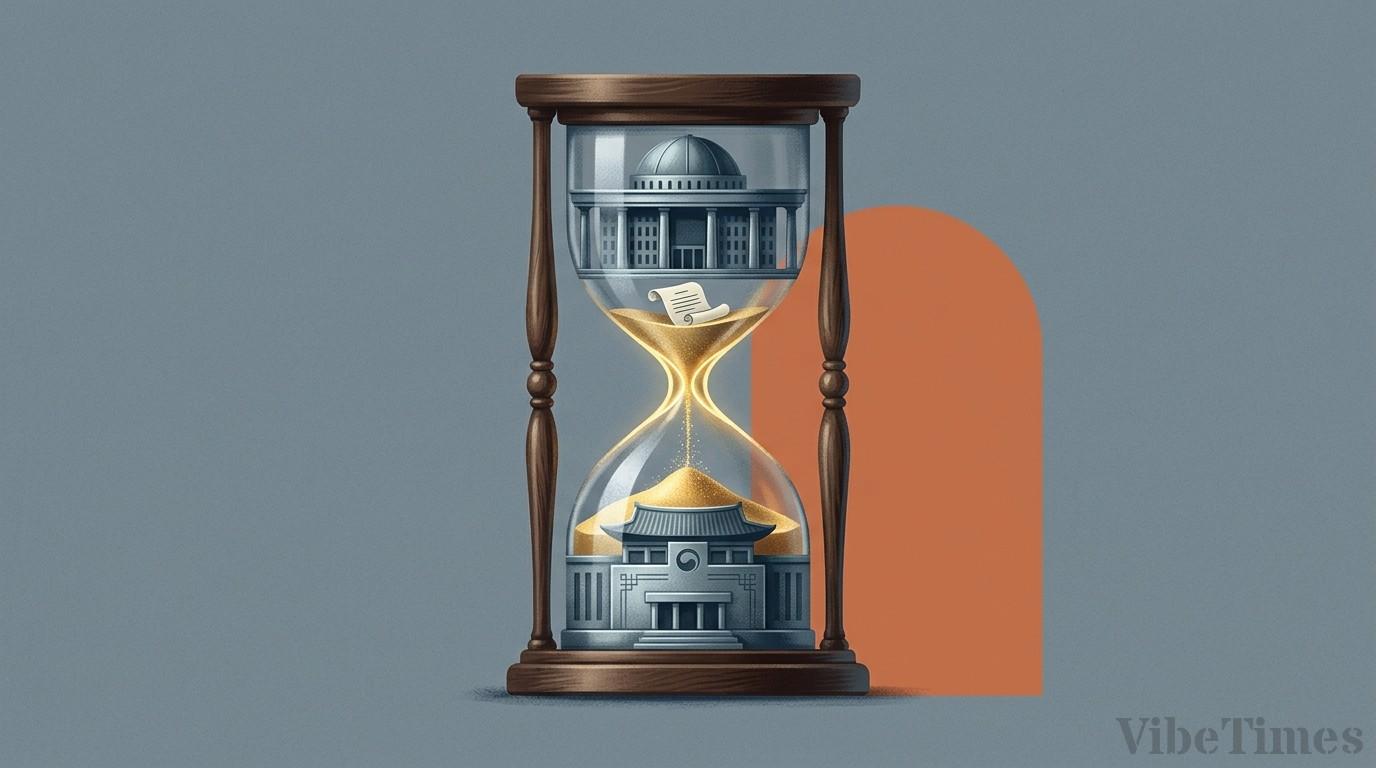
President Lee Raises Constitutional Amendment on First Day Back from European Tour
On December 19, the day he returned from an 8-day, 10-country tour of Europe and the G7, President Lee Jae-myung mentioned the possibility of a so-called 'one-point constitutional amendment' while briefing on the tour results at the Chunchugwan press room in the Blue House. The context was that a constitutional amendment might be necessary for the reform of the election commission. This is the first time the President has directly brought up the constitutional amendment card on the day of his return.
The current constitution designates the Election Commission as an independent constitutional institution. Legal restrictions limit direct oversight by the National Assembly or the executive branch, leading to continuous criticisms that there are virtually no external control mechanisms even when operational problems arise, such as the ballot shortage incident during the 6.3 presidential election. President Lee's statement that 'a constitutional amendment is needed for Election Commission reform' is interpreted as directly targeting this structural limitation.
Constitutional Amendment Logic Linked to Fake News and Suffrage Remarks
At the same briefing, the President criticized both "plotting social chaos by disseminating fake news and making unfounded false statements" and "stopping and searching passersby." He emphasized, "Legitimate exercise of sovereignty and criminal acts must be clearly distinguished," adding, "We will discern the good from the bad, respond strictly, and protect."
These remarks connect to a logic that seeks to elevate the dissemination of false information during elections to a constitutional-level issue. The framework appears to place the protection of suffrage and the rectification of the information environment on the same level, using this as grounds for constitutional amendment. Indeed, the President also used the phrase, "Blocking entry is obstruction of business and a serious crime." This is interpreted as an attempt to redefine the electoral space constitutionally, going beyond simple administrative reform.
Realistic Hurdles and Political Repercussions of Pursuing Constitutional Amendment
Constitutional amendment is a highly difficult process requiring the concurrent approval of over two-thirds of the National Assembly members and a majority vote in a national referendum. In the current minority-government, majority-opposition setup, the likelihood of the People Power Party responding favorably is low. While PPP leader Jang Dong-hyuk has recently utilized Election Commission issues, such as urging nationwide re-elections in connection with the ballot shortage incident, as a tool for political attacks, the party is expected to strategically distance itself from discussions leading to constitutional amendment.
Conversely, within the Democratic Party, a trend of strong support for the President's remarks is anticipated. A 'one-point' constitutional amendment aimed at maintaining the Election Commission's independence while strengthening its accountability is an agenda that is easy to secure justification for. Whether President Lee's remarks will ignite constitutional amendment discussions between the ruling and opposition parties, or remain mere political rhetoric, depends on the Democratic Party's concrete proposal for amendment moving forward.
Significance of Domestic Political Message Amidst Overseas Diplomatic Achievements
During the briefing that day, the President also explained the achievements of the G7 summit. He directly stated that in discussions on North Korean denuclearization with U.S. President Trump, he explained "a plan to start with a freeze and transition to long-term peace settlement and denuclearization." Externally, while prominently showcasing the results of pragmatic diplomacy, he simultaneously put forward significant domestic political agendas of Election Commission reform and constitutional amendment.
This can be seen as an attempt by the Lee Jae-myung administration, which has passed its first year, to strengthen its domestic political leadership leveraging its diplomatic achievements. By placing the discourse of constitutional amendment on top of accomplishments like achieving $700 billion in exports and debuting on the G7 stage, it is a strategy to build political momentum for its second year in office. While it remains uncertain whether the constitutional amendment discussions will lead to an actual legislative process, given the President's direct mention, it is highly likely to emerge as a key variable at future ruling-opposition negotiation tables.
