President Lee Strengthens Critical Mineral Supply Chain Ties with Brazil; Momentum Builds for Korea-Mercosur FTA

First South American Diplomacy Since Inauguration; Korea-Brazil Summit Takes Center Stage
President Lee Jae-myung held an expanded summit meeting with Brazilian President Luiz Inácio Lula da Silva in Brasilia, Brazil, on the 27th (local time). After concluding their 140-minute discussion, the two leaders drew a "heart shape" with their hands to showcase their friendship. Following the summit, President Lee arrived in São Paulo, the economic capital, having previously discussed economic cooperation with global venture capitalists (VCs) in San Francisco, USA, on the 25th. Securing critical minerals and establishing a new economic cooperation model between the two nations are evaluated as the top priorities of this state visit.
The most significant achievement of this visit is that discussions regarding the Korea-Mercosur Free Trade Agreement (FTA) have gained full momentum. Mercosur, composed of Brazil and three other South American nations, represents a vast single market with a population of 290 million. With existing trade agreements with the European Union (EU) stalling, Korea has secured a bridgehead to proactively target the South American market. The agreement by the two leaders to expedite the trade deal is underpinned by the South Korean government's strategic judgment to diversify alternative export outlets amid the reshuffling of global supply chains.
Strategic Significance of Resource Security and Supply Chain Diversification
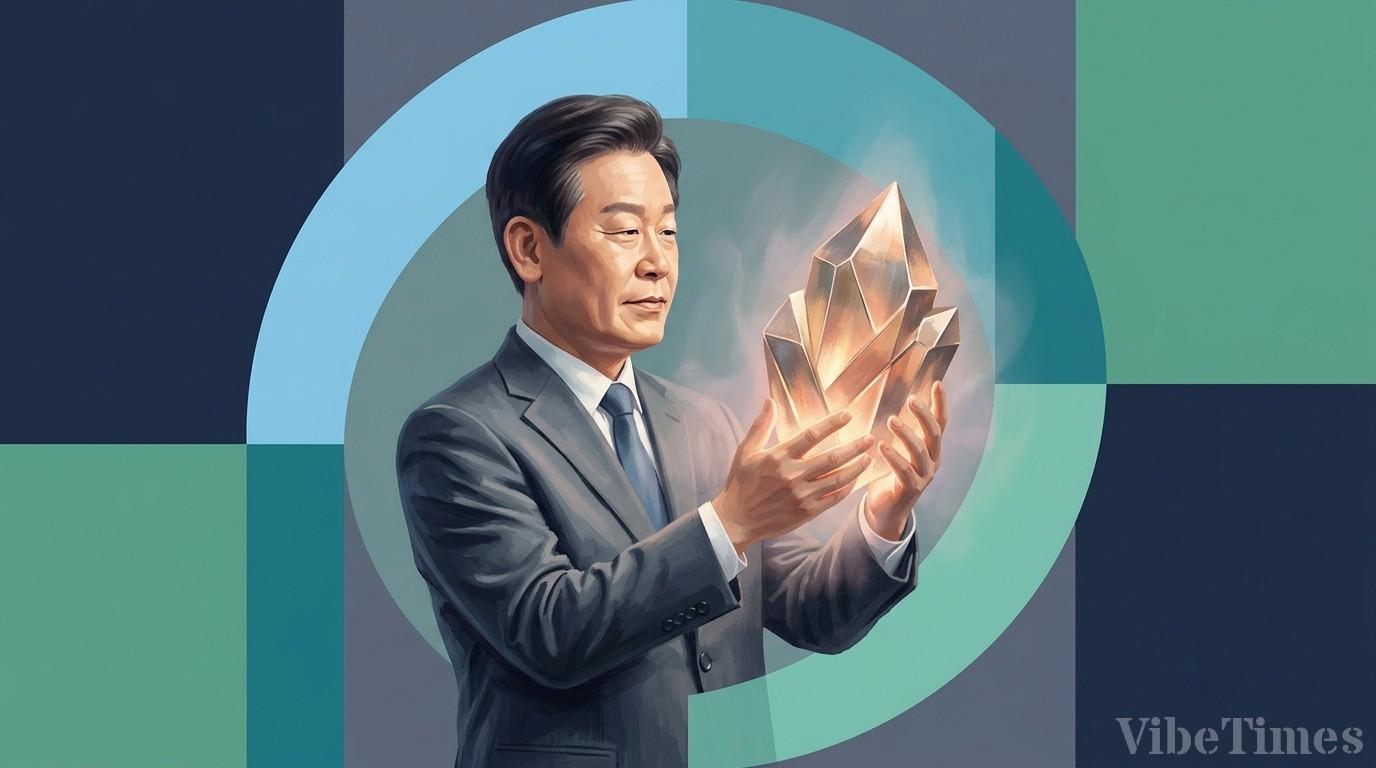
The explicit inclusion of "critical mineral cooperation" in the São Paulo itinerary reflects a response to the global weaponization of resources. Brazil is a world-leading producer of minerals essential for next-generation industries, such as iron ore, nickel, and manganese. Stable supply of these minerals is vital for South Korea's key industries, including electric vehicles, batteries, and semiconductors. As trade conflicts between the U.S. and China prolong, the nation faces the imperative task of diversifying supply chains for critical minerals—previously heavily reliant on China—toward Southwest Asia and South America. President Lee had previously emphasized semiconductor sites and infrastructure construction. The stable acquisition of resources is directly linked to maintaining the competitiveness of Korea's manufacturing sector.
These diplomatic efforts possess continuity, leading into the hosting of the San Francisco AI Summit and events to attract venture investments. It is a two-pronged strategy: building global partnerships in artificial intelligence (AI), the core of technological innovation, while simultaneously securing the physical resources that underpin the real economy. This goes beyond a simple visit to an ally; it is part of economic diplomacy designed to engineer future industrial ecosystems. Momentum has been created for a revolutionary expansion in trade volume between Korea and Brazil.
Convergence of Shifting Global Trade Environment and National Strategy
Diplomacy is the most powerful investment tool for designing a nation's future economy.
Recently, the international trade environment has been rapidly reshifting toward self-centered nationalism. A representative example is U.S. legislators proposing a bill to ban entry of foreign officials who discriminate against American companies, citing the Coupang case. We are in an era where global corporations are directly influenced by the policies and systems of each country. Amidst these circumstances, President Lee strengthened ties with President Lula and discussed institutional mechanisms to support the advancement of companies from both nations. This is a strategy that emphasizes multilateralism to break down the barriers of protectionism.
President Lee's remarks, reinterpreting the values of the Saemaul Undong (New Community Movement) as a model for modern economic development, are also significant. It serves as diplomatic rhetoric that builds trust with developing nations like Brazil by sharing past development experiences. It is expected to contribute to achieving the pragmatic goal of creating economic synergy between the two nations and further solidifying the foundation for Korean companies' entry into the South American market.
Through the state visit to Brazil, South Korea has secured a stable resource supply chain and laid the groundwork for trade with a massive economic community. The geopolitical and economic value secured through diplomacy will be directly connected to the nation's future growth engine. Following the South American tour, follow-up measures for resource security and market expansion are expected to proceed rapidly.