For the 100-Day National Assembly, the Answer Is Consensus, Not Railroading

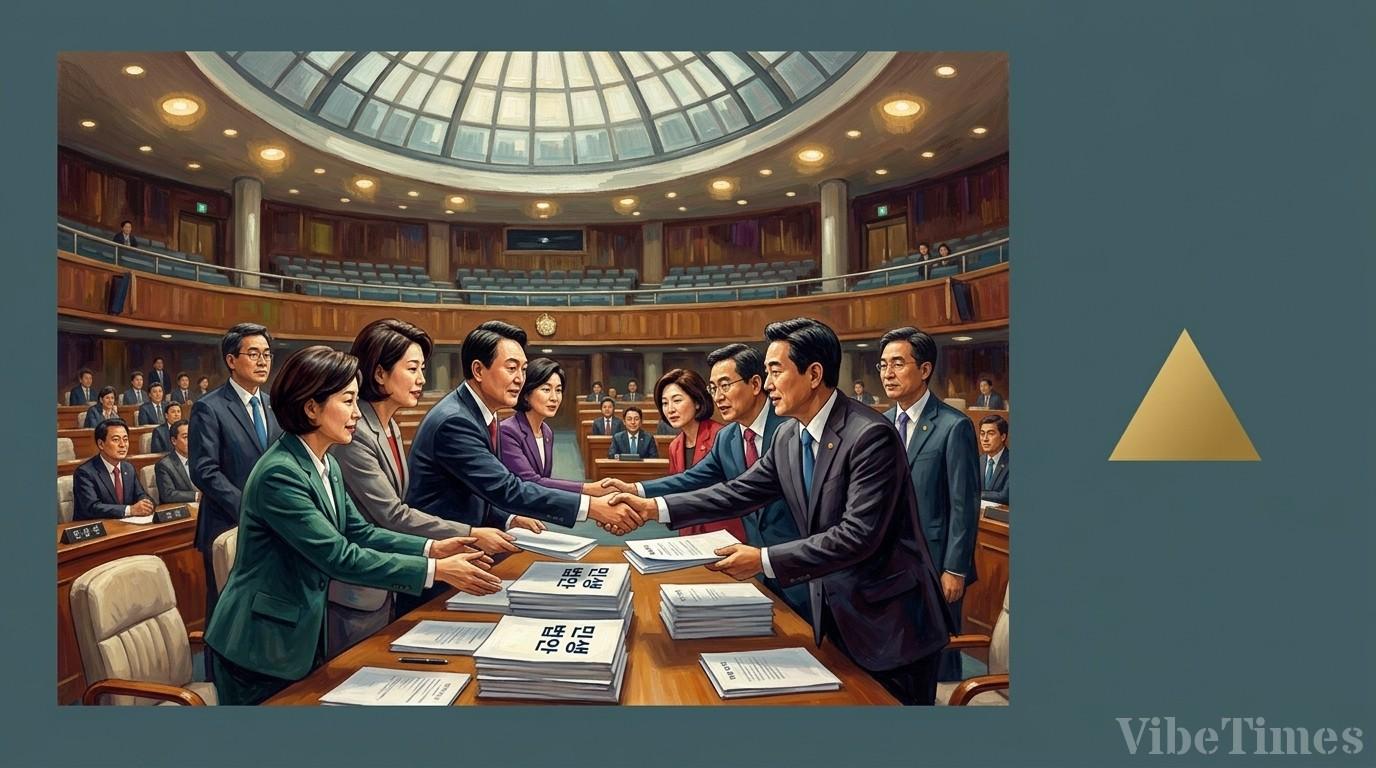
Bills contested between the ruling and opposition parties will be set aside, with only agreed-upon measures brought to a vote. According to political circles on the 2nd, the Democratic Party of Korea has decided to open this regular session's plenary by passing livelihood bills on which bipartisan consultation has been completed. It plans not to force through contentious items such as the housing supply bill and the Yongsan Park Special Act. In effect, a style of Assembly management has begun in which what can pass is settled first, rather than bills being railroaded through.
Why the '100-Day War' Chose Consensus First
The regular session opened on the 1st. Over its 100 days, legislation, budget review, and confirmation hearings following the August 30 cabinet reshuffle will all move forward at once. Immediately after the opening, the Democratic Party nailed down this principle for steering the political landscape:
We will ensure that livelihood legislation does not stall over confirmation hearings, nor budget review be delayed by political strife.
The budget bill carries a hard deadline of December. The calculation is plain: meeting it requires a baseline of trust between the two parties. Were the Democrats to force contested bills early, the opposition could retaliate by holding up budget review or hearing schedules. The judgment is that building up passable bills first ultimately yields a larger legislative haul.
Bills Headed for a Vote—and Bills Left Pending
Priority items are being narrowed to bills with a tangible impact on people's lives that do not divide the two parties' interests. The Yongsan Park Special Act and the housing supply bill are expected to clear committee-level consultation before knocking on the plenary's door again.
Digital assets is the area gathering pace. On the 2nd, the Political Affairs Committee's bill review subcommittee convened, with Kwon Dae-young, vice chairman of the Financial Services Commission, among the attendees. The Democratic Party's position is that substantive discussion will begin once the government's Framework Act on Digital Assets is referred over from the Financial Services Commission; inside and outside the committee, the contours of an integrated bill are taking shape. Whether the stablecoin bill can be introduced before Chuseok is the first hurdle.
Regional legislation is also riding the current. Rep. Seo Sam-seok of the Democratic Party introduced a revision renaming the 'Muan office' of the Jeonnam-Gwangju Unified Special City the 'Jeonnam office.' As administrative housekeeping tied to the unified city's establishment, it carries little partisan friction and stands a chance of making the consensual-passage list.
Follow-up measures to laws already passed are coming as well. From the 10th, patients who suffer minor injuries in traffic accidents—sprains, bruises and the like—must undergo a separate review by specialist medical staff to receive treatment beyond eight weeks. The aim is to reduce insurance payouts burdened by overtreatment. Here, more than the plenary vote itself, success will hinge on whether implementation translates into results people actually feel.
Sparring in the Cracks of the Consensus
The People Power Party is pressing an offensive even as it cooperates. On the 2nd, party leader Jang Dong-hyuk demanded that former presidential policy chief Kim Yong-beom “appear without fail as an ordinary witness and reveal the truth at the National Assembly audit.” He also announced plans to pursue a parliamentary investigation and a special prosecutor to verify lobbying suspicions surrounding the push for single-asset leverage products. “Kim Yong-beom can hardly have caused such a fiasco alone,” he said, raising the need to broaden the scope of the investigation.
Some bills remain head-on clashes. Over the so-called 'Yong Hye-in Prevention Act' introduced by Rep. Na Kyung-won, the Basic Income Party shot back: “No remorse for the insurrection.” With calls for institutional safeguards colliding with accusations of a political attack, the bill is drifting away from the consensus list.
The special counsel for the election commission is another variable in plenary operations. Five assistant special prosecutors on Lee Tae-han's team were appointed on the 1st, four of them former prosecutors. If the probe into the ballot paper shortage in the June 3 local elections picks up speed, it could collide with the audit schedule and come back as a burden on legislative negotiations.
The Timetable to the December Budget
The real test of the consensus-first strategy is the budget bill. The volume of livelihood bills cleared will serve as a thermometer for bipartisan negotiations. Early agreements, if they accumulate, can build momentum for the budget talks; but if the special counsel probe, parliamentary investigations, and confirmation hearings drag on, contested bills will easily slip down the agenda.
The stablecoin bill is the short-term barometer. Its pre-Chuseok introduction hinges on when the government bill arrives, and any delay would push back the timeline for institutionalizing the digital asset market accordingly. Whether the Yongsan Park Special Act and the housing supply bill pass within the year depends on how quickly differences can be bridged. The regular session's first report card, it appears, will be graded not on the number of bills passed but on whether the two parties keep their consultative framework intact through December.