KOSPI Triggers Circuit Breaker Just 3 Minutes After Market Open

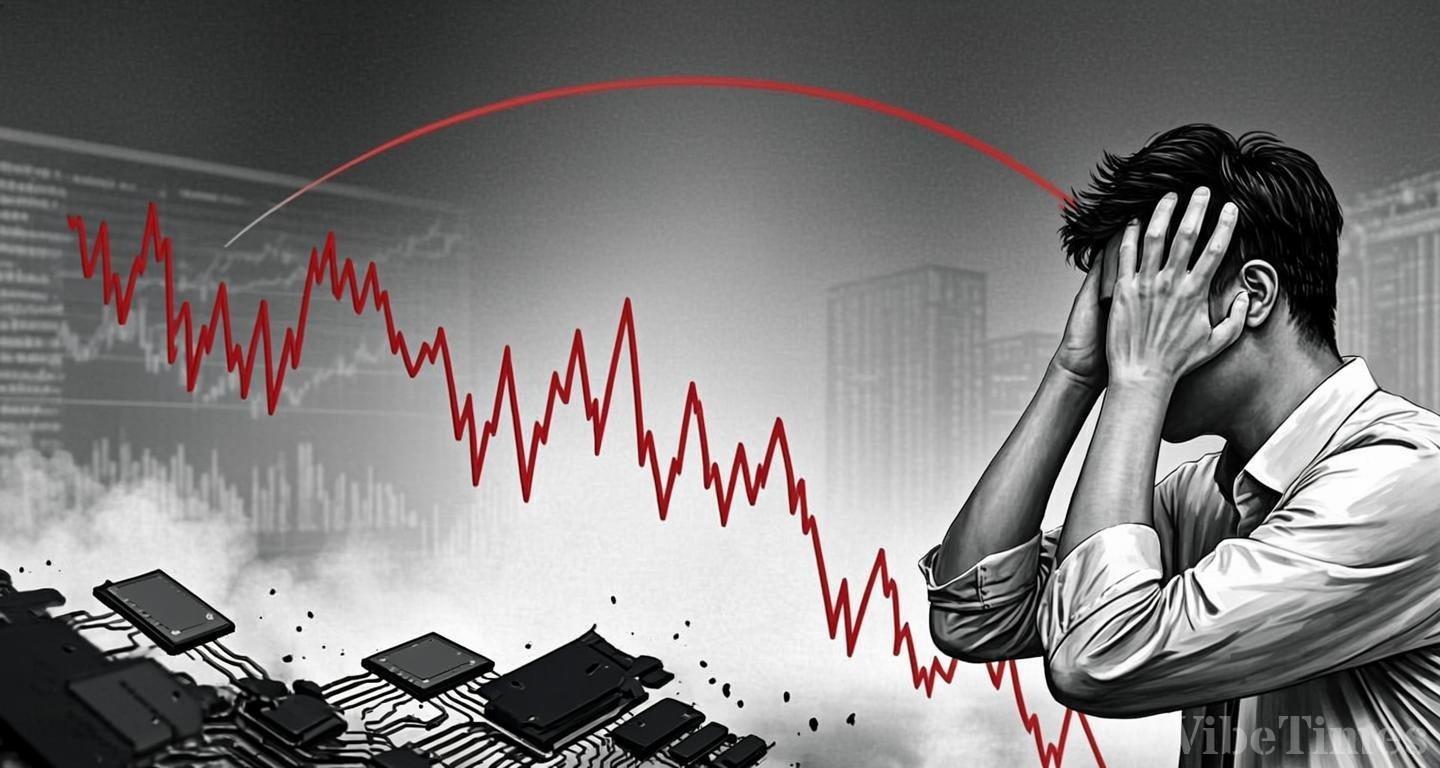
Fears of artificial intelligence (AI) regulation triggered by the U.S. midterm election results led foreign investors to dump semiconductor shares en masse, forcing the KOSPI to trigger a circuit breaker (a mechanism that temporarily halts trading to prevent a sharp sell-off) just three minutes after the open on the 6th. The sell-off was ignited by growing concerns over tighter AI regulation following the Democratic Party's victory in the U.S. midterms, where it had campaigned on regulating AI data centers. According to the Korea Exchange, the KOSPI plunged 8.78% immediately after the opening, falling to 4,911.28 — the first time below the 5,000 level in nine months since Feb. 6. A circuit breaker was triggered at 9:03 a.m., and highly volatile trading followed, with sell-side sidecars activated in both markets. The KOSPI closed the day at 5,059.69, down 6.02% from the previous session.
The turmoil also exposed the vulnerability of Korea's stock market, which is heavily concentrated in semiconductors. Samsung Electronics and SK Hynix were at the center of the foreign sell-off. Foreign investors net sold 10.4 trillion won in the main board over the past week, with the two stocks accounting for 7.6 trillion won of that total — Samsung Electronics (2.2 trillion won) and SK Hynix (5.4 trillion won). The combined market capitalization of the two stocks hit a record high of about 4,174.8437 trillion won on June 25, but shrank to 1,930.1102 trillion won on the day. Their combined share of the KOSPI's market cap fell from a peak of 57.11% in June to 46.23%, but adding related stocks such as Samsung Electronics preferred shares, SK Square and Samsung Electro-Mechanics still brings the figure to 53.87%.
Against this backdrop, the Financial Supervisory Service decided to exempt brokerages from the mandatory collateral maintenance ratio (140%) on credit financing from the 9th through January next year. The measure is intended to break the vicious cycle in which plunging stock prices trigger forced margin calls, whose selling volume in turn drags the index down further.
Pepperstone Group, an Australian foreign exchange trading platform, analyzed that "while Samsung Electronics and SK Hynix have secured some visibility on demand through long-term supply contracts over the years, it remains uncertain whether the current pace of AI investment growth can be sustained, given policy uncertainty, funding costs, and power constraints." Seo Sang-young, executive director at Mirae Asset Securities, predicted: "Although the KOSPI has entered historically undervalued territory, heightened volatility is expected to persist for the time being due to pressure on foreign investor flows stemming from improving U.S. economic indicators, a stronger dollar, and interest rates."
