Will Glass Substrates Usher in a New Era for AI Chip Production?

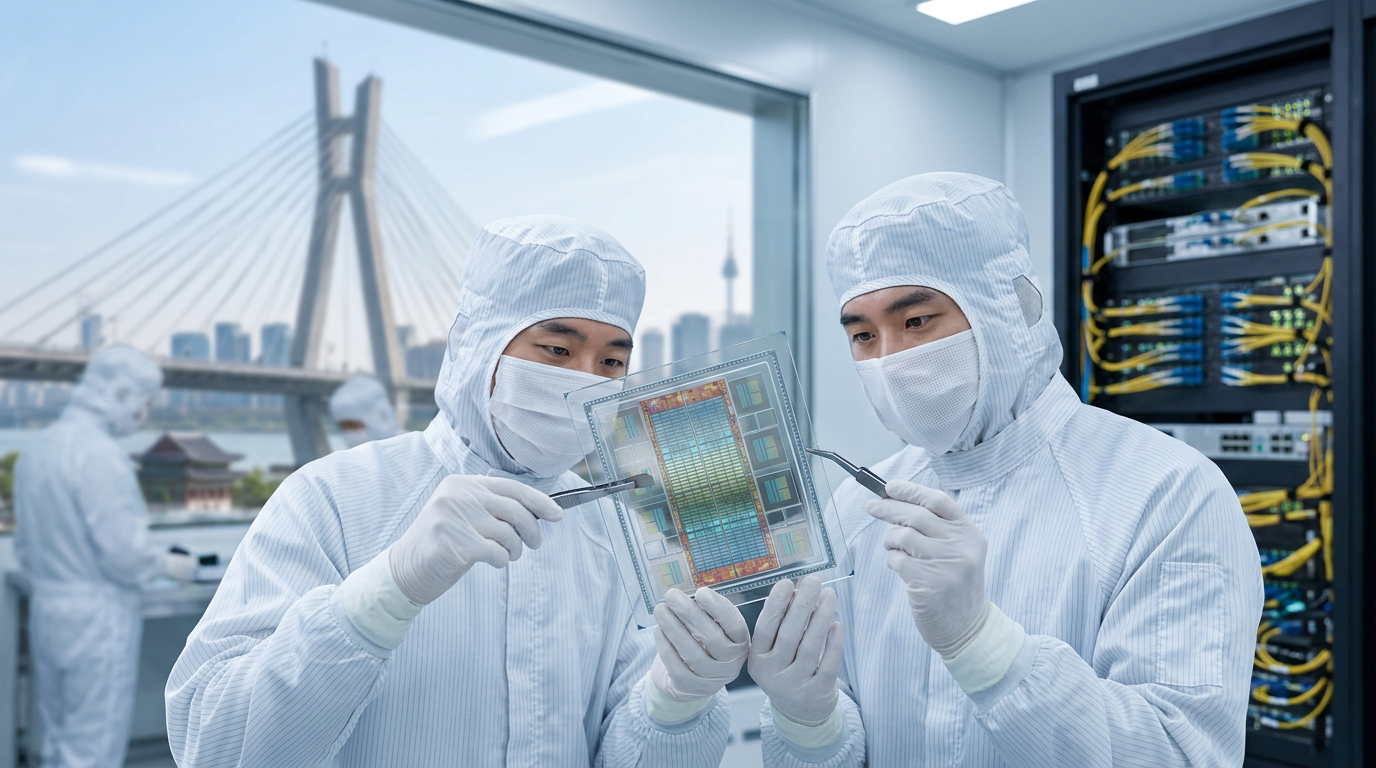
A shift is underway in the next generation of artificial intelligence (AI) semiconductors, potentially moving from traditional organic materials to glass as a core substrate. This transition is driven by the rapid expansion of global data centers and the escalating demand for high-performance computing, making substrate innovation a critical challenge for supporting and connecting semiconductor chips. Glass substrates are emerging as a compelling alternative, offering enhanced heat resistance and enabling more precise manufacturing processes compared to existing materials, thereby boosting both hardware performance and energy efficiency.
The semiconductor industry's keen interest in glass substrates stems from the inherent limitations of current organic substrates. Materials like glass fiber-reinforced epoxy, used since the 1990s, have faced issues with warping and deformation when exposed to the high temperatures generated by chips. Such substrate distortion can misalign intricate internal components, reduce cooling efficiency, and lead to premature system failures or performance degradation. This problem has become a significant technical hurdle, particularly in the demanding environment of modern data centers, which consume vast amounts of power for AI training and generate substantial heat.
Glass boasts excellent thermal stability, maintaining its form even at high temperatures, and allows for thinner, more intricate circuit layouts. Rahul Manepalli, a vice president at Intel Advanced Packaging, noted that the limitations of organic substrates were foreseen nearly a decade ago. Intel's research indicates that adopting glass substrates could enable over ten times the density of signal and power interconnections compared to conventional methods. This advancement not only accelerates data transfer speeds between chips but also allows for smaller substrate sizes, leading to maximized overall energy efficiency.
Among companies at the forefront of commercialization is South Korea's Absolics, which has completed a dedicated glass substrate production facility in the United States and plans to commence commercial production this year. Intel is also strengthening collaborations with supply chain partners to integrate glass into its next-generation semiconductor packaging. Deepak Kulkarni, a Senior Fellow at AMD, stated that the industry is facing mechanical constraints due to the surge in AI workloads and increasing package sizes, highlighting glass as a key to overcoming these limitations and enabling continuous semiconductor scaling.
Unlike past attempts, the glass substrate ecosystem is becoming increasingly robust with significant participation from global players, including those in Korea and China. Initially, due to high production costs, glass substrates are expected to be primarily adopted for high-performance chips used in large-scale data centers. However, as manufacturing processes stabilize and costs decline, their application is anticipated to expand to consumer hardware such as laptops and mobile devices. Market experts analyze that the current technical imperative is more pressing than ever, making it highly probable that glass substrates will become the standard for next-generation semiconductors.