US Military AI Must Break Free from Exclusive Corporate Influence

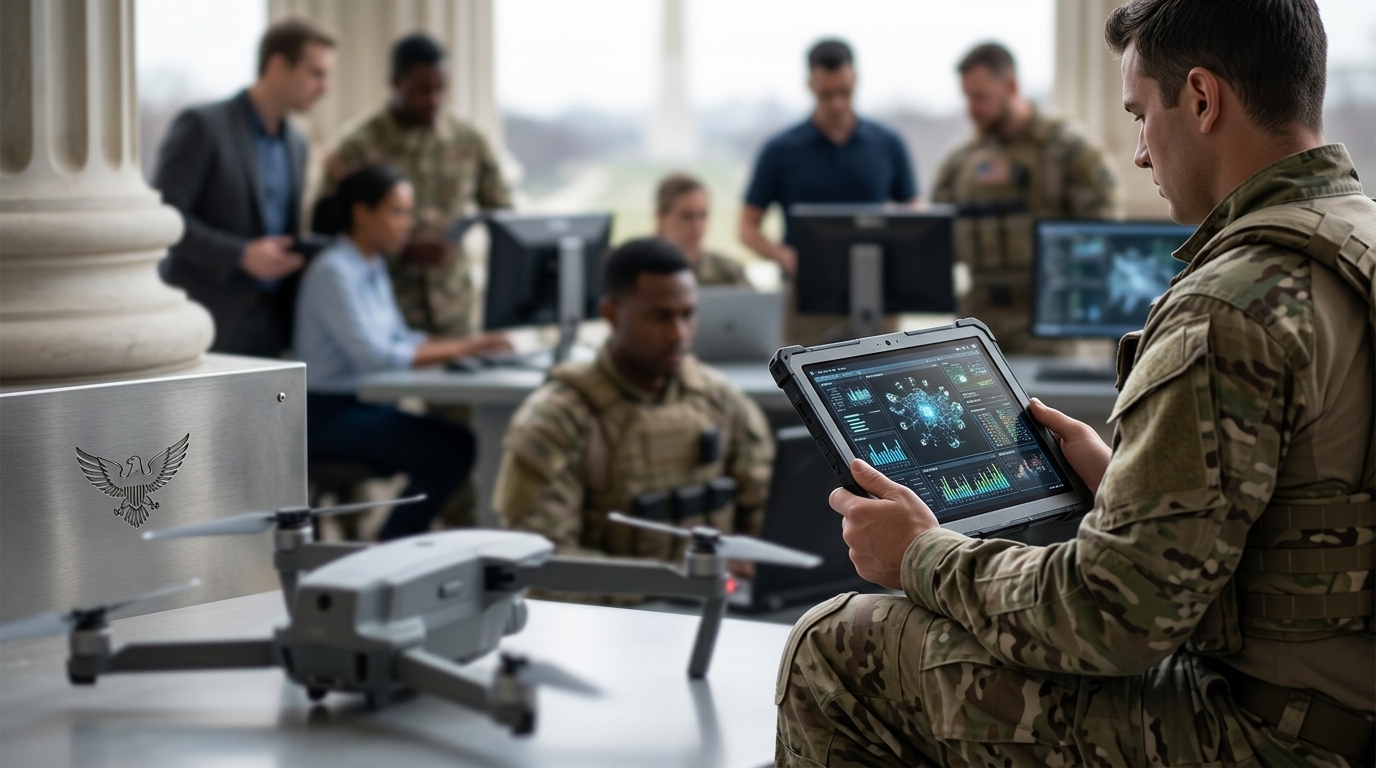
An argument has been made that U.S. military artificial intelligence (AI) must embrace an 'open source' approach, allowing anyone to inspect and modify software blueprints, to counter China's technological pursuit and avoid being swayed by unilateral corporate decisions, thereby securing technological transparency and public accessibility. Rob Maness, a former U.S. Air Force colonel, published an op-ed arguing that an open-source-based open ecosystem should be introduced for U.S. military AI, instead of monopolistic systems from private companies, to counter China's rise. It has been pointed out that if U.S. AI systems rely on corporate-led closed structures, they could be exposed to decisions prioritizing corporate interests over national interests, posing risks to national security.
China is expanding its military artificial intelligence (AI) capabilities through government-led resource investment. Discussions surrounding the operation of U.S. military AI are proceeding in a direction that incorporates private sector technological prowess while securing the public value of national security. The redesign of military AI systems based on open source has emerged as part of efforts to secure technological leadership and strengthen battlefield response capabilities.
Meanwhile, the 2026 Seoul International Book Fair will explore the theme 'Homo duduri,' highlighting the role of humans in confronting artificial intelligence, continuing societal discussions on the AI era. The theme declaration at that time was jointly authored by novelist Kim Yeon-su and AI models Claude and Jemini.