Latest Trends in Climate Change Response Technologies

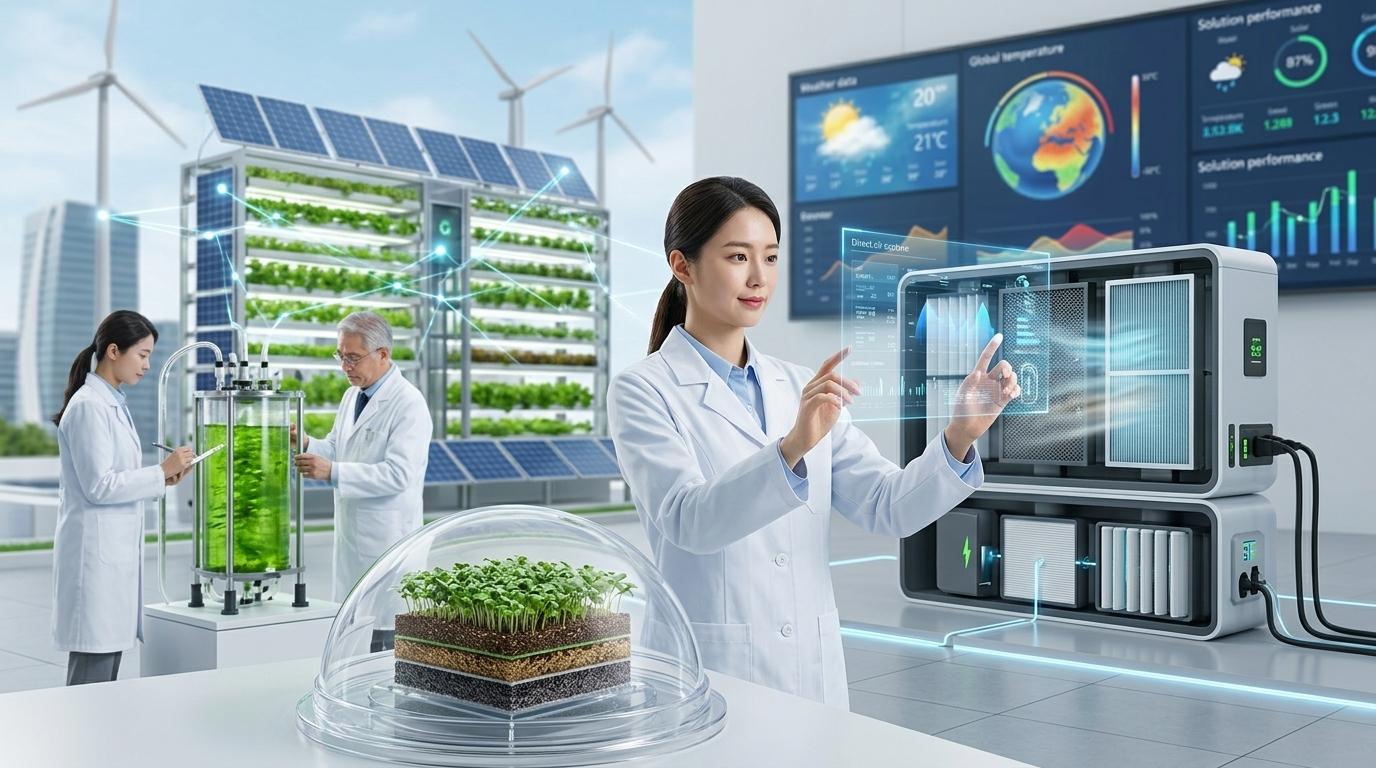
As rising global temperatures and extreme weather events accelerate, the development and application of innovative scientific technologies, including next-generation energy, carbon capture and utilization, and climate resilience enhancement, are emerging as key to human survival in the race to meet the 43% emission reduction target by 2030.
Amidst the urgent need to halt the accelerating climate crisis through technological innovation, 2023 was recorded as the hottest year on record, with temperatures approximately 1.45°C above pre-industrial levels. This has led to an unprecedented increase in the frequency and intensity of extreme weather events such as heatwaves, droughts, floods, and super wildfires, causing loss of life and immense economic damage. This reality starkly illustrates the urgency and importance of science and technology in responding to climate change.
With the critical role of science and technology in achieving the 1.5°C target being emphasized, the IPCC warns that greenhouse gas emissions must be reduced by 43% by 2030 compared to 2010 levels to limit global temperature rise to 1.5°C. This goal requires fundamental changes in existing energy systems, industrial structures, and lifestyles, and is unattainable without the development and global application of innovative scientific technologies for carbon reduction and climate adaptation.
Next-Generation Energy Technologies: Moving Beyond Fossil Fuels and Designing a Sustainable Future
The most urgent task for achieving the 1.5°C goal, centered on the evolution of renewable energy and securing new power sources, is to reduce reliance on fossil fuels and accelerate the transition to clean energy. To this end, research is actively underway on technologies to maximize the efficiency of solar and wind power, as well as next-generation nuclear power (Small Modular Reactors - SMRs), hydrogen energy, and artificial sun (fusion power) with recognized potential.
For the establishment of high-efficiency renewable energy systems and the advancement of Energy Storage Systems (ESS), perovskite solar cells that increase the efficiency of solar panels, and the development of larger offshore wind turbines and floating technologies, hold the potential to dramatically increase renewable energy output. Furthermore, advanced large-capacity, high-performance ESS technologies that compensate for the intermittency of renewable energy sources, particularly innovations in battery technology and grid integration, are emerging as core research areas. Next-generation ESS technologies, such as solid-state batteries, are expected to become essential components of future energy systems by enhancing safety and energy density.
In exploring the potential of hydrogen and fusion as future energy sources, securing the competitiveness of 'green hydrogen' (produced using renewable energy) is a critical task, as hydrogen energy's carbon footprint varies depending on its production method. Technologies to increase electrolysis efficiency and develop hydrogen transportation and storage are currently in progress. Additionally, artificial sun (fusion power), which offers the prospect of unlimited energy supply, is considered the technology with the greatest long-term potential, and its commercialization is being steadily explored through international joint research.
Carbon Cycle Innovation: Technologies for Removal and Utilization Beyond Reduction
As the technological race intensifies toward 'carbon negative' goals beyond 'net zero,' and the understanding grows that achieving climate targets solely through emission reductions is insufficient, the importance of technologies that remove already emitted carbon from the atmosphere and recycle it into useful resources is increasing. This is exemplified by 'Carbon Capture, Utilization, and Storage' (CCUS) technologies and Direct Air Capture (DAC) technologies.
Examining the status and challenges of CCUS technologies, CCUS, which captures carbon dioxide from sources like fossil fuel power plants and industrial facilities for underground storage or for recycling into industrial raw materials, building materials, and fuels, is garnering attention as a crucial complement to greenhouse gas reduction. However, increasing capture efficiency, ensuring the safety of storage sites, and achieving economic viability remain major challenges for commercialization, with ongoing research moving beyond demonstration phases to explore commercial models. The IEA (International Energy Agency) predicts that CCUS will contribute approximately 15% to achieving net zero by 2050.
With the potential of Direct Air Capture (DAC) and carbon removal technologies gaining attention, DAC technology, which directly absorbs carbon dioxide from the atmosphere, has the advantage of removing carbon even when emission sources are difficult to pinpoint. Recently, various DAC technologies are being developed to improve energy efficiency and reduce costs, offering the possibility of transitioning to a 'carbon negative' society. Furthermore, research is actively underway on technologies linked to nature-based solutions, such as enhancing blue carbon through oceans and BECCS (Bioenergy with Carbon Capture and Storage) which combines bioenergy with carbon capture technology.
Enhancing Climate Resilience: Technological Evolution for Adaptation and Safety
The importance of resilience-enhancing technologies is growing in the face of a changing climate, focusing on responding to the unavoidable impacts of climate change and increasing the resilience of society and ecosystems. The core objective is not merely to reduce damage but to support sustainable living within the transformed environment.
Smart agriculture and food security technologies are pursuing the development of smart farms, vertical farms, and disaster-resistant crops using gene editing technology to counter reduced agricultural productivity caused by rising temperatures, changes in precipitation patterns, and increased pest outbreaks. Precision agriculture, utilizing IoT, AI, and big data, supports the creation of climate-resilient agricultural systems by optimizing water and fertilizer usage. Moreover, the advancement of purification and desalination technologies and smart water management systems to address water scarcity due to climate change are also significant research areas.
For disaster prediction and urban resilience enhancement solutions, developing advanced technologies that improve the accuracy of early warning systems for extreme weather events and minimize damage during disasters such as floods, heatwaves, and landslides is essential. Integrated solution research is underway to enhance urban-level resilience, including disaster prediction models using AI and big data, eco-friendly urban design, and the construction of resilient infrastructure.