Middle East Unrest Plunges Construction Sector into Triple Crisis

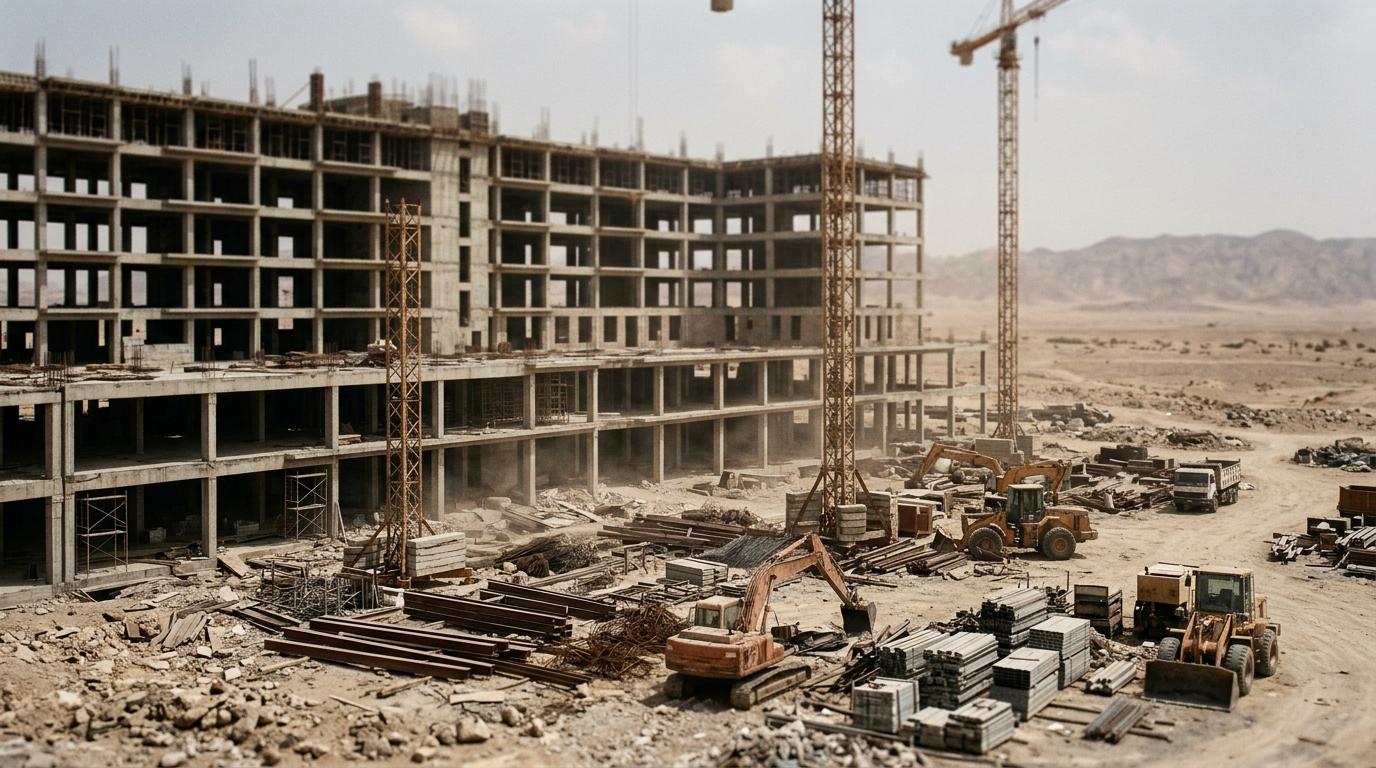
Geopolitical tensions in the Middle East have spread throughout the order market, pushing South Korea's construction industry into a corner with shrinking overseas orders, rising raw material prices, and increased financing costs. Following attacks on Iran by the U.S. and Israel, large-scale projects such as parts of Saudi Arabia's NEOM City construction and subsequent work on Iraq's Al-Faw Grand Port have been postponed or scaled back. In the first quarter of 2026, orders from the Middle East amounted to $316.22 million, a stark 94% decrease from $4.958 billion in the same period last year.
The ripple effects of the Middle East conflict continue to put upward pressure on prices for key construction materials like steel and cement. Concerns have emerged over potential blockades of the Strait of Hormuz, which could restrict maritime transport routes. Projects heavily reliant on long-distance sea freight face risks of logistical disruptions and increased shipping costs, potentially leading to delays and additional expenses. The surging U.S. dollar-won exchange rate and soaring energy prices are fueling global inflation and increasing interest rate volatility. This has raised the cost burden for overseas projects, with the potential for delays in new business initiatives due to clients postponing large-scale infrastructure investment decisions and rising interest rates for financing.
The government has activated an emergency economic task force to prevent construction material supply instability from halting projects. It is conducting continuous monitoring of construction material trends and exploring countermeasures such as emergency imports, identifying alternative materials, and adjusting construction priorities when supply shortages arise. The first vice minister of Land, Infrastructure and Transport emphasized that disruptions in construction material supply directly impact the national economy and housing stability, pledging close inter-ministerial cooperation to swiftly resolve on-site risks.
In addition to Middle East-driven risks in materials and construction costs, cross-ministry support is being provided to alleviate financial burdens. The government discussed measures to resolve financial difficulties for construction firms during a meeting chaired by the Prime Minister. To cope with the increased financial strain from rising construction costs and extended project timelines, specialized support measures for the construction industry, including expanding project finance guarantees, extending loan maturities, and easing guarantee requirements, are under review.
Recognizing that Middle East risks may not be a short-term issue, attention is turning to alternative markets like North America, Europe, and Southeast Asia, as well as high-value-added infrastructure sectors such as nuclear power and data centers. Some major construction companies are expanding their order books for eco-friendly power plants, data centers, and logistics facilities, primarily in the U.S. and Canada, while considering strategies to increase the proportion of housing, urban infrastructure, and transportation projects in Southeast Asia. The Korea Overseas Infrastructure and Urban Development Corporation (KIND) is reorganizing its overseas centers in high-risk regions like the Middle East and Bangladesh, focusing on discovering public-private partnership (PPP) projects in developed markets such as Europe and North America. KB Securities recently analyzed in a report that while the Middle East remains a key market for large projects, geopolitical variables and order delays are increasing. The report suggests that while strengthening selective bidding focused on profitability, portfolio adjustments are needed to increase the proportion of high-value projects like nuclear power, data centers, and eco-friendly infrastructure in relatively stable markets such as North America, Europe, and Southeast Asia.
Amidst the triple crisis of orders, costs, and financing, the key future question will be whether the South Korean construction industry can break away from its reliance on the Middle East and secure new growth engines, and how much the government's support measures will alleviate burdens on the ground.