Former Prime Minister Han Duck-soo Sentenced to 5 Years in Prison for Neglecting Constitutional Court Appointments

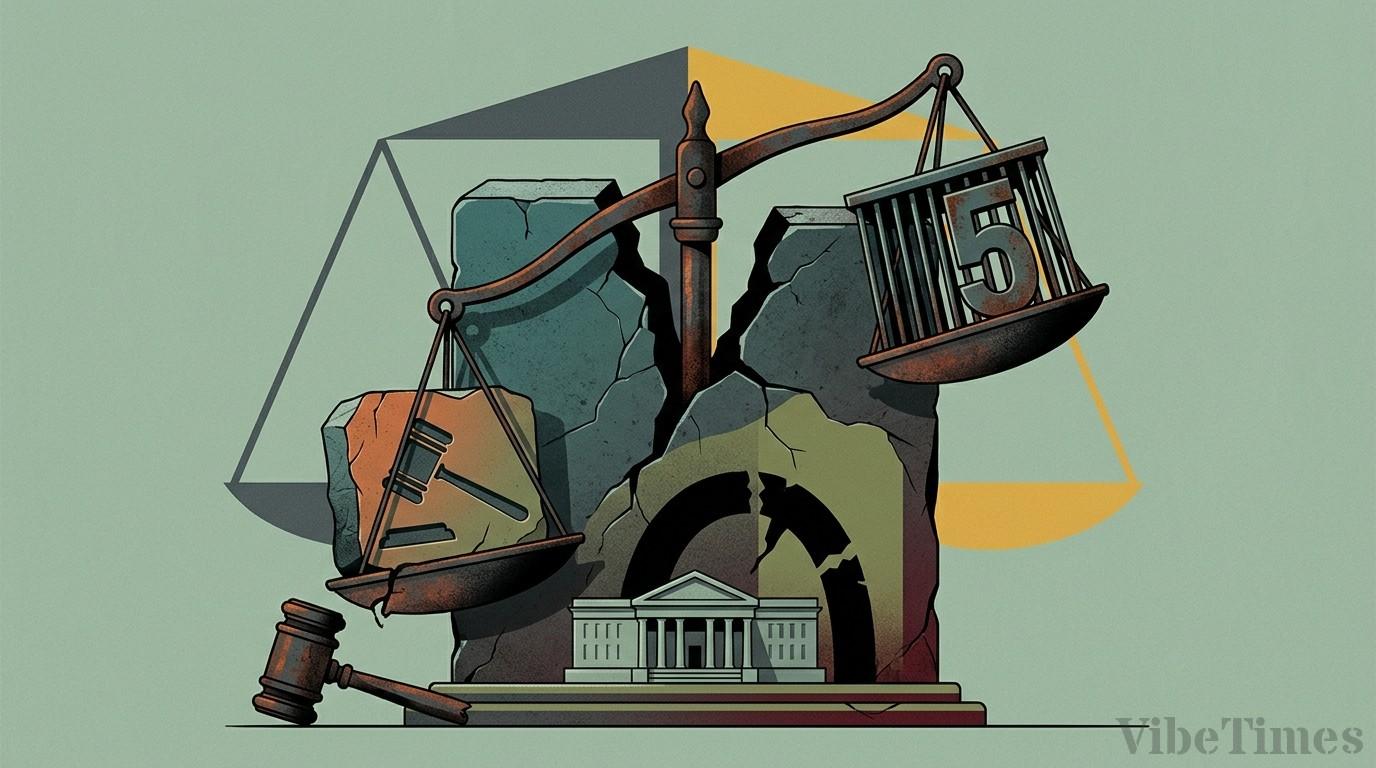
Former Prime Minister Han Duck-soo Sentenced to 5 Years in Prison for Neglecting Constitutional Court Appointments
The special prosecutor team has handed down a severe sentence to the former second-in-command for deliberately failing to appoint constitutional court justices recommended by the National Assembly, thereby paralyzing the functions of a constitutional institution. On the 28th, during the final hearing at the Seoul Central District Court's Criminal Division 33, Special Prosecutor Cho Eun-seok characterized former Prime Minister Han's actions as an abuse of power that distorted public choice and undermined the foundations of the rule of law. This ruling is interpreted as a judicial warning that the administrative branch cannot arbitrarily halt or delay the constitutional court justice appointment process. The special prosecutor determined that former Prime Minister Han was deeply involved not only in the failure to appoint justices but also in allegations of hasty nominations, requesting a five-year prison sentence by consolidating charges of dereliction of duty and obstruction of the exercise of rights.
The core issue of the trial is whether the Prime Minister, as the head of the executive branch, failing to recommend individuals legally nominated by the National Assembly falls within the category of sovereign acts. While former Prime Minister Han's defense emphasized the discretionary scope of appointment powers and denied the charges, the special prosecutor deemed it a clear failure to fulfill his duties. This sentencing sets a strict standard for the fulfillment of constitutional obligations by high-ranking public officials, and is expected to have a significant ripple effect on personnel administration in the public sector going forward. In particular, the delay in the basic rights relief process for citizens due to the vacuum at the Constitutional Court served as a decisive factor in the sentencing.
Strengthened Personnel Vetting System and Proposed Three Laws Following Expansion of Police Investigative Authority
With the amendment of the Criminal Procedure Act expanding the police's authority to conclude investigations, discussions have intensified regarding the introduction of parliamentary hearings for the head of the National Investigation Headquarters. According to a report by reporter Han Ji-eun, the National Assembly has proposed amendments to three related laws to ensure transparency in the appointment of the head of the National Investigation Headquarters, which oversees police investigations. This comes as a result of increased societal demand for the independence and neutrality of the police organization following the adjustment of investigative powers between prosecutors and the police. Allegations of inadequate investigation and controversies over false closures, as seen in the missing police officer incident in Jeju, have further fueled this legislative movement. The Democratic Party has stated its intention to pursue reform legislation that holds the police organization accountable for its powers, demanding a complete overhaul of the police force.
The introduction of parliamentary hearings for the head of the National Investigation Headquarters signifies democratic oversight of police investigative administration, going beyond a mere procedural enhancement. Currently, the head of the National Investigation Headquarters is appointed by the President upon recommendation from the Inspector General of the National Police Agency. However, once the legislation is complete, the nominee will be required to undergo a vetting process by the National Assembly. While this change is positively evaluated in terms of preventing the misuse of investigative powers and ensuring the public's right to safety, some express concerns that it could undermine the political neutrality of investigative agencies. Fundamental changes in the power structure and investigative command system within the police organization are anticipated depending on whether the bill is passed.
Opposition and Ruling Parties' Differing Views on Labor Market Regarding Night Work Restriction Bill
A direct clash between the ruling and opposition parties over the protection of workers' right to life and the maintenance of corporate productivity has emerged through amendments to the Occupational Safety and Health Act. The amendment proposed by Assemblyman Park Hong-bae aims to strictly limit night work to 12 times per month and 48 hours per week. In response, the People Power Party issued a statement on the 29th, strongly criticizing the bill for potentially causing adverse effects by depriving night shift workers of their livelihoods. The logic presented is that a reduction in income is inevitable for workers in sectors such as logistics, security, and services, where night shift allowances constitute a significant portion of their earnings. Reporter Kwon Hee-won analyzed that the ruling party views this bill as an excessive regulation that infringes upon the autonomy of the market economy.
Experts predict that if this amendment is passed, employment patterns in industrial sites will undergo rapid changes. Similar to the introduction of the 52-hour workweek, companies are likely to face increased costs for hiring additional staff or an acceleration of the outsourcing of night operations. The impact is expected to be particularly significant for manufacturing companies requiring 24-hour operation and platform workers. Figures such as Oh Sung-hwan of the Cho Kuk Innovation Party, who has made the recovery of public livelihoods a policy pledge, are criticizing government policies and advocating for improvements in working conditions, suggesting that fierce legislative and budget battles will continue throughout the regular parliamentary session. While the labor sector welcomes the bill as a necessary measure to secure health rights, the business community opposes it, arguing that it hinders the formation of a flexible labor market.
Establishment of Integrated Special City of Jeonnam-Gwangju and Social Ramifications of Treason Trial
Discussions on metropolitan-level administrative integration to combat the crisis of regional extinction have materialized with the proposal of a bill to establish a 20 trillion won fund. The amendment to the special law on the establishment of the Integrated Special City of Jeonnam-Gwangju, proposed by Assemblyman Yang Bu-nam, aims to secure stable funding by creating a fund to support integration costs. This strategy goes beyond simple regional mergers to attract large-scale national investment and foster the self-sufficiency of the regional economy. Proponents from the ruling party, including Jin Byung-young, have also expressed their commitment to contributing to job creation policies through increased public and private sector investment, drawing attention to the potential for bipartisan cooperation. Given the substantial budget allocation, enhancing fiscal independence and establishing an efficient administrative system will be key challenges in the legislative process.
Meanwhile, trials for former high-ranking officials indicted on charges of treason are consecutively taking place at the Seoul Central District Court. The 26 cases indicted by the second comprehensive special prosecutor's team, including former Prosecutor General Shim Woo-jung and former Deputy Director of the National Intelligence Service Hong Jang-won, will be formally handled by Criminal Division 38-3, which specializes in treason cases. With the special prosecutor's intensive investigation leading to indictments, analyses suggest that a legal judgment on acts that undermine the constitutional order is imminent. The 100-day regular parliamentary session, commencing on September 1st, is expected to become a battlefield of extreme confrontation between the ruling and opposition parties, with the sentencing of former Prime Minister Han Duck-soo, the treason trials, and various reform bills all converging.
Happiness can build a solid reputation only in the pursuit of efforts to promote human happiness.
As Charles Sumner said, all legislative and judicial processes must ultimately converge towards the improvement of citizens' lives. While the 133 legislative tasks currently proposed in the National Assembly and the special law on prosecutorial manipulation are aimed at checking the powers of governmental bodies and stabilizing public livelihoods, there is also a constant risk that their essence could be distorted due to political interests. Whether policies such as the 100 trillion won economic investment plan or the child support enforcement policy, proposed by the Cho Kuk Innovation Party and the People Power Party respectively, will be enacted into law and increase public benefits will determine the future direction of political leadership.