Why Nuclear Waste Recycling Is Underperforming Expectations

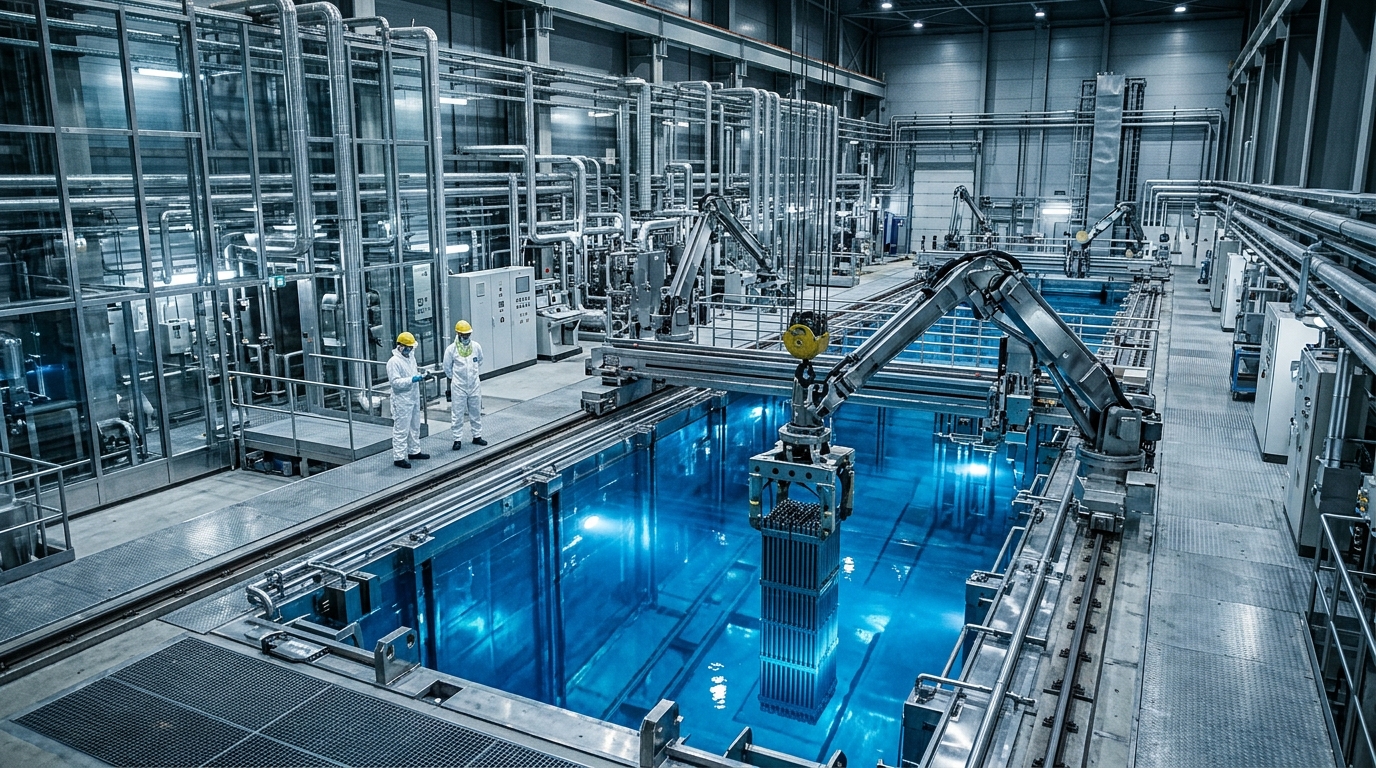
Spent nuclear fuel recycling technology holds the potential to reduce waste and recycle resources, yet it is demonstrating low global performance due to high costs, process complexity, and technical limitations. Spent nuclear fuel contains recyclable uranium and plutonium, and reprocessing it can decrease waste generation and reduce the need for mining new nuclear materials.
France operates the world's largest and most established recycling program, with its La Hague facility in the north capable of processing approximately 1,700 tons of spent nuclear fuel annually.
The current PUREX process dissolves spent nuclear fuel in acid to extract and separate uranium and plutonium. The extracted plutonium is then used as Mixed Oxide (MOX) fuel, while uranium, after re-enrichment, is utilized as standard low-enriched uranium fuel.
However, the reprocessing process is costly and complex, and the efficiency of uranium extraction falls short of 100%. Furthermore, recycled MOX fuel is known to be usable for a maximum of two cycles due to technical limitations. Additionally, concerns exist that the plutonium generated during reprocessing carries a risk of diversion for nuclear weapons manufacturing. Uranium produced through reprocessing is strategically stockpiled by France or exported abroad for enrichment.
Allison Macfarlane, former Chair of the U.S. Nuclear Regulatory Commission (NRC), pointed out that while reprocessing can reduce waste volume, spent MOX fuel emits more heat than conventional fuel, potentially requiring more space in underground disposal facilities. Therefore, deep geological repositories remain necessary.