US Defense Secretary Declares End to Allies' 'Security Free Ride' Era

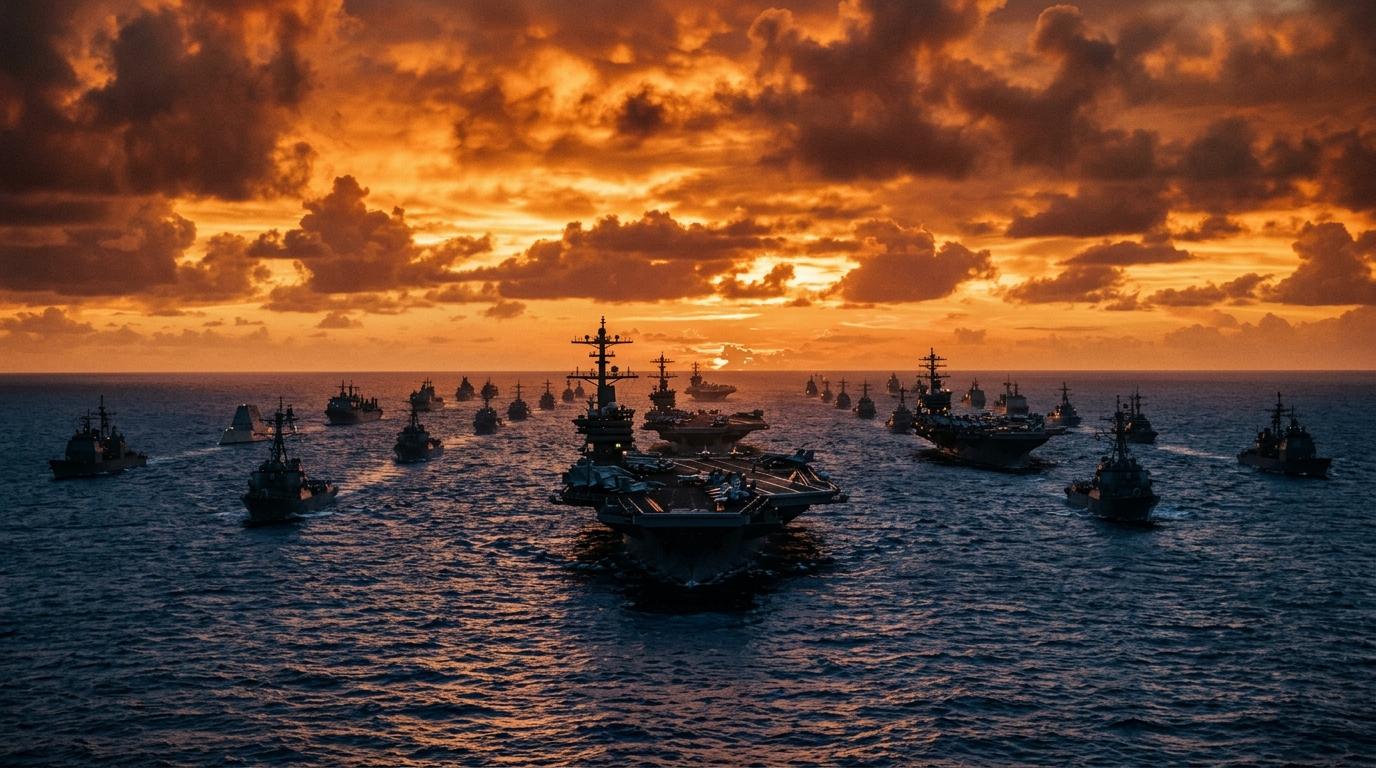
U.S. Defense Secretary Pete Hegseth has made it clear that allies will no longer take security support for granted. He emphasized that the era of 'security free-riding' is over for European and Asian countries that have been under American protection for decades, urging their participation in the maritime blockade targeting Iran. This raises a broader question beyond current international affairs: the changing role of the United States, which has underpinned the global trade order for 80 years since World War II. The article examines the impact of reduced U.S. security support on the global trade system, including South Korea.
In 1945, at the end of World War II, the U.S. built a maritime order based on its fleet of nearly 7,000 vessels, guaranteeing freedom of navigation for all nations. This was founded on the ideas of 19th-century naval strategist Alfred Thayer Mahan, who viewed freedom of maritime commerce as crucial for national prosperity. Under this order, global trade experienced explosive growth, including South Korea's export-led development, Japan's post-war reconstruction, and China's manufacturing boom.
Hegseth's remarks are interpreted as a signal that the U.S. is no longer willing to act as the world's maritime police, extending beyond the immediate situation in the Strait of Hormuz. This signals a demand for cost-sharing for the 'free security' the U.S. has provided. What the U.S. is demanding from its allies is not just the deployment of warships, but also a contribution to the costs of maintaining the freedom of navigation order. The core of Hegseth's statement, observers suggest, is that if these costs are not paid, the U.S. will no longer provide that order free of charge.
South Korea is particularly vulnerable to a blockade of the Strait of Hormuz due to its high dependence on energy imports, sourcing about 70% of its crude oil and a significant amount of natural gas from the Middle East. South Korea has already refused a U.S. request for a deployment to the Strait of Hormuz. The country's high reliance on exports and energy imports, coupled with its overall security and economic relationship with the U.S. — including the presence of U.S. troops — are all being called into question by these demands.
If the U.S. withdraws from maintaining the maritime order, another power is likely to fill the vacuum. History shows that powers filling such vacuums have not always guaranteed free passage. Just as Portugal controlled Indian Ocean trade routes and levied tolls in the 16th century, Iran's actions in the Strait of Hormuz today and China's expanding influence in the South China Sea are analyzed within this context. If South Korea's energy routes fall into the hands of other nations, its options could become extremely limited. Hegseth's remarks serve as a warning that that day may not be far off.