Kim Bu-gyeom Holds Early Lead, Conservative Camp Faces Unification Difficulties

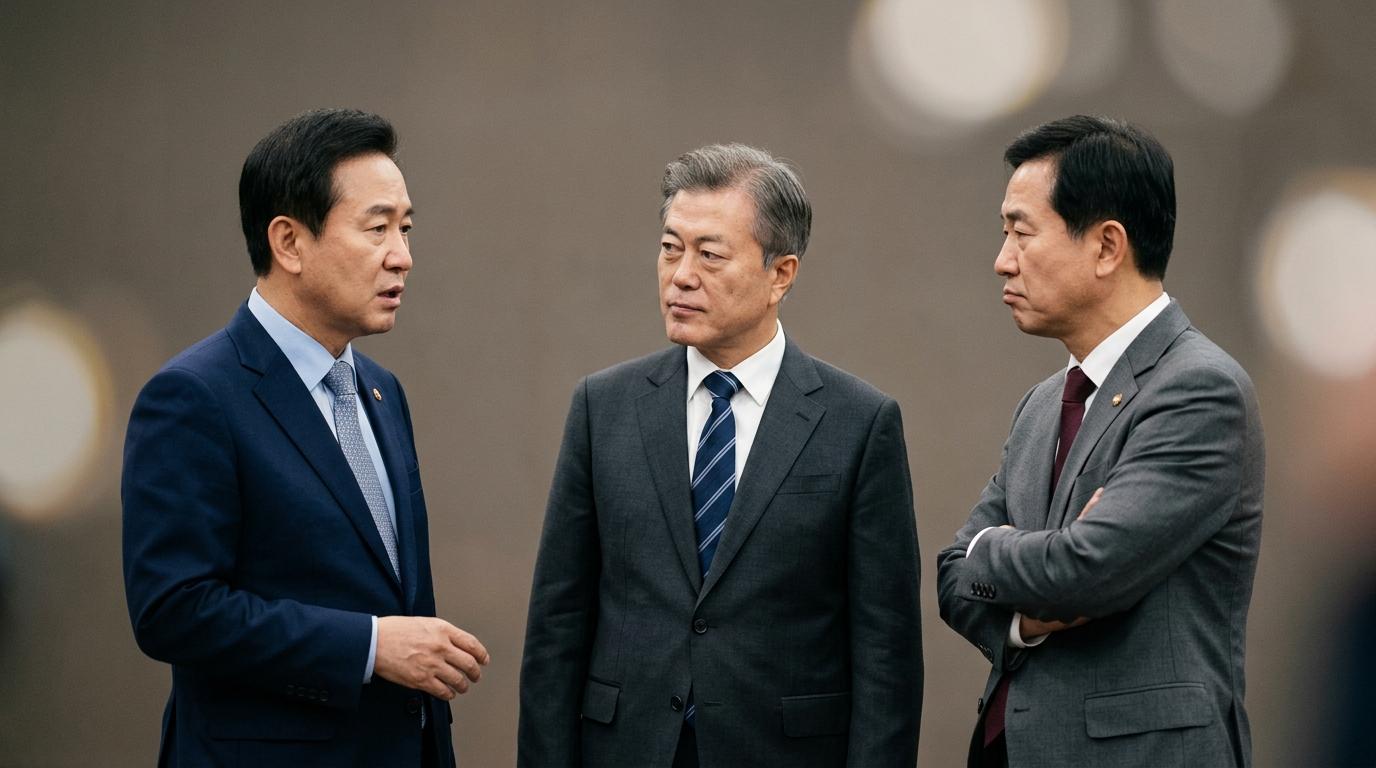
Democratic Party candidate Kim Bu-gyeom has taken an early lead in the Daegu mayoral race, while the People Power Party's conservative camp is facing difficulties in selecting a unified candidate. The aftermath of the primaries is prolonging the selection process for the People Power Party's Daegu mayoral nominee.
With Yoo Young-ha and Choo Kyung-ho set to face off in the final selection, Lee Jin-sook, former Chairperson of the Korea Communications Commission, who was cut from the preliminary round, is asserting that she, along with fellow preliminary round casualty Joo Ho-young, will contest the decision and demand a rerun. Joo announced his withdrawal from the race after a court dismissed their challenge, but Lee, despite appeals from party leadership, insists on pursuing an independent path, signaling her intention to run. Lee Jin-sook has scheduled a press conference for the 25th to make a statement.
Candidate Kim Bu-gyeom is swiftly moving to form his election committee with a unified candidate approach. Lawmaker Kwon Chil-seung and former Daegu Vice Mayor for Political Affairs Park Bong-gyu are serving as co-chairs, with a significant number of former and current lawmakers and figures from conservative parties joining the campaign, strengthening its policy-centric image. Kim has announced 'Daegu Industrial Grand Transformation' as his primary pledge, emphasizing his ability to secure budget through his role as a liaison with the Lee Jae-myung administration, alongside plans for new airport construction and administrative integration.
The final People Power Party candidates, Yoo Young-ha and Choo Kyung-ho, are presenting pledges focused on restoring conservative legitimacy. Under the slogan 'Daegu's Future, Hope of Conservatives,' Yoo's key pledges include attracting Samsung's semiconductor facilities and hospital branch to Daegu, and developing a Daegu Citizen Comprehensive Health Complex. Choo, advocating for 'Improving Daegu's Economic Structure,' has promised to create a hub for AI, robotics, and future mobility industries, relocate the Corporate Bank of Korea headquarters to Daegu, and pursue administrative integration of Daegu and North Gyeongsang Province.
If voting begins with the current structure, Kim is expected to win. However, a strong sense of crisis within the People Power Party could lead to consolidation or a shift to a two-way race, potentially making it a close contest as conservative votes coalesce. The final People Power Party candidate is scheduled to be announced on the 26th. As the election campaign progresses, the situation could change rapidly if the unification variable materializes. If the conservative camp unites behind one candidate to prevent wasted votes, it could lead to a close race, a scenario that Kim cannot afford to be complacent about. Whether the conservative bloc can engineer a comeback is the biggest point of interest in this Daegu mayoral election.
There is also a view that if the party fails to clearly select a candidate and internal conflict persists, responsibility for the election outcome could be called into question. Within the People Power Party, there is a palpable sense of crisis that victory will be difficult without unification.
Recent opinion polls support this outlook. A survey on Daegu mayoral candidate suitability conducted by Daegu MBC-Ace Research from April 18-19 showed Kim Bu-gyeom leading with 45.3%, a significant gap over Lee Jin-sook (17.2%), Choo Kyung-ho (16.2%), and Yoo Young-ha (5.4%). In hypothetical two-way matchups against all candidates, Kim also led outside the margin of error. Among the conservative candidates, Lee Jin-sook (22.8%) and Choo Kyung-ho (19.7%) were neck and neck, and this trend was observed even among People Power Party supporters, suggesting that future unification discussions will be fiercely contested.