How Long Until the KF-21's First Production Aircraft Enters Service?

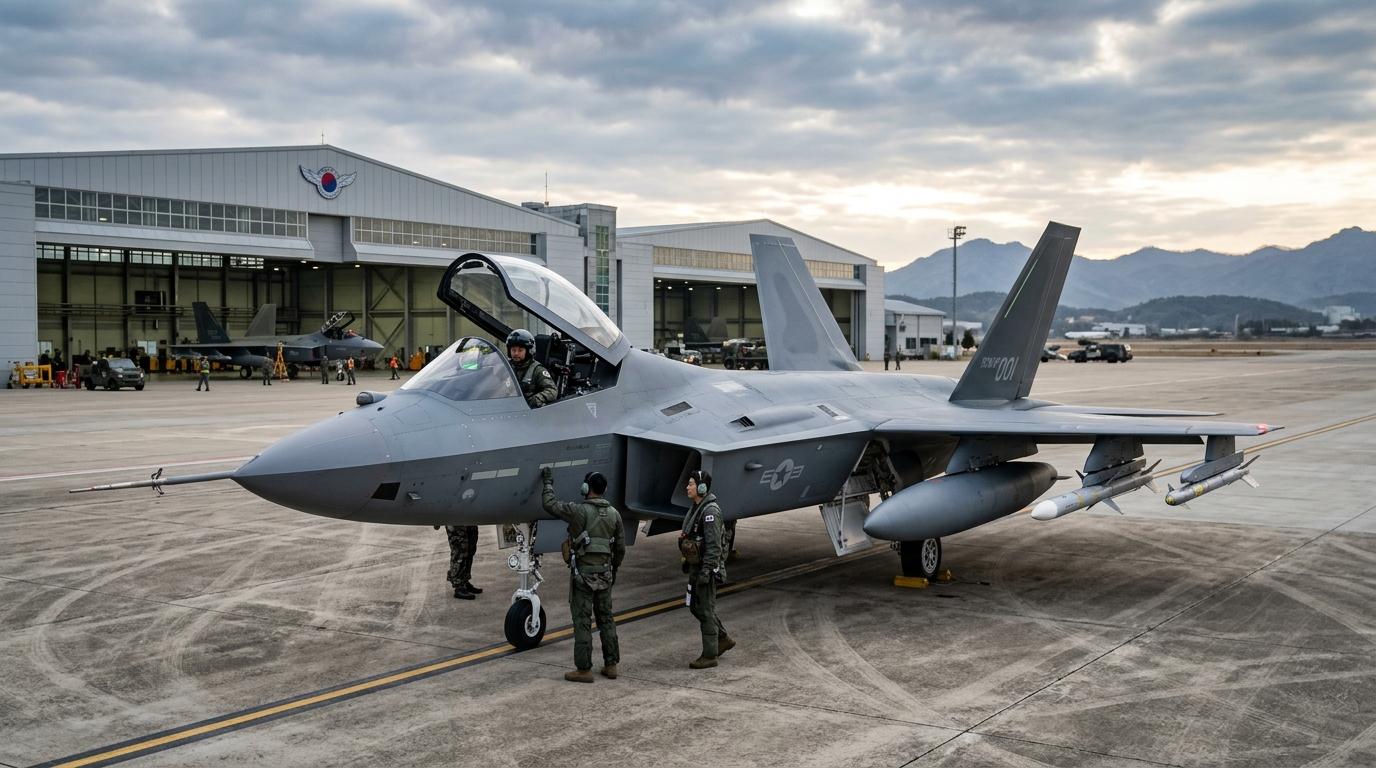
The successful flight of the KF-21 Boramae fighter jet's first production unit marks a significant milestone for securing the Republic of Korea Air Force's future capabilities. However, many complex stages lie ahead before the aircraft completes its successful test flights and is ready for deployment on the actual battlefield. This involves more than just manufacturing the airframes; it encompasses fulfilling the military's stringent operational requirements, integrating advanced weapon systems, training specialized pilots and maintenance personnel, and establishing a robust logistics support system. This article systematically analyzes the expected timeline and the importance of each process from the successful flight of the KF-21's first production unit to the stage of actual Air Force operation.
The KF-21's journey, from prototype development to the first production aircraft, laid the foundation through the initiation of the next-generation fighter program and the verification of prototypes. The KF-21 Boramae project was pushed as a key defense initiative to counter the aging F-4 and F-5 fighter jets currently in operation and to elevate the Republic of Korea Air Force's operational capabilities for future warfare environments. Since the full-scale commencement of the fighter jet system development project in April 2020, a total of six prototypes were manufactured. These prototypes underwent rigorous test flights in various missions and environments, thoroughly verifying whether the KF-21's design possessed theoretically achievable performance and if the key avionics and systems could be integrated and operated without issue. Notably, the six prototypes demonstrated the aircraft's stability and operational performance in extreme flight conditions, including diverse weather, altitudes, and speeds, increasing the likelihood of a successful transition to the production phase.
The flight of the first production aircraft signifies great importance while simultaneously highlighting future challenges. The recently successful flight of the KF-21's first production unit officially confirms that the technological prowess and design secured through the prototype development process can be accurately replicated on the actual production line. This suggests that production preparations have largely stabilized, further boosting confidence in the ability to manage production processes and ensure quality for mass production. However, the success of prototype development and the first production flight do not immediately mean all the military's final operational requirements have been met. Additional performance verification and various system integration processes, according to the military's strict standards, still remain, and successfully implementing these will be a key challenge for the future operational deployment of the KF-21.
Essential Procedures for Combat Deployment and Production/Operational Readiness
As an essential procedure for combat deployment, a suitability assessment for military operations is required to confirm satisfaction of the Operational Requirements (ROC). Following the successful flight of the first production aircraft, the KF-21 will undergo a more in-depth evaluation phase to determine how perfectly it meets the Air Force's actual operational requirements. This process focuses on re-verifying performance predicted during development or partially confirmed through prototype testing in the actual operating environment of the Air Force, further identifying potential issues, and devising solutions. First, through the Initial Operational Capability (IOC) and Full Operational Capability (FOC) assessments, the developed fighter will be evaluated from multiple angles to assess its ability to perform its intended functions in the Air Force's real operational environment. This includes aerodynamic performance, maneuverability, and radar and electronic equipment operational capabilities. Subsequently, an Operational Test, involving actual Air Force pilots and maintenance crews in a simulated combat environment, will determine the final feasibility for operational deployment.
Integration and performance testing of advanced weapon systems are also critical processes for achieving combat readiness. For the KF-21 to perform as a true 4.5-generation fighter, perfect integration with the latest domestic and foreign weapon systems is essential. This involves not just mounting weapons on the aircraft but also technologically integrating them organically with the flight control and fire control systems. From the early stages of development, the KF-21 was designed with the intention of carrying missiles like the Meteor or domestically developed precision-guided munitions. Through system integration and testing, the launch and guidance capabilities of each weapon system will be confirmed. Furthermore, live-fire tests conducted at various altitudes and speeds will serve as the final procedure to comprehensively verify the accuracy and lethality of weapon delivery and the fighter's survivability.
Full-scale production and the manufacturing of initial batches will accelerate practical operational preparations. The successful flight of the KF-21's first production unit signifies that preparations for maximizing production line efficiency and establishing a stable parts supply chain are complete. In the initial production phase, Korea Aerospace Industries (KAI) will fully operate the production line to manufacture the quantities required by the military according to the planned schedule, focusing on stabilizing production processes and ensuring quality. Aircraft completed in this manner will undergo the Air Force's stringent final inspections before delivery and acceptance, which will proceed sequentially based on budget and evaluation results.
Pilot training and the establishment of logistics/maintenance systems must proceed in parallel with aircraft acquisition. Even if advanced fighters are produced, they cannot perform combat missions without skilled personnel to operate them and the necessary support systems. Therefore, pilot and maintenance crew training programs tailored to the KF-21's specific characteristics must be developed, including advanced simulator training and actual flight maneuver training. Simultaneously, a logistics support system must be fully established to ensure smooth operational efficiency, encompassing the procurement of spare parts, the introduction of specialized maintenance equipment, and an efficient material management system.
Looking at the overall outlook for the remaining time until actual operation, the successful flight of the KF-21's first production unit represents significant progress, but several years are still needed before its combat deployment. Based on current information and the typical development cycle of fighter jets, it is estimated that it will take at least 2-3 years, and potentially 4-5 years or more, from the first production aircraft's flight to full operational capability within actual Air Force units. The successful integration of advanced radar and electronic warfare equipment, as well as domestically developed precision-guided munitions, will particularly influence the overall schedule. For the Republic of Korea Air Force, which aims to have the initial formation of 20 aircraft by 2026, thorough and systematic progress at each stage is paramount.