22nd National Assembly Sees Record Low Bill Approval Rate of 7.5%

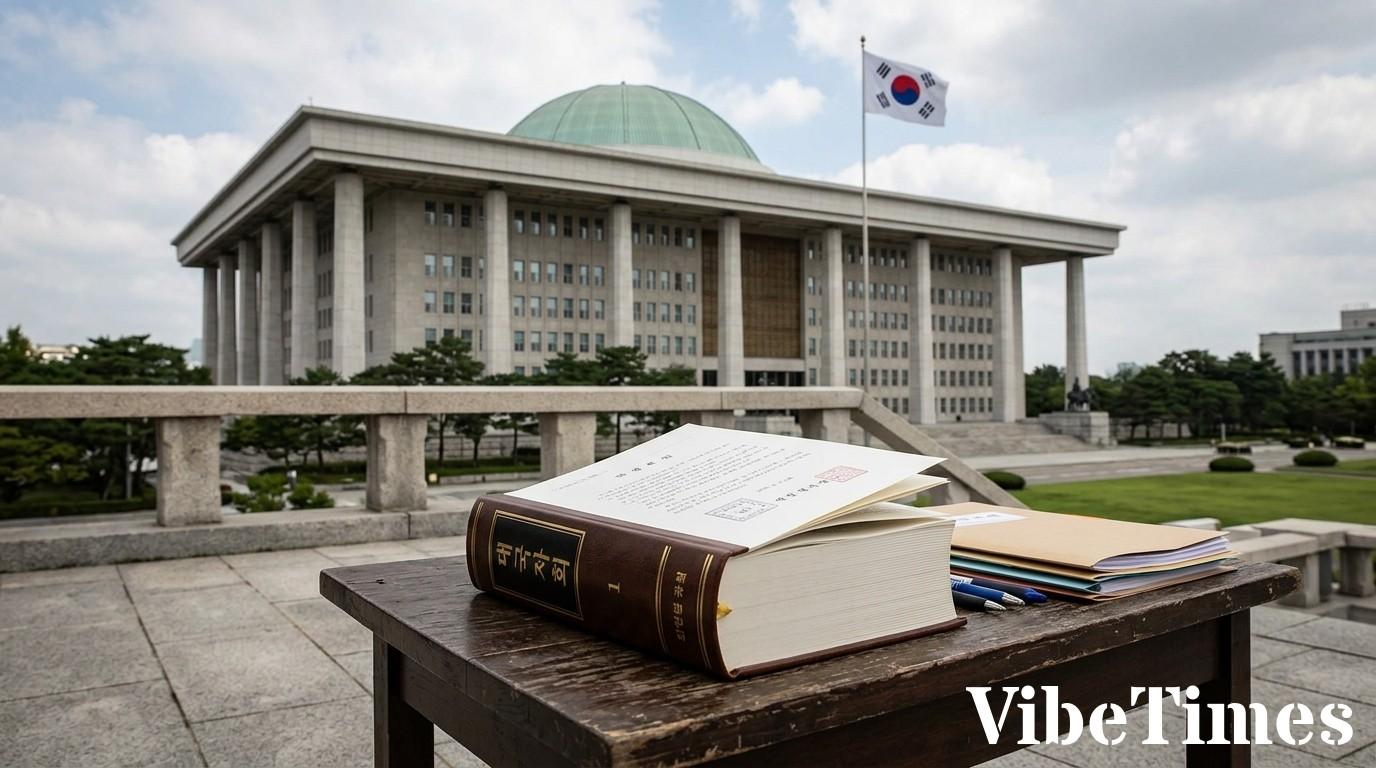
22nd National Assembly Records Lowest-Ever Bill Approval Rate of 7.5% Amid Deepening Legislative Gridlock
As the first half of the 22nd National Assembly nears its conclusion, concerns are mounting over the overall functioning of the legislature, with bill processing rates hitting an all-time low. The 22nd National Assembly, which convened in May 2024, faced severe conflict between the ruling and opposition parties from its outset. This deadlock persisted even after a state of emergency was declared on December 3rd, followed by the impeachment of President Yoon Suk-yeol, and the subsequent inauguration of the Lee Jae-myung administration under a configuration where the ruling party held a majority of seats. This political confrontation has led to delays in processing bills crucial for public welfare, ultimately resulting in a dismal approval rate of 7.5% for legislation.
According to the National Assembly's Bill Information System, the bill approval rate for the first half of the 22nd National Assembly stood at a mere 7.5%. This figure is notably lower compared to previous assemblies. This phenomenon is not solely attributable to the current assembly but is seen as a result of the intensifying, extreme confrontation between parties, which began to solidify during the 21st National Assembly and has become further entrenched in the 22nd. The situation where related bills remain unaddressed, despite becoming socially contentious issues – such as a 'Tampered Prosecution Special Prosecutor' bill that grants the power to withdraw indictments, with public opinion showing 44% opposition versus 27% support in surveys – indicates that the legislative branch is not functioning properly.
Background of Legislative Struggles: Extreme Confrontation and Special Prosecutor Investigations
The primary backdrop for the low bill approval rate in the 22nd National Assembly is the deep-seated distrust and extreme confrontation between the ruling and opposition parties. The 'minority-party-in-opposition' situation during the Yoon Suk-yeol administration, which was in place at the time of the assembly's launch in May 2024, made cooperation difficult. Even under the Lee Jae-myung administration, which began following a state of emergency declaration and impeachment proceedings on December 3rd, this political tension has not eased. Instead, the widening gap in party stances has transformed the National Assembly into a venue for political bickering rather than normal legislative activity.
Recent media reports indicate that the 7.5% bill approval rate for the first half of the 22nd National Assembly is a direct consequence of this extreme confrontation. The significantly lower figure compared to the 21st National Assembly demonstrates how difficult it has been to reach consensus between parties during the legislative process. Amidst this climate, despite 'Tampered Prosecution Special Prosecutor' related bills becoming contentious issues, legislative discussions have been delayed, with public opinion divided on the matter. A Gallup poll showed that 44% of the public opposed granting the 'Tampered Prosecution Special Prosecutor' the power to withdraw indictments, suggesting a need for a cautious approach, yet discussions within the National Assembly have progressed slowly.
Furthermore, the continuous stream of corruption-related issues, such as the prosecution's demand for a seven-and-a-half-year prison sentence for First Lady Kim Keon-hee, who is on trial for alleged bribery and embezzlement, and the testimony of Kim Hyong-hyo, former Senior Secretary to the President for National Security, regarding the 'justification of martial law' messages, have consumed the political energy of the National Assembly. Although the independent counsel team has reached its midpoint, it faces criticism for 'zero indictments' and is proceeding with investigations into key figures. This has led the National Assembly to focus more on judicial judgments and political disputes than on legislative activities. While some lawmakers, like Representative Lee Dong-hyun, have pushed for the swift passage of 'Education Normalization' and the 'Five Education Rights Protection Bills' to address difficulties in the education sector and emphasized policy development and legislation to enhance the public nature and quality of private schools, it is noted that the broader political climate has not supported these efforts.
Key Takeaways and Impact Analysis on Markets and Industries
The fact that the 22nd National Assembly's bill approval rate has fallen to 7.5% clearly indicates that the legislature is failing to perform its core legislative functions. This is not merely an issue of parliamentary operations but can have significant ripple effects across the economy and various industries. When legislation is not processed promptly and efficiently, businesses face difficulties in planning investments. For instance, delays in bills concerning new industrial regulations or support policies can increase uncertainty within related industries, potentially leading to a contraction in new investments.
Specifically, if bills related to national priorities emphasized by the President – such as redistribution policies aimed at resolving economic inequality and mitigating social polarization, or policies for transitioning to a decarbonized society and expanding renewable energy to combat climate crises – are not passed in a timely manner, the growth of related industries will inevitably be slow. Moreover, delays in policy formulation to address elderly poverty in an aging society will create setbacks in building a social safety net. The attention shown by Choi Seung-ho, the chairperson of the Samsung Electronics Super Union, towards resolving elderly poverty underscores the urgency of this social demand. However, it is unfortunate that such social demands are not translating into concrete legislation.
The proposals by reporter Ko Hyung-kyu, such as improving parental leave systems and expanding child allowances as policies to address the low birth rate, and his emphasis on strengthening educational fairness and easing the burden of private education as key policy directions in his role as a member of the Education Committee, are highly significant. If these sensitive and urgent livelihood issues are overshadowed by political disputes in the National Assembly, losing legislative momentum, it could lead to a weakening of overall social growth potential and a decline in the competitiveness of individual industries. Ultimately, legislative delays can increase the rigidity of the economic system, undermine predictability, and even damage potential growth drivers. Therefore, the low bill approval rate of the 22nd National Assembly should be interpreted not just as a report card for the legislature but as a serious warning signal for the future of the nation's economy and industries.
Future Outlook and Implications
The 7.5% bill approval rate for the first half of the 22nd National Assembly casts a pessimistic outlook on future parliamentary operations. Given that the current extreme confrontation between the ruling and opposition parties shows no signs of resolving in the short term, difficulties in the bill processing process are inevitable in the second half as well. The 22nd National Assembly began with the political variable of a 'ruling party majority, opposition minority' and this dynamic has only strengthened through a series of subsequent events. Consequently, it is expected that it will take considerable time and effort to find common ground on major bills directly related to public welfare. With high public concern over the 'Tampered Prosecution Special Prosecutor' bill, it remains uncertain how these sensitive pieces of legislation will be processed. Some argue that the reason the 22nd National Assembly is being labeled 'the worst ever' is due to this legislative stagnation. The news of the 'CLARITY Act' passing after a bipartisan vote can be seen as a somewhat positive signal, but this is likely an exceptional case. For instance, news of Bitcoin miner Iris Energy completing the issuance of $3 billion in convertible notes due in 2033 demonstrates active movements in overseas markets with low regulatory uncertainty, indirectly suggesting the negative impact of domestic legislative delays on the investment and business expansion of domestic companies.
In this context, normalizing legislation in the 22nd National Assembly is an urgent task for securing the government's policy execution capabilities and ensuring stable economic growth. If the National Assembly fails to fulfill its role, the negative ripple effects – such as reduced corporate investment, sluggish job creation, and intensified social conflict – will inevitably grow. Therefore, the ruling and opposition parties must put aside political confrontation and restore productive discussions and cooperation for the greater cause of national economy and public welfare stability. While it is difficult to pinpoint a specific timeline or outlook, this is a critical juncture demanding sincere efforts to achieve at least minimal legislative outcomes.