Criminal Procedure Act Revised…Prosecutors’ Direct Investigation Authority Abolished After 70 Years; Separation of Investigation and Indictment

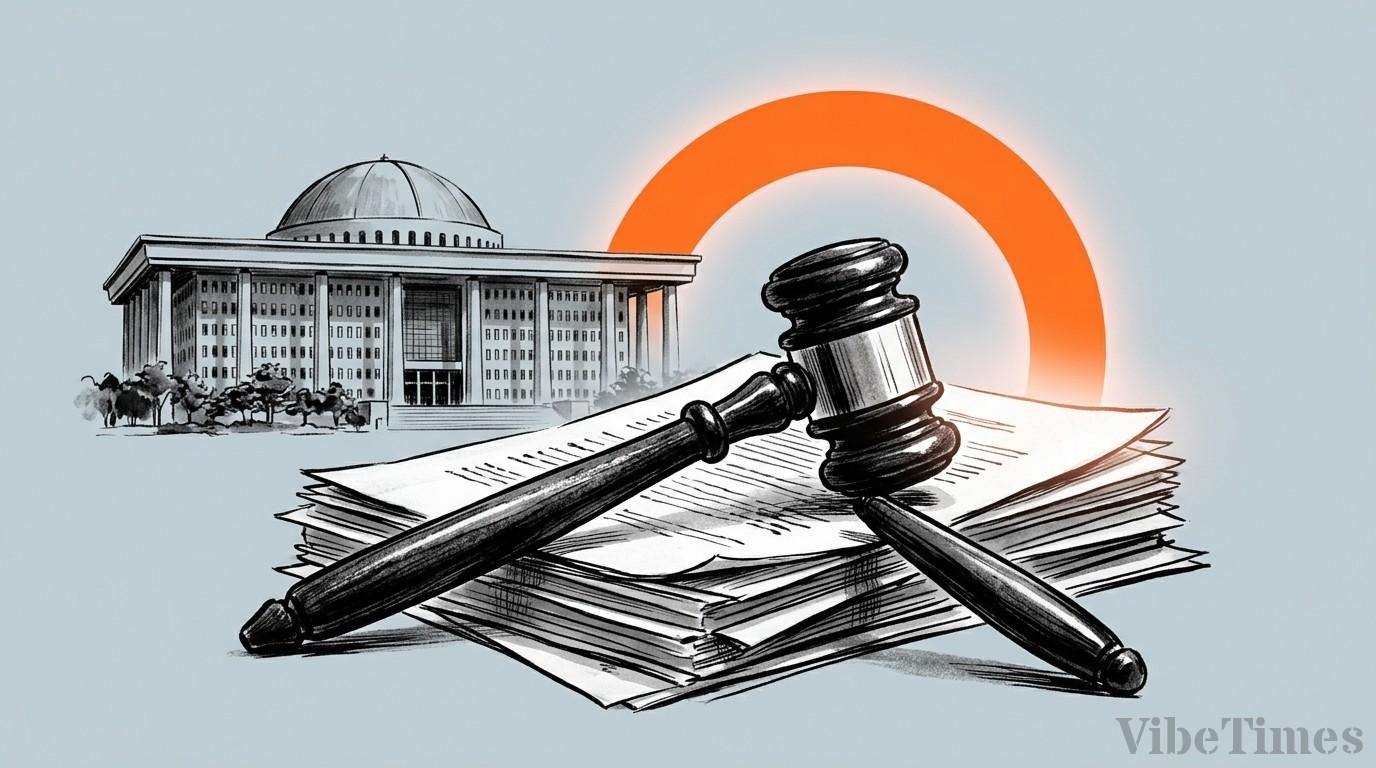
Biggest Judicial System Overhaul Since 1954 Enactment
The most significant transformation of the judicial system in 70 years has been implemented since the Criminal Procedure Act was enacted in 1954. As the revision of the Criminal Procedure Act, led by the Democratic Party, passed the plenary session of the National Assembly, the prosecutor’s sole authority to directly investigate crimes has completely vanished into history. The image of investigating prosecutors, frequently seen in past dramas, is now institutionally impossible. This effectively establishes the legal groundwork for the complete separation of investigation and indictment, which has long been the central theme of prosecutorial reform.
Key Analysis and Exception Clauses for Application
The core of the revised Criminal Procedure Act is the complete abolition of the prosecution's supplementary investigation authority. The principle of separating investigation and indictment—where the police investigate cases and prosecutors review them to refer to trial—has been solidified. This is interpreted as a measure to reduce the potential for infringement of citizens' fundamental rights and prevent the concentration of authority in a single entity. The existing method, where prosecutors directly requested warrants or collected evidence, has been completely overhauled as part of an effort to clear away the remnants of the Japanese colonial period.
However, not all cases have been transferred to the police. The revision explicitly includes exception clauses that allow for direct prosecution investigation in specific cases. Cases such as special counsel investigations related to the National Election Commission, which are directly tied to political neutrality and election fairness, and cases where a judgment of dismissal of prosecution has been rendered, will maintain the existing investigation system. This reflects the legislative judgment that the credibility of the national security and election systems must be protected even as the entire judicial system is reorganized. This clause was the most heated subject of debate during the bill review process.
Political Controversy and Social Repercussions
The ruling bloc, including the Democratic Party, evaluated the passage of this bill as the decisive final puzzle piece in resolving the monopoly of power institutions. They believe that the principle of checks and balances has been established by breaking up the prosecution's powerful direct investigation authority and dispersing it to the police and the Corruption Investigation Office for High-ranking Officials (CIO). Ruling party officials unanimously stated that with the separation of investigation and indictment, the long-held wish of prosecutorial reform has finally been fulfilled. The intention is to systematically block the biased investigative practices of power institutions that have caused suffering to the people.
Conversely, dissent emerged even within the ruling party during the bill's passage. Democratic Party Rep. Kwak Sang-eun cast a vote against the bill, expressing concern that the rapid abolition of investigation authority could cause significant distress to the daily lives of the public. Some have also raised concerns about the emergence of a so-called 'police state' due to the excessive expansion of police powers. There are criticisms that the police monopoly on investigations, in the absence of checks by prosecutors, could lead to further human rights violations or abuse of authority. As this represents a fundamental change in the judicial system, arguments for and against are tightly locked over the ripple effects it will have across society.
Future Legislative Procedures and Outlook for System Settlement
With the passage of the Criminal Procedure Act at the National Assembly plenary session, the judicial system is expected to enter a new paradigm. However, for the successful settlement of the system, remaining legislative and administrative procedures must be followed. Since the police are now responsible for the entire process from evidence collection to requests for detention warrants, the large-scale expansion of investigative capacity and manpower has emerged as an urgent task. Detailed guidelines must also be developed simultaneously to prevent work clashes between the two investigative agencies.
Follow-up measures are expected at the National Assembly level. A revision to the National Assembly Act, which significantly shortens the fast-track bill review period from 330 days to 90 days, is expected to be put to a plenary vote soon. Discussions on the revision of the CIO Installation Act are also underway to extend the investigation period to a maximum of one year and relax the restrictions on its activation. It remains to be seen how the redistribution of investigative and prosecutorial powers and the actual realization of justice will unfold, requiring close observation of the specific execution process of the revised laws.