Chief Justice Submits Written Recommendations for Justices Son and Kim… Ruling Party Protests, Citing 'Consideration of Impeachment'

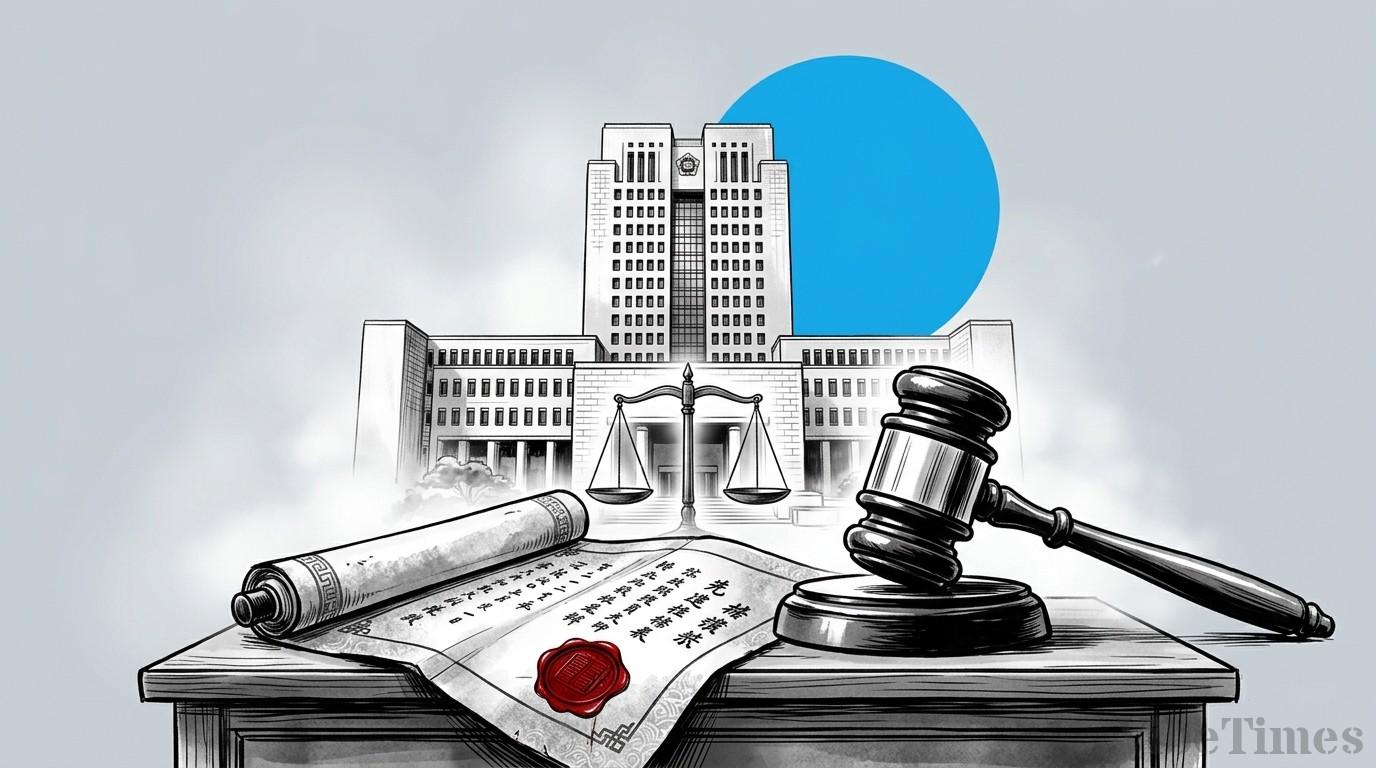
Chief Justice Jo Hee-dea has nominated Senior Judge Son Bong-ki to succeed former Supreme Court Justice Roh Tae-ak and Senior Judge Kim Sung-su to succeed Justice Lee Heung-gu, causing tensions to skyrocket between the judiciary, the Presidential Office, and the ruling and opposition parties. In particular, as it is known that Chief Justice Jo delivered the recommendation via written document without prior consultation with the Presidential Office, some in the ruling bloc are strongly reacting, claiming that the move "makes light of the President's appointment power."
Breaking Convention with 'Written Recommendation'… What is the Problem?
Recommendations for Supreme Court Justice candidates have typically been made following a meeting between the Chief Justice and the President, or at least a minimum consultation process. However, those procedures were omitted this time. Chief Justice Jo Hee-dea submitted two candidates at once in the form of a written notice without separate coordination with the Cheong Wa Dae (Blue House). It is reported that he cited the urgency of normalizing the judiciary due to the simultaneous vacancies of two Justice seats, but the method itself has invited controversy.
Under the Constitution, Supreme Court Justices are appointed by the President upon the recommendation of the Chief Justice and undergo a National Assembly confirmation hearing. Procedurally, Chief Justice Jo's recommendation is an exercise of authority granted by the Constitution. However, the complete lack of political communication between the head of the judiciary and the head of the administration is emerging as a separate issue. Some in the political circle view this not as a simple procedural error but as a 'message' from the judiciary to the administration.
Ruling Bloc Says 'Consider Impeachment' vs. Supreme Court Says 'Just Exercise of Authority'
Cho Kuk, head of the Innovation Policy Research Institute at the Rebuilding Korea Party, urged President Lee Jae-myung to reject the recommendation on the 19th, stating, "The written recommendation for Justices makes light of the President." Within the ruling bloc, there is even talk of considering the impeachment of Chief Justice Jo Hee-dea. Conversely, the opposition People Power Party is defending the Chief Justice from the perspective of judicial independence, and the controversy follows the factional fault lines of the political struggle.
The logic behind the ruling bloc's protest is clear. Forcing a recommendation without even consulting the President, who holds the appointment power, is seen as a disregard for the administration. On the other hand, the judiciary's stance prioritizes the justification that filling the vacancies within the legal timeframe is urgent. They argue that if the Justice vacancies prolong, the hearing of major cases will inevitably face setbacks. As both sides have valid points, the focus is narrowing from the 'recommendation itself' to the 'method and timing.'
The President's Options and Political Fallout
President Lee Jae-myung's remaining options are compressed into three: accepting the recommendation and appointing them, rejecting or returning the recommendation, or demanding replacement of the candidates. If he accepts, he risks provoking hardliners within the ruling bloc; if he rejects, it could escalate into an unprecedented conflict between the President and the Chief Justice in constitutional history. Either way, it is a dilemma accompanied by political costs.
What draws attention is the trend of President Lee's approval ratings. With polls hitting record lows daily and a downward trend for five consecutive weeks, a head-on clash with the judiciary is inevitably a burdensome card. Conversely, if the ruling bloc hastily moves to impeach the Chief Justice, it could have the reverse effect of triggering resistance from the judiciary and a consolidation of conservatives. It is a situation where calculating costs and benefits is not easy.
Outlook: Possibility of a Battle of Time
A solution is unlikely to be found for the time being. For the ruling bloc to actually wield the impeachment card, internal opinion gathering and adjustments to the national schedule are needed, and from the Chief Justice's standpoint, there is no justification to withdraw the recommendation. Ultimately, President Lee's decision on whether to appoint is expected to determine the direction of the political situation in the coming weeks.
There are two main scenarios. If President Lee accepts the appointment on the premise of a National Assembly confirmation hearing, the conflict will move to the hearing stage. Conversely, if he opts for rejection or reservation, pressure from the ruling bloc on the Chief Justice will intensify, potentially solidifying a confrontation with the judiciary throughout his term. However this unprecedented situation in constitutional history concludes, it is expected to establish a new precedent regarding how the relationship between the President and the Chief Justice is defined.