KF-21's First Production Unit Test Flight: Were There Any Issues?

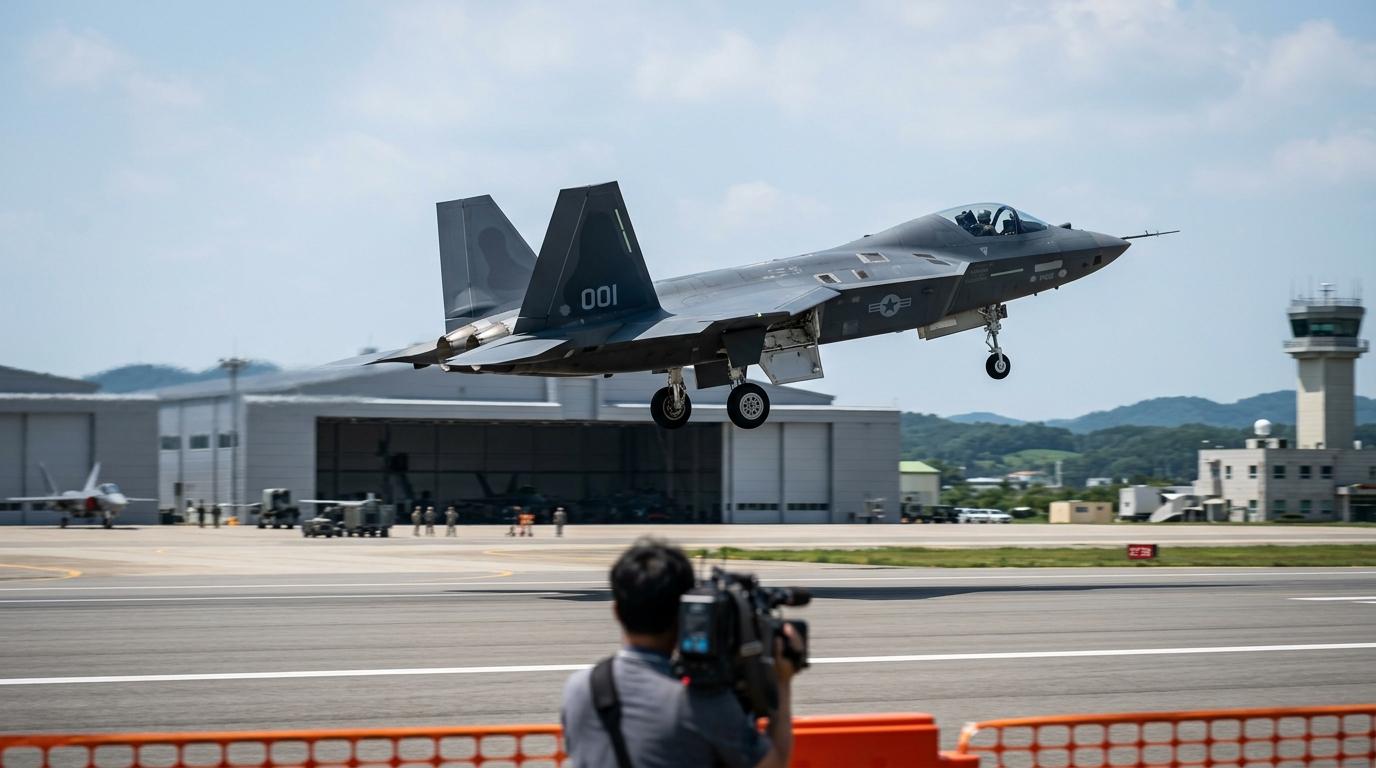
KF-21 First Production Unit Test Flight: Achievements and Diagnosis
News has emerged that the KF-21 'Boramae's first production unit has completed its test flight successfully. This marks a significant milestone in securing the Republic of Korea Air Force's next-generation main fighter jet. However, unlike the initial prototype development phase, the production stage introduces the new characteristic of mass production, inevitably increasing the possibility of unforeseen potential issues. Therefore, even if the test flight results of the first production unit are officially announced as 'problem-free,' a close analysis of the underlying meaning and any challenges that may have occurred or been overlooked is necessary.
The transition from prototype to mass production involves subtle yet significant developmental differences; the KF-21 project is broadly divided into two stages. The first is the 'Prototype' development phase, where the primary goals are to finalize the basic design, implement core performance capabilities, and resolve technical challenges in integrating various advanced systems. Systematic test flights were conducted using six prototypes, and issues identified during this process were improved through design modifications, parts replacements, and software updates. In contrast, the 'Mass Production' phase focuses on producing a large number of aircraft with consistent quality based on an already validated design, tailored to actual military requirements. Consequently, the test flight of the first production unit serves as a different kind of inspection than that of the prototypes, focusing on evaluating the stability of the production process, the uniformity of parts, and the reliability in actual operational environments. Given that the objectives and characteristics of these two stages differ, the test flight results of the first production unit carry more than just the meaning of 'success.'
Looking at the actual test flight and key results, the KF-21's first production unit rolled out from Korea Aerospace Industries' (KAI) Sacheon plant in December 2023. After approximately three months of ground testing and checks, it successfully completed its maiden test flight on March 28, 2024. The flight, which lasted about 30 minutes, focused on verifying basic flight performance, control systems, and engine operating status. The Defense Acquisition Program Administration (DAPA) and KAI stated that the test flight was successfully completed without any officially reported major technical defects or anomalies. This is interpreted as a positive signal, suggesting that the technological maturity accumulated during the prototype development phase has been well reflected in the production design, and the production process is operating stably.
Analyzing what the announcement of 'no problems' signifies, the declaration of 'success' for the first production unit's test flight is a crucial achievement demonstrating the culmination of the development team's efforts. It implies that technical issues encountered during the prototype phase have been successfully resolved and that the design's reliability is being maintained during mass production. However, due to the nature of aircraft development and production, it is difficult for all potential issues to be perfectly revealed in an initial test flight. Specifically, minor part variations, assembly tolerances, complex software integration issues that can arise during mass production, or durability problems that may surface in long-term operational environments may not be comprehensively included in the initial test flight reports. Therefore, the 'no problems' announcement signifies the absence of officially confirmed major defects and suggests the need for further reliability assurance through ongoing verification processes and long-term operational data.
Challenges in the Production Process and Future Outlook
Attention must be paid to minor variations in parts and systems caused by changes in the production process. During the prototype phase, a small number of aircraft are built with near-manual precision to enhance part accuracy. However, in the transition to mass production, standardized processes and mechanized production lines are introduced for large-scale manufacturing. This can lead to slight deviations in material, processing methods, or assembly precision compared to prototypes. Particularly for engine components directly affecting performance and safety, high-value electronic equipment, and critical airframe structures responsible for structural integrity, these minor variations could have unforeseen impacts on flight performance or durability. For the first production unit, effectively managing and verifying deviations that can occur in these production-specific processes is crucial, as it directly relates to the quality uniformity of subsequent units.
Verification of the stability of newly integrated 'production-specific' systems is also essential. As a '4.5-generation' fighter, the KF-21 is planned to be equipped with the latest radar, electronic warfare systems, communication systems, and various domestic and foreign advanced weapon systems. While some of these systems are integrated and undergo basic functional tests during the prototype phase, all systems must be perfectly integrated and interoperable in the production aircraft intended for military deployment. The test flight of the first production unit plays a vital role in confirming that these newly finalized integrated systems operate stably in ground and flight test environments and interface smoothly without interference or errors. The complexity of software integration and electromagnetic interference (EMI) are areas that demand meticulous verification during the production stage.
Whether the design incorporates considerations for operational environment and maintenance efficiency is also an important factor. Fighter jet development goes beyond merely achieving flight performance; it must also consider efficiency in the actual operational environment by the Air Force and long-term maintainability. While prototype development focuses on performance realization, the production stage considers critical factors like component lifespan, ease of replacement, accuracy of fault diagnosis systems, and convenience for maintenance personnel. For instance, if a specific part wears out faster than expected or requires a complex procedure for replacement, it can hinder actual combat operational capabilities. Potential issues in these practical aspects may not be apparent during initial flight tests, and the KF-21's first production unit test flight likely includes such indirect evaluation elements.
Examining reliability assurance tasks through comparison with past domestic aircraft development cases, South Korea has successful domestic aircraft development and production experience, including the T-50 trainer and FA-50 light attack aircraft, prior to the KF-21 project. During the T-50 development, there were also numerous unexpected technical challenges and efforts to meet performance requirements. The fact that the KF-21's first production unit test flight was officially successful is a positive sign that lessons learned and experiences from past projects have been well incorporated into the production design and process. However, it is important to consider that the technical level, performance requirements, and international cooperation environments differ for each project. Given that the KF-21 is a far more complex and advanced 4.5-generation fighter than the T-50, thorough preparation and flexible response to unforeseen variables during the production process remain crucial.
Looking at the key checklist for the production stage proposed by experts, aviation professionals, while positively assessing the success of the KF-21's first production unit test flight, are also highlighting key challenges to watch during the ongoing production process. Major points raised include minimizing part defect rates and rigorous quality control during production, maintaining assembly precision and managing performance variations between individual aircraft, preventing integration errors between various electronic equipment and systems, ensuring continuous software updates and integration stability, and re-verifying performance under diverse weather conditions and actual operational environments. They particularly emphasize that minimizing performance deviations between production aircraft and prototypes, along with continuous quality improvement and data-driven reliability assurance efforts, are key to the long-term success of the project.
Regarding the future reliability and combat deployment prospects of the KF-21 project, the successful test flight of the first production unit indicates that the project is proceeding smoothly according to schedule and raises expectations for future production and final system development completion. Based on these test flight results, the South Korean government and development team must continue to monitor potential risk factors and further strengthen public trust through transparent information disclosure and technical verification processes. Many steps remain before mass production fully commences, additional test flights are conducted, weapon integration is completed, and military requirements are incorporated for final combat deployment. If meticulous checks and thorough preparations are made at each stage, the KF-21 'Boramae' is expected to establish itself as a symbol of self-reliant defense, performing a pivotal role for the Republic of Korea Air Force.