KOSPI Plunges 11% in Two Days Even as US Stocks Rebound

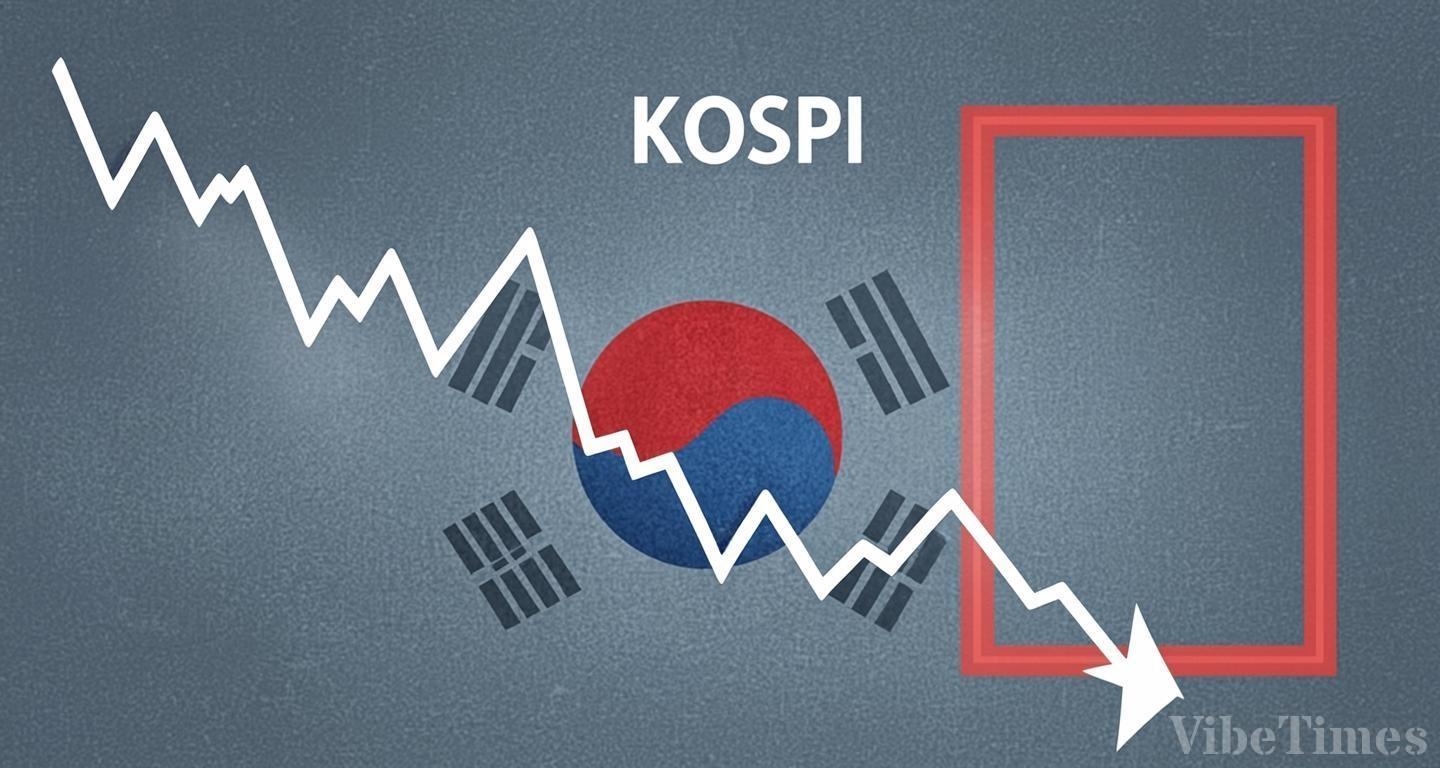
Concerns that the Democratic Party's takeover of both chambers of Congress in the US midterm elections would lead to tighter regulation of AI data centers sent semiconductor stocks tumbling, dragging the KOSPI down 10.98% over two trading days. The KOSPI closed at 5,383.80 on the 5th, down 5.28% from the previous day, and fell another 6.02% to 5,059.69 on the 6th. On the 6th, a circuit breaker was triggered just 3 minutes and 33 seconds after the market opened, and the index sank as low as 4,911.28 intraday. The KOSDAQ also plunged 5.03% to 644.27, as the Korean market slumped in tandem.
US markets also plunged on the 5th, with the Nasdaq down 5.52% and the Philadelphia Semiconductor Index down 12.25%. But on the 6th, the tide turned: the Nasdaq rose 1.09% to 24,579.42, the S&P 500 gained 0.31% to close at 7,376.86, and the Philadelphia Semiconductor Index rebounded 4.2%. Even so, the losses were not recouped. Comparing closing prices on the 6th with election day on the 3rd, Micron fell 19.31%, Broadcom 11.57%, and Nvidia 9.70%, while the Philadelphia Semiconductor Index dropped roughly 8.6% over the two days.
According to Kiwoom Securities, the semiconductor sector accounted for about 4.6 percentage points of the KOSPI's 5.28% decline on the 5th, and large-cap stocks fell 6.49% on the 6th, more than mid-caps (3.38%) and small caps (2.53%).
In the midterm elections on the 3rd, the Democratic Party won back majorities in both the Senate and the House, even in traditionally Republican strongholds. With data center power and water use, and the burden on local residents, emerging as key issues, Gina Ortiz Jones, a Democrat elected governor of Texas, announced she would halt new data center development. Microsoft, Google, and Meta are pursuing data center projects in Texas. However, the application of regulations varies depending on licensing authority held by state and local governments, and the impact on existing operations and future investment plans remains uncertain. Executive powers, including President Donald Trump's veto authority, also remain in play.
Foreign selling drove the decline. Foreign investors net sold about 2.5 trillion won worth of KOSPI shares on the 4th, 3.4 trillion won on the 5th, and 2.77 trillion won on the 6th — roughly 8.7 trillion won over three days — with the selling concentrated in semiconductors. Samsung Electronics and SK Hynix fell about 13% and 19% respectively over two days; SK Hynix plunged 9.46% on the 5th and 10.44% on the 6th, closing at 1,132,000 won on the 6th. Foreign investors' net selling of SK Hynix on the 6th totaled about 1.92 trillion won, with Samsung Electronics at about 130 billion won. The two companies' combined market capitalization is around 1,930 trillion won, or roughly 46% of the entire KOSPI, meaning the whole index shakes whenever its semiconductor heavyweights do.
Not every stock fell together. As votes were being counted on the 4th, Hanwha Solutions rose 18.64% and Samsung SDI climbed 11.57%, reflecting expectations of the Democratic Party's renewable energy support policies.
